Skip to content

Spinal Decompression Therapy in Brentwood, Tennessee

We provide spinal decompression therapy for back pain, sciatica, and mobility concerns. Our chiropractor-led care team builds treatment around your evaluation and goals.

Upfront, Transparent PricingServing 18 CommunitiesMon-Fri: 9 am–7 pm, Sat: 9 am–2 pm, Sun: ClosedFast Scheduling
Spinal decompression therapy helps people in Brentwood address back pain, neck pain, sciatica, and other spine-related concerns. Advanced Injury Care Clinic starts with a thorough evaluation, then explains whether this approach fits your needs. We may combine decompression with spinal adjustments, soft-tissue therapy, corrective exercises, or rehabilitation guidance. Your symptoms, health history, and movement goals guide the care plan.

What patients want to improve with spinal decompression

Less strain during selected movements.

A clearer plan for spine-related symptoms.

Support for improved daily movement.

Care that connects decompression with broader chiropractic treatment.

What Spinal Decompression Therapy Covers

Spinal decompression therapy is a noninvasive chiropractic service that applies controlled unloading to support care for spine-related pain and movement concerns.

  • Spinal decompression therapy differs from a spinal adjustment because it uses a separate unloading approach instead of a manual adjustment.
  • Patients in the area receive this service through Advanced Injury Care Clinic after an evaluation determines whether it fits their condition.
Three rolls of colored tape sit beside scissors, folded towels, and a tray of small spray bottles on a wooden table
About

How spinal decompression care fits your treatment plan

Spinal decompression therapy uses controlled traction to reduce loading through targeted areas of the spine. The goal is to support movement and daily function, not promise a fixed result. We begin with a health history and exam. We then discuss your symptoms, goals, and suitable options before treatment starts. This service may be part of back pain care alongside adjustments, soft-tissue therapy, or corrective exercises. Individual response differs, so we monitor progress and change care when appropriate. The most useful outcome is a clear decision about fit and a way to track change. We may look at movement, symptom patterns, and daily activities during follow-up visits.

Process

What happens during spinal decompression care

1

Health history and movement exam

We review your symptoms, injury history, and movement limits. This step helps us understand the concern before selecting care.

2

Suitability discussion

We explain how spinal decompression therapy works and whether it fits your condition. You can ask questions before treatment starts.

3

Controlled decompression session

We position you on a spinal decompression table and apply controlled unloading as part of the planned care.

4

Progress review

We discuss symptom changes and daily function during follow-up care. The plan can change when your needs or response change.

What to prepare before spinal decompression care

Bring information that helps us understand your symptoms and treatment goals.

  • A list of current symptoms and affected areas.
  • Details about any accident, workplace injury, or sports injury.
  • A record of activities that increase or reduce discomfort.
  • Questions about spinal decompression, adjustments, or corrective exercises.

The Advanced Injury Care Clinic Standard

Patient Assessment

We assess symptoms, movement, and injury history before recommending spinal decompression therapy.

Personalized Care Plans

We shape decompression care around each patient’s condition, daily goals, and response to treatment.

Progress Monitoring

We review symptom and movement changes, then adjust the decompression plan when patient progress calls for it.

Questions about spinal decompression therapy

What kind of doctor provides spinal decompression therapy?

Advanced Injury Care Clinic provides spinal decompression therapy through its chiropractor-led care team. We assess your condition first, explain the procedure, and create a treatment plan around your needs. The plan may include spinal adjustments, soft-tissue therapy, or corrective exercises when those services fit your goals.

What changes the cost of spinal decompression care?

The cost depends on the evaluation, recommended services, and care plan for your condition. We review those factors before treatment and explain the available options. Advanced Injury Care Clinic offers free consultations, so you can discuss your concerns before deciding on care.

Can spinal decompression therapy help after an auto accident?

Spinal decompression therapy may support care after an auto accident when an evaluation finds it suitable. We review whiplash, back pain, neck pain, and movement changes before making a recommendation. Care may also include adjustments, soft-tissue therapy, or rehabilitation guidance.

How is spinal decompression different from an adjustment?

Spinal decompression uses controlled unloading, while an adjustment uses a directed chiropractic movement. We assess your condition before choosing either approach. Some care plans include both methods, while others focus on the service that best matches the patient’s symptoms and goals.

Do I need an X-ray before spinal decompression therapy?

An X-ray is used when clinical findings make imaging appropriate. We begin with a health history and exam, then explain any recommended next step. Your symptoms, injury history, and movement findings guide the decision about imaging and treatment.

How do you measure progress during decompression care?

Progress is measured through symptom changes, movement, and daily function. We ask how activities feel and review the goals set during treatment planning. If your response changes, we adjust the care plan and explain the reason for that change.
Contact

Ask about spinal decompression therapy in Brentwood

Advanced Injury Care Clinic offers free consultations for patients in Brentwood and nearby communities. Discuss your symptoms, goals, and suitable care options with our chiropractor-led team.
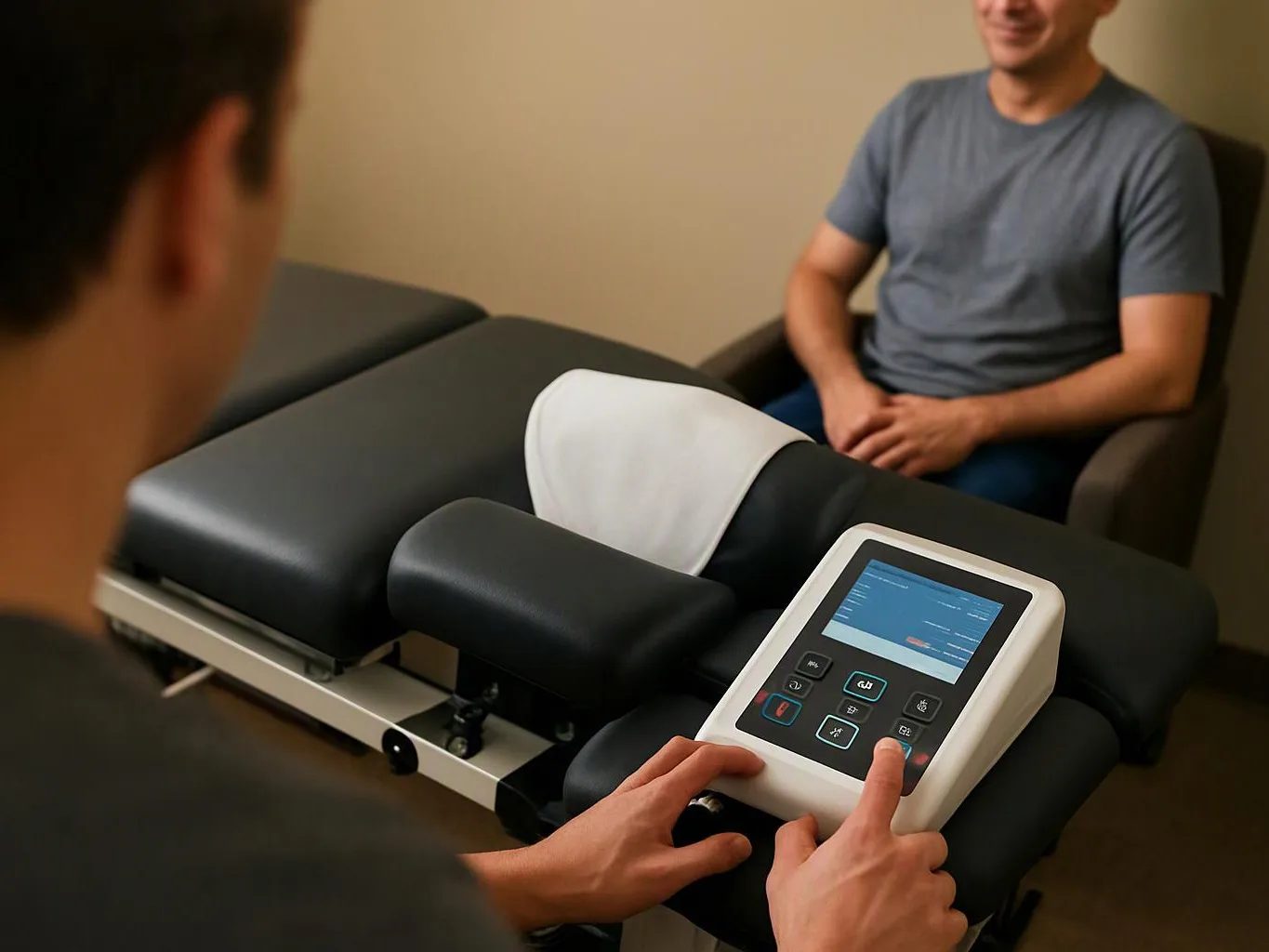
A person adjusts a therapy table device while another sits nearby in a small treatment room
Scenarios

When Customers Call Us About Spinal Decompression Therapy

1

Back Pain After Daily Activity

Back pain that worsens with sitting, bending, or walking can affect work and home tasks. The key question is whether decompression fits the cause and movement pattern, not whether it suits every case. We’ll review your history and exam findings, explain the treatment choice, and connect care with your daily goals.

2

Leg Symptoms With Spine Pain

Pain that travels from the back toward the leg can raise concerns about sciatica or nerve irritation. A careful assessment matters because symptoms can have different sources. We’ll discuss the pattern, check movement, and explain whether spinal decompression therapy belongs in your care plan.

3

Recovery After an Injury

Whiplash, workplace injuries, and sports injuries can change how the neck or back moves. Treatment should account for the injury history and current function. We’ll assess the affected areas, explain suitable options, and monitor progress as care develops.

Our Other Services

Massage TherapyTight muscles after exercise or an accident can limit sleep and ordinary movement. Massage therapy uses focused soft-tissue work on the neck, shoulders or lower back to ease muscle tension and improve comfort.
Chiropractic AdjustmentPatients with stiff joints or restricted movement want relief that lasts beyond a quick visit. We assess spinal motion, then use chiropractic adjustments to address joint restrictions and support easier daily movement.
Auto Accident Injury TreatmentAuto accident injuries can appear as whiplash, neck stiffness, back pain, or headaches after the crash. We review your symptoms and injury history, then coordinate chiropractic care, soft-tissue therapy, and exercise guidance to support safer movement during recovery.
Prenatal Chiropractic CareExpectant parents seeking comfort during pregnancy may need care for pelvic pressure or lower back pain. Prenatal chiropractic visits use gentle positioning and pregnancy-safe techniques to support easier movement as the body changes.
Pediatric Chiropractic CareGrowing children with posture concerns or movement discomfort need an approach suited to their age. Pediatric chiropractic care includes a gentle assessment of spinal alignment and mobility, with parents receiving clear next steps.
Postural CorrectionDesk workers with forward head posture or rounded shoulders often notice neck strain by day’s end. Postural correction examines standing alignment and movement habits, then adds targeted guidance to help you sit and move with less strain.

The health and wellness information on this website is for general informational purposes only and is not medical advice. It does not create a provider-patient relationship. Always consult a qualified licensed provider in Brentwood Estates, Tennessee, United States about your specific condition before making care decisions. Individual results vary.

(615) 265-0412