Skip to content

Spinal Decompression Therapy in Lakewood, Tennessee

Back symptoms in Lakewood need a careful exam before treatment begins. We offer a free consultation to discuss whether spinal decompression therapy fits your needs.

Upfront, Transparent PricingServing 18 CommunitiesMon-Fri: 9 am–7 pm, Sat: 9 am–2 pm, Sun: ClosedFast Scheduling

Quick Summary: Spinal Decompression Therapy in Lakewood, Tennessee

Spinal Decompression Therapy in Lakewood is provided by Advanced Injury Care Clinic for disc-related symptoms, nerve compression, and mobility concerns. Our team serves Lakewood, Brentwood, Williamson County, and the greater Nashville area, with free consultations available.

  • What we do: Advanced Injury Care Clinic provides Spinal Decompression Therapy in Lakewood, Tennessee for disc-related pain, nerve compression, and mobility concerns.
  • What is included: Key capabilities include health history review, injury evaluation, spinal decompression, soft-tissue therapy, corrective exercises, and rehabilitation guidance.
  • What you get: The treatment plan identifies whether spinal decompression fits the condition and supports better movement and daily function.

Can spinal decompression therapy help a herniated disc when back symptoms keep returning?

Spinal decompression therapy may help some people with herniated disc symptoms, but an exam must guide the decision. Advanced Injury Care Clinic checks your history, movement, and nerve-related symptoms before recommending care. Individual response differs, so the plan focuses on safety, fit, and your daily goals.

Spinal Decompression Therapy for Disc-Related Symptoms in Lakewood

Spinal decompression therapy focuses on people with disc-related symptoms, sciatica, neck pain, or limited movement. The work starts with a health history and exam, then moves to a report of findings and care discussion.

The key decision is whether traction-based care matches the source of your symptoms. We don't treat every back problem with the same method, and severe or unexplained symptoms may call for another type of medical assessment.

This page serves buyers who want to understand decompression before scheduling care in Lakewood. Our team also considers spinal adjustments, soft-tissue therapy, corrective exercises, and rehabilitation guidance when those options fit the evaluation.

  • Ask whether your symptoms fit traction-based care.
  • Share prior injury details, health records, and current symptoms.
  • Discuss nerve symptoms, movement limits, and daily goals.
  • Review how spinal decompression fits the wider treatment plan.
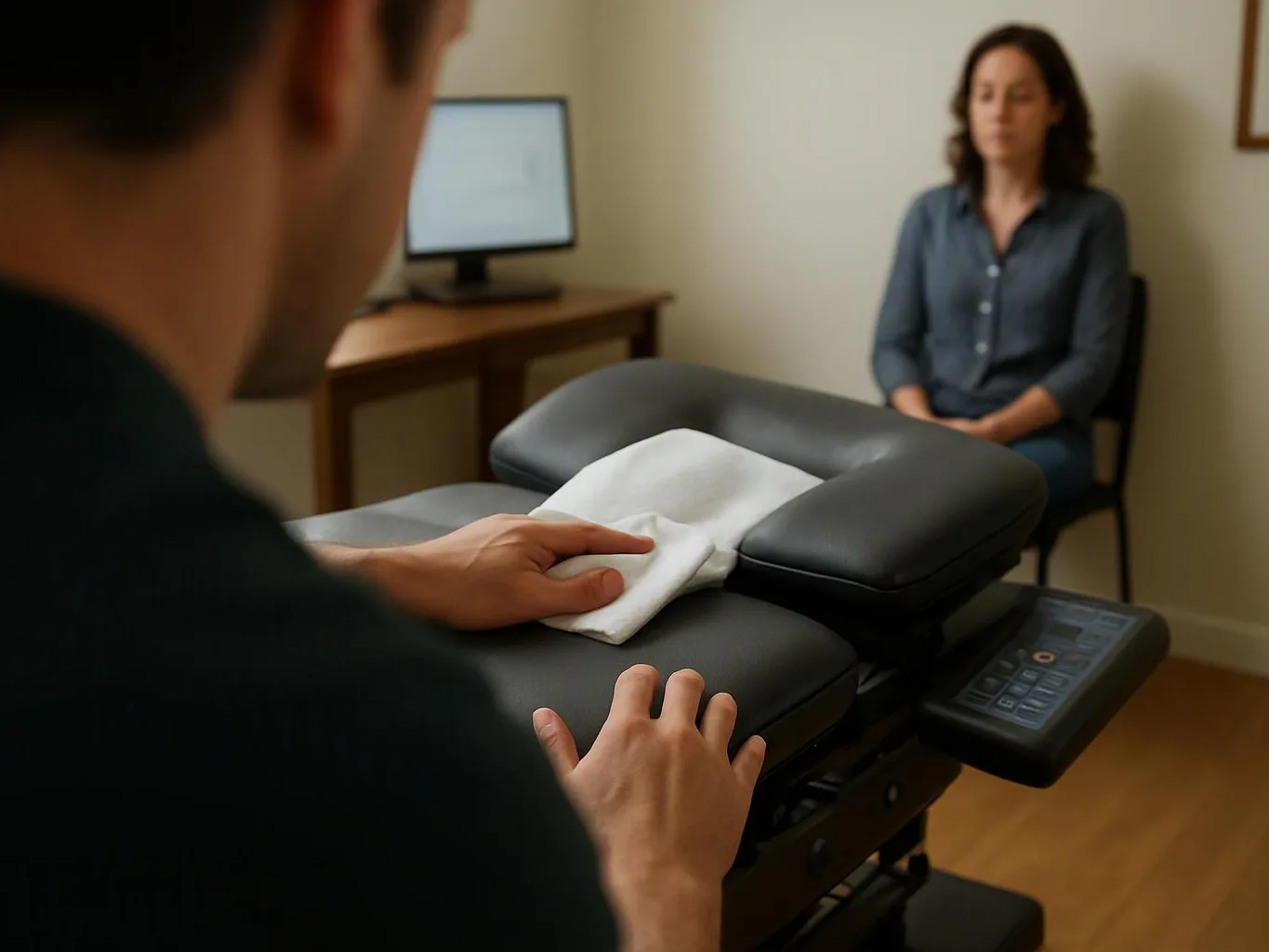
A person adjusts a padded treatment table while a seated woman waits in a small exam room

Service Overview

Spinal decompression therapy is a noninvasive treatment that uses controlled traction to reduce stress around parts of the spine.

  • It differs from spinal adjustments because it uses gradual unloading instead of a quick manual movement.
  • Our team provides this care for patients in Lakewood and the surrounding service area.
Process

How We Provide Spinal Decompression Care

1

Review your health history

We discuss your symptoms, injury history, daily limits, and treatment goals during the new patient intake.

2

Complete the injury evaluation

Our team checks movement and relevant symptoms. X-rays may be considered if clinically indicated.

3

Explain the findings

We provide a report of findings and explain whether spinal decompression fits the condition.

4

Set the treatment plan

The personalized treatment plan may include decompression, spinal adjustments, soft-tissue therapy, or corrective exercises.

5

Review progress

We use follow-up evaluation to discuss how care is progressing and whether the plan needs to change.

The scope this service is meant to handle

A person in Lakewood with recurring leg symptoms after a disc injury may want decompression right away. We first check the health history, movement, and nerve-related signs, then explain whether this approach fits or whether another evaluation is safer.

What Patients Receive From This Decompression Approach

A clear fit check before treatment

The first decision is suitability. Our chiropractor-led care team reviews your history, exam findings, and symptoms before adding decompression to care.

Care shaped around the injury

Disc symptoms can differ from muscle strain or joint pain. We adjust the plan around the findings instead of using one routine for every patient.

A realistic limit on treatment

Spinal decompression is the wrong choice when symptoms need urgent medical assessment or when the exam does not support traction-based care.

What This Care Can Change for Your Daily Movement

Controlled traction may reduce stress around an irritated spinal segment.

A focused exam helps connect symptoms with the areas that need attention.

Corrective exercises can support movement between visits.

The plan keeps care tied to daily function and your stated goals.

Regular maintenance may help support movement after the main injury concern settles.

What Spinal Decompression Therapy Includes

Advanced Injury Care Clinic provides comprehensive Spinal Decompression Therapy in Lakewood. Here's what you get:

  • We review your health history and current symptoms before treatment.
  • We complete an injury evaluation that considers movement and possible nerve involvement.
  • We discuss spinal decompression therapy and whether it fits your condition.
  • We build a personalized treatment plan around your needs and goals.
  • We may add soft-tissue therapy, spinal adjustments, corrective exercises, or rehabilitation guidance.
  • We review progress and adjust the plan when your condition or goals change.

How Decompression Differs From Related Care

These options address different parts of a care plan, so the evaluation guides the choice.

Care optionMain focusHow it may fit
Spinal decompression therapyControlled traction around the spineMay suit selected disc-related symptoms
Spinal adjustmentsBrief manual movement of spinal jointsMay support joint movement when clinically appropriate
Soft-tissue therapyMuscle and connective tissue tensionMay support movement alongside other care

The Advanced Injury Care Clinic Standard

  • Patient Assessment
  • Personalized Care Plans
  • Clear Treatment Explanations
  • Progress Monitoring

Questions About Spinal Decompression Therapy

Can spinal decompression therapy help a herniated disc?

Back symptoms from a herniated disc may improve with spinal decompression therapy for some patients. The exam must guide that choice. We review movement, nerve-related symptoms, and health history before recommending care. Results vary, and decompression doesn't replace urgent medical assessment when symptoms are severe or unexplained.

Which part of the spine decides whether decompression fits?

The affected spinal segment helps decide whether decompression fits your symptoms and exam findings. Disc location, nerve involvement, movement limits, and pain patterns all matter. Our team connects those findings with your daily goals. A diagnosis alone does not determine the full treatment plan.

What changes the time needed for a decompression visit?

The evaluation findings and treatment plan shape the time needed for a decompression visit. A health history, movement exam, and report of findings come before care decisions. Additional services, such as soft-tissue therapy or corrective exercises, may also affect the visit. We explain the plan during your consultation.

How does a visit move from the first call to the last step?

The visit moves from intake to evaluation, findings, treatment planning, and progress review. We first discuss your symptoms and history. Then we assess movement and determine whether decompression fits. Follow-up care may include spinal adjustments, soft-tissue therapy, or exercises when those options match your needs.

Why might a bulging disc need a different plan?

A bulging disc may need a different plan because symptoms and nerve involvement vary by person. We assess movement, pain patterns, and daily limits before selecting care. Spinal decompression may fit some findings, while adjustments, exercise, or another medical review may fit others. Individual response differs.

What should I bring to the first consultation?

Health records, imaging reports, medication details, and a clear symptom history can help the first consultation. These details give our team useful context about prior injuries and current concerns. Write down what worsens or eases symptoms. We’ll use the information with the exam to discuss suitable options.

Which care options can support decompression therapy?

Soft-tissue therapy, spinal adjustments, corrective exercises, and rehabilitation guidance can support decompression when they fit the evaluation. Each option addresses a different part of movement or comfort. Our team explains which services belong in your plan. We don't add a treatment without connecting it to your findings and goals.
Contact

Discuss Spinal Decompression Therapy in Lakewood

Back symptoms deserve a careful treatment discussion, especially when a disc problem or nerve compression is involved. Contact Advanced Injury Care Clinic to book a free consultation and review your options.

Two women sit at a table, one showing pink tape and a cup while talking in a clinic room

Spinal Decompression Therapy in Other Areas

The health and wellness information on this website is for general informational purposes only and is not medical advice. It does not create a provider-patient relationship. Individual results vary.

(615) 265-0412