
What Is An X-ray?
An X-ray is a diagnostic image created when a controlled beam of energy passes through the body and records differences in tissue density. X-rays show bones and joint alignment clearly, so clinicians can assess fractures, dislocations, arthritis-related changes, and some spinal conditions. The image supports clinical evaluation but does not explain every source of pain.
Quick Facts About X-ray
Category
Diagnostic imaging
Used for
Bone and joint assessment
Common confusion
Not the same as an MRI
Also called
Radiograph, Radiography
Often discussed with
Auto Accident Injury Treatment
Key Takeaways About X-ray
- X-rays show bone structure more clearly than soft tissue.
- Images can help assess alignment after a collision.
- An X-ray does not show every cause of pain.
How X-ray Works
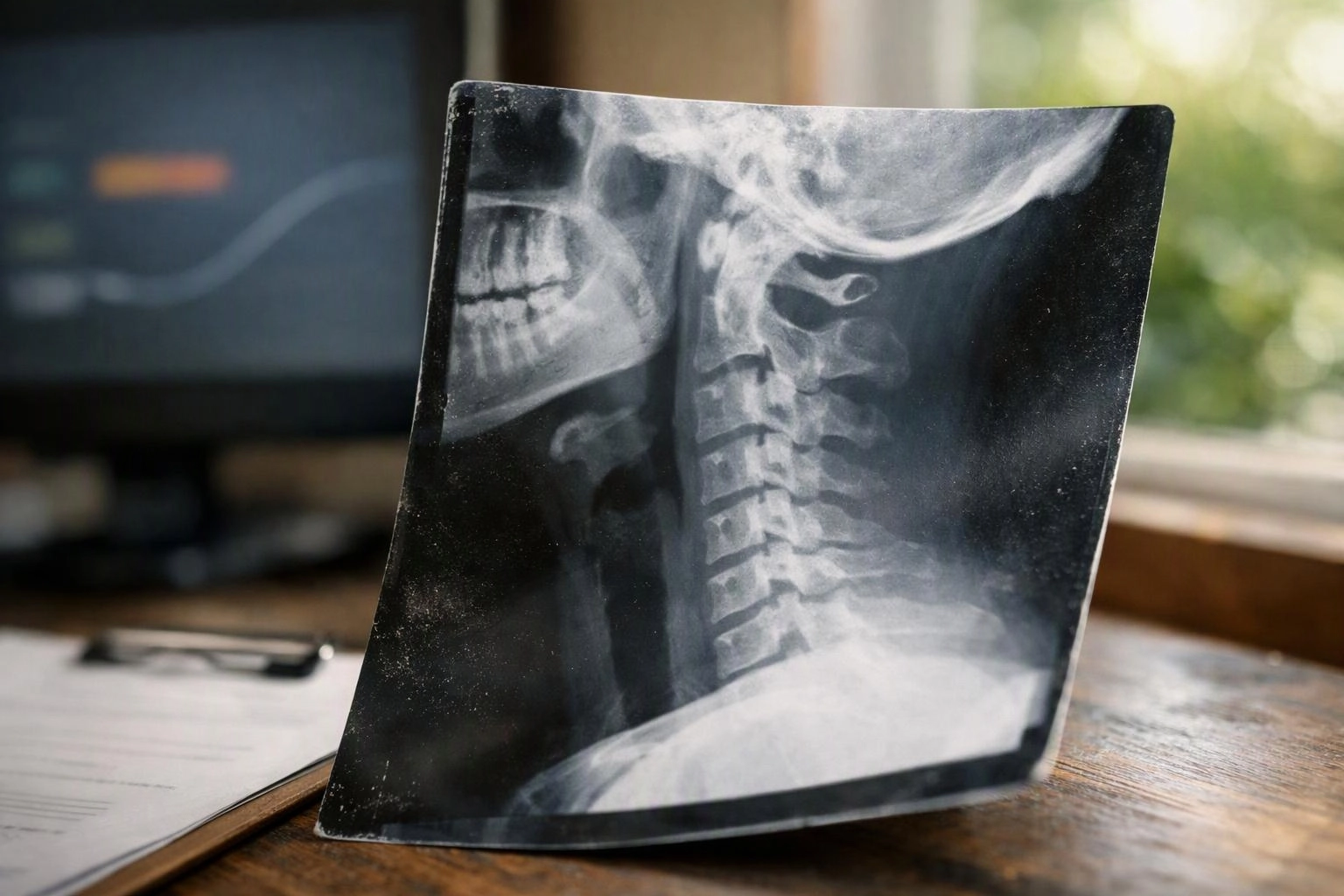
X-ray imaging sends a beam through the body toward a detector. Dense structures absorb more of the beam and appear lighter, while less dense areas appear darker. The resulting image shows the shape, position, and general condition of bones and joints.
Related glossary terms: Cervical Spine, Lumbar Spine, Whiplash.
Radiography can help a clinician examine spinal alignment, joint spacing, and visible bone changes after an auto accident. An X-ray may support decisions about further evaluation, but the image must be considered alongside symptoms, movement, and a physical examination. Soft tissues, including muscles and many ligaments, do not appear in the same detail as bone. Other imaging methods may be considered when the clinical question involves those tissues.

From the Advanced Injury Care Clinic team
When we evaluate an auto accident injury, we review X-ray findings alongside the history, reported symptoms, movement, and physical examination. We look for findings that may affect care, such as changes in alignment or visible bone injury. We also keep the image in context because pain can involve tissues that X-rays do not show clearly.
X-ray in Practice: A Real-World Example
After a rear-end collision, a patient may report neck pain and reduced movement. An X-ray can help assess the cervical spine for visible alignment changes or bone injury while the clinical examination addresses symptoms that the image cannot show.
Related Services
Related Terms
Cervical Spine
The cervical spine is the upper section of the spinal column located in the neck. It…
Lumbar Spine
Lumbar Spine is the lower section of the spinal column between the thoracic spine and pelvis…
Whiplash
Whiplash is a neck injury caused by rapid forward and backward movement of the head. The…
Range of Motion
Range of Motion is the amount and direction a joint can move through its available movement…
Advanced Injury Care Clinic
Have Questions About X-ray?
Contact Advanced Injury Care Clinic for practical guidance on X-ray and related chiropractor work in Brentwood.