
What Is Whiplash?
Whiplash is a neck injury caused by rapid forward and backward movement of the head. The motion can strain muscles, ligaments, joints, and other soft tissues around the cervical spine. Symptoms may include neck pain, stiffness, headaches, reduced movement, or discomfort that develops after a vehicle collision or another sudden impact.
Quick Facts About Whiplash
Category
Neck injury
Used for
Describing collision-related neck symptoms
Common confusion
Symptoms do not always start immediately
Also called
Neck Sprain, Cervical acceleration-deceleration injury
Often discussed with
Auto Accident Injury Treatment, Neck Pain Treatment
Key Takeaways About Whiplash
- Whiplash involves rapid neck movement during impact.
- Symptoms may appear after the initial collision.
- Whiplash is not limited to visible vehicle damage.
How Whiplash Works

Whiplash develops when the head moves quickly while the neck structures respond at a different rate. That motion may affect muscles, ligaments, joints, and nerves around the cervical spine. The resulting symptoms can vary based on the direction of force and the tissues involved.
Related glossary terms: Cervical Spine, Range of Motion, Strain.
A clinical assessment connects reported symptoms with movement, tenderness, posture, and neurological findings. A provider may also consider the collision history and changes in daily activities. Range of motion testing can show whether neck movement is limited or painful, while other findings can help separate whiplash from conditions that affect the shoulder, upper back, or arm.
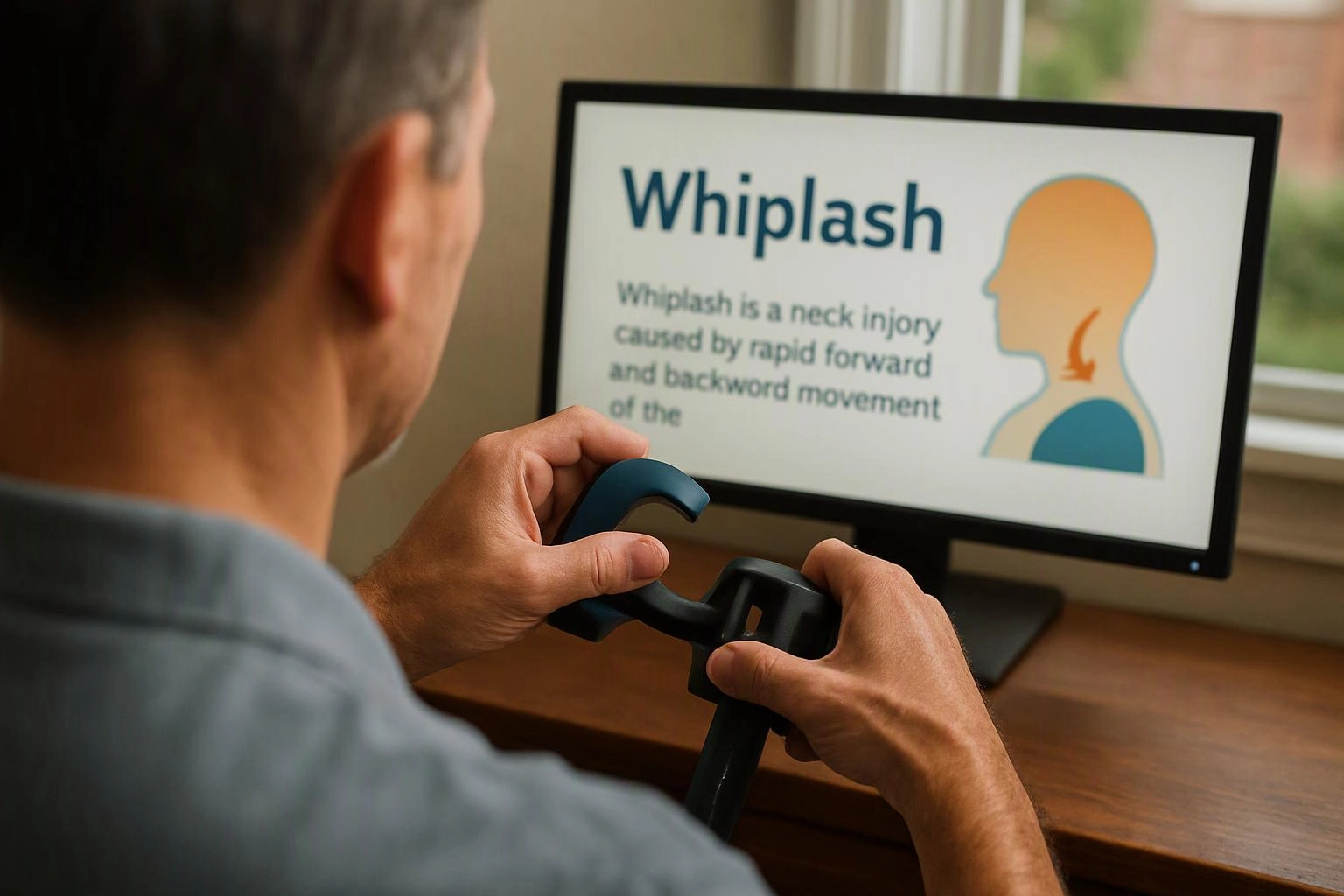
From the Advanced Injury Care Clinic team
When we assess whiplash during Auto Accident Injury Treatment, we review the collision history and the person’s current symptoms. We also check neck movement, tenderness, posture, and related neurological findings. Our team uses those observations to guide a focused care plan and monitor changes over time.
Whiplash in Practice: A Real-World Example
After a rear-end collision, a driver may feel shaken but notice only mild neck tightness at first. Later, turning the head, checking blind spots, or working at a desk may bring out pain and restricted movement.
Related Terms
Cervical Spine
The cervical spine is the upper section of the spinal column located in the neck. It…
Range of Motion
Range of Motion is the amount and direction a joint can move through its available movement…
Strain
A strain is an injury to a muscle or tendon caused by overstretching, force, or repeated…
Facet Joint
A facet joint is a small synovial joint at the back of the spine that connects…
Advanced Injury Care Clinic
Have Questions About Whiplash?
Contact Advanced Injury Care Clinic for practical guidance on Whiplash and related chiropractor work in Brentwood.