
What Is a Strain?
A strain is an injury to a muscle or tendon caused by overstretching, force, or repeated loading. Tendons connect muscles to bones, so a strain may affect either tissue. After an auto accident, a strain can develop in the neck, back, shoulder, or other areas affected by sudden movement. Symptoms may include pain, tenderness, stiffness, weakness, or reduced movement.
Quick Facts About Strain
Category
Muscle or tendon injury
Used for
Describing soft-tissue injury
Common confusion
A sprain affects a ligament
Also called
Muscle Strain, Muscle pull
Often discussed with
Auto Accident Injury Treatment, Corrective Exercise Therapy
Key Takeaways About Strain
- Strains affect muscles or tendons.
- Accident forces can strain several body areas.
- A strain is not the same as a sprain.
How Strain Works
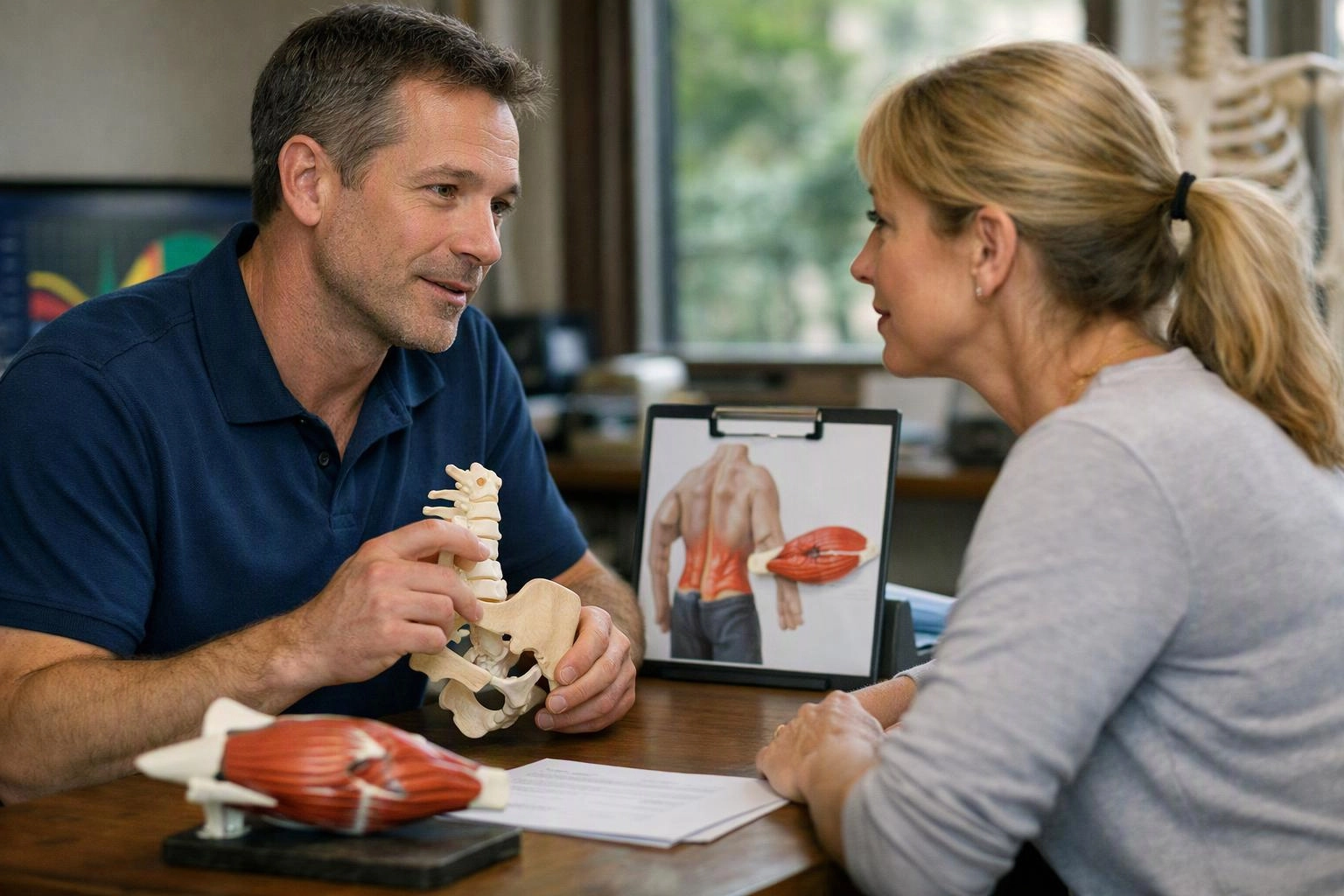
Strain develops when force places more load on muscle tissue or a tendon than the tissue can comfortably manage. The affected area may become painful, tender, stiff, or weak. Sudden motion, impact, or repeated effort can all contribute to this type of injury.
Related glossary terms: Whiplash, Range of Motion, Muscle Imbalance.
A clinician considers the location of symptoms, the movement that brings them on, and changes in range of motion. The examination may also compare strength and tenderness on nearby areas. A strain can occur alongside other injuries, so the surrounding joints and soft tissues also receive attention during an assessment.
Strain is different from a sprain because a sprain involves a ligament. Neck and back strains commonly enter discussions after a collision because sudden vehicle movement can load those areas quickly.
From the Advanced Injury Care Clinic team
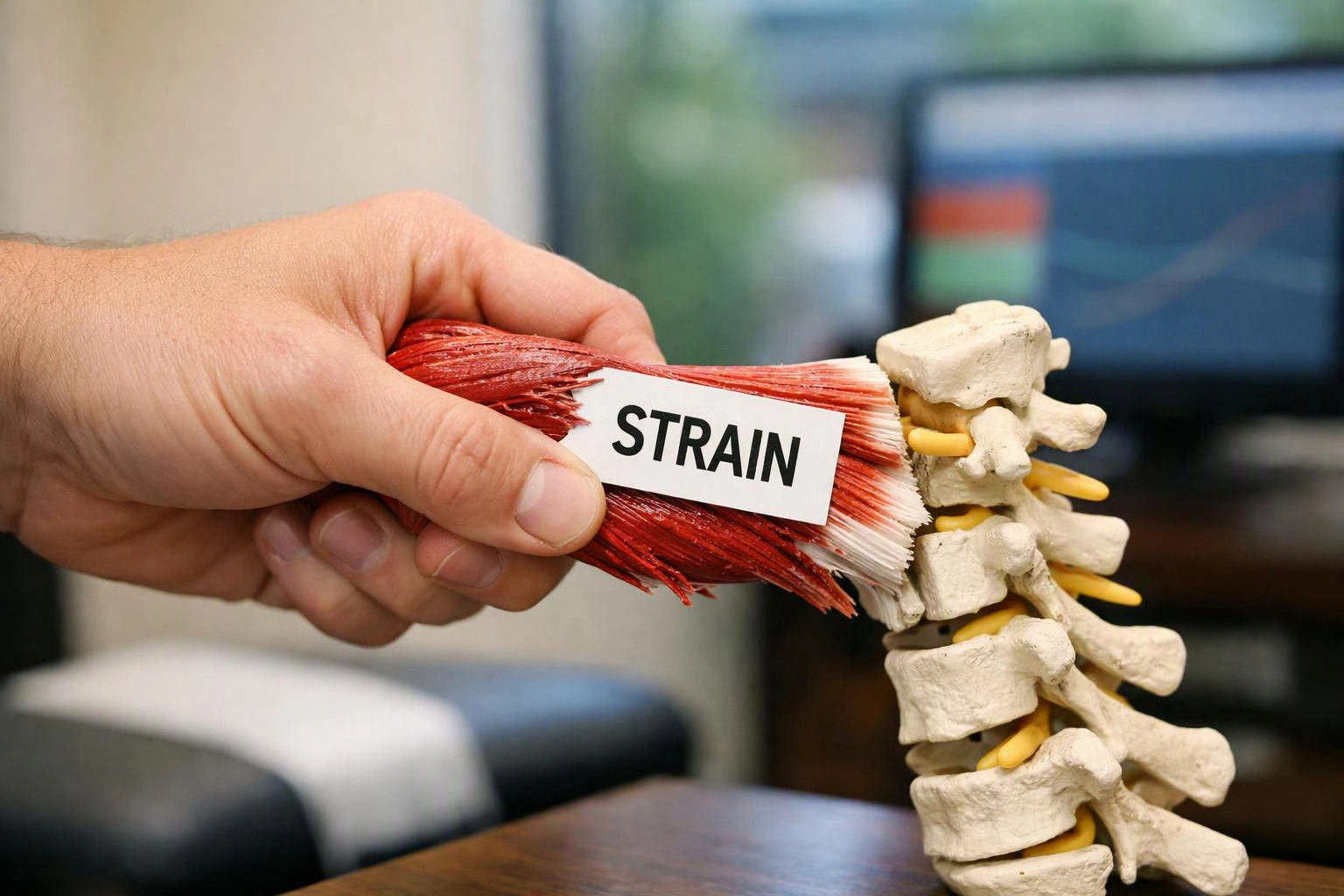
When we assess a possible strain after an auto accident, we ask how the force occurred and which movements reproduce symptoms. We examine tenderness, motion, and strength across the affected area. Our team also considers nearby joints and soft tissues so the strain is viewed within the person’s broader injury pattern.
Strain in Practice: A Real-World Example
A driver may develop a neck strain after a rear-end collision causes the head and torso to move suddenly. Neck stiffness and pain during rotation can guide the clinical examination.
Related Terms
Whiplash
Whiplash is a neck injury caused by rapid forward and backward movement of the head. The…
Range of Motion
Range of Motion is the amount and direction a joint can move through its available movement…
Muscle Imbalance
Muscle imbalance is a difference in strength, flexibility, activation, or endurance between muscles that share a…
Trigger Point
Trigger Point is a sensitive area within a muscle that may feel tight and produce pain…
Advanced Injury Care Clinic
Have Questions About Strain?
Contact Advanced Injury Care Clinic for practical guidance on Strain and related chiropractor work in Brentwood.