Glossary

What is Disc Herniation?

Disc Herniation is a spinal condition where the soft, gel-like center of a spinal disc pushes through a tear in the tougher outer layer. This can irritate nearby nerves, causing pain, numbness. Or weakness in the back, legs. Or arms. Disc herniations often occur in the lower back or neck and are commonly linked to aging, injury. Or improper lifting.

Reviewed by Advanced Injury Care ClinicSources reviewed: Mayo Clinic, Cleveland Clinic

Quick Facts About Disc Herniation

Category

Spinal injury

Used for

Explaining nerve-related back or neck pain

Common confusion

Often mistaken for muscle strain or arthritis

Also called

Herniated Disc, Slipped Disc

Often discussed with

Back Pain Treatment, Neck Pain Treatment

Key Takeaways About Disc Herniation

Understanding Disc Herniation
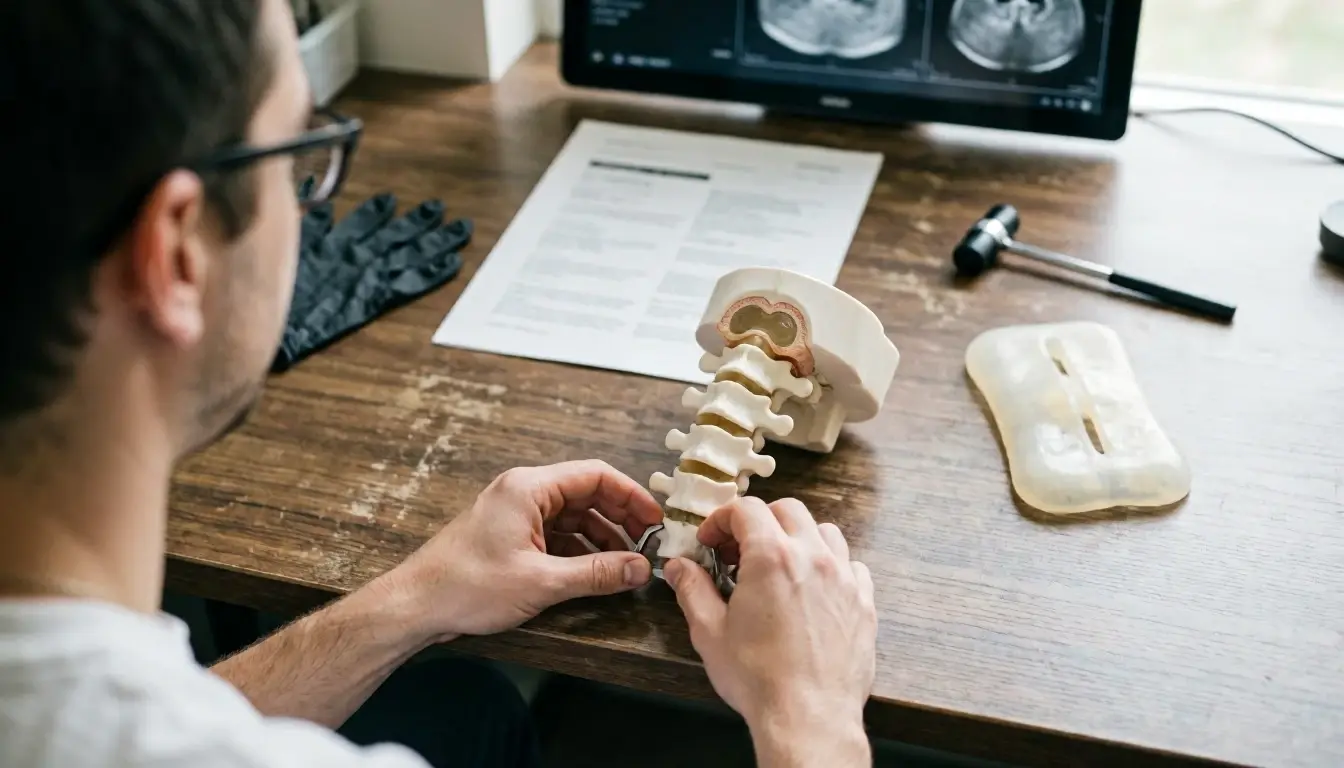
Disc Herniation in Chiropractor—Brentwood Estates

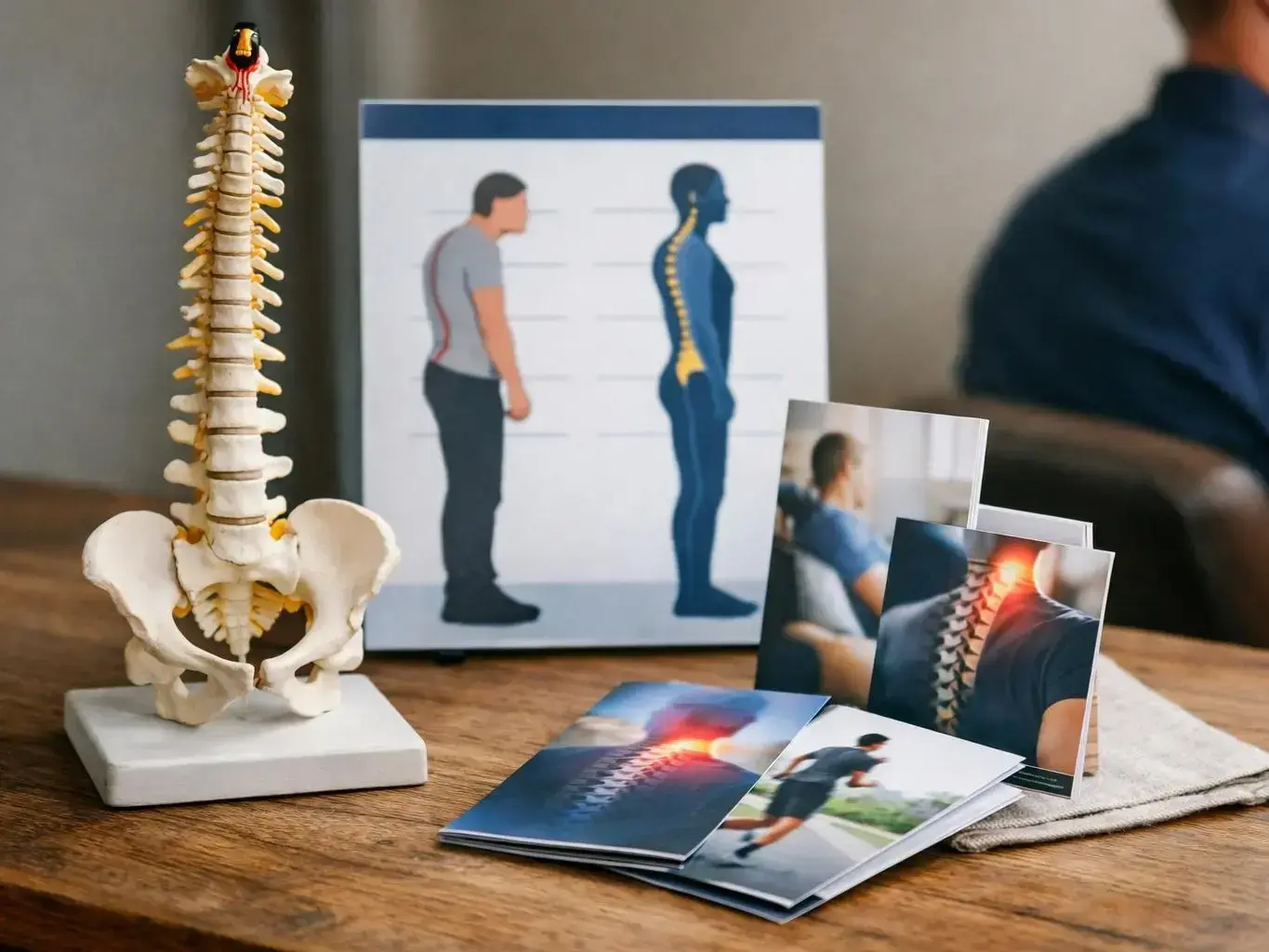
Disc herniation is a problem with the spine's cushions. These cushions are called discs.

Related glossary terms: Sciatica, Spinal Decompression, Chiropractic Care.

Discs sit between bones called vertebrae. These bones stack up to make the spine.

Each disc has a soft center. It's called the nucleus pulposus.

A tough outer ring surrounds it. This ring is the annulus fibrosus.

If the outer ring tears, the soft center can push out. This is a herniation.

The bulge can press on nerves. This causes pain, tingling. Or weakness.

Disc herniations happen most in the lower back. They also happen in the neck.

Discs lose water as we age. They become less flexible.

Sudden injuries can also cause herniation. Lifting heavy things wrong can do this.

Twisting the spine can cause it too. Symptoms may start right away or come slowly.

How Disc Herniation Works?

A herniated disc can press on nerves. This causes pain or other problems.

The spine protects nerves. But a herniated disc can take up their space.

A lower back herniation can press the sciatic nerve. This causes leg pain.

This leg pain is called sciatica. It can hurt a lot.

A neck herniation can cause arm or hand pain. It can also cause numbness or weakness.

Doctors diagnose herniation with tests. They may use an MRI or CT scan.

They check reflexes and muscle strength. They look for tender spots.

Many herniations get better with rest. Physical therapy can help too.

Pain relievers can ease the pain. Some cases need shots or surgery.

Why Disc Herniation Matters?

Disc herniation can hurt daily life. Pain can make moving hard.

It can stop people from doing normal things. Work can become harder too.

Sometimes it causes long-term pain. It can also damage nerves.

Early treatment helps avoid problems. It helps people get better faster.

Most herniations get better over time. Rest and care help a lot.

Good habits can prevent herniation. Stand and sit straight.

Lift things the right way. Stay active to keep your spine healthy.

When Disc Herniation Matters Most?

Some herniation symptoms are serious. They need quick medical help.

Loss of bladder or bowel control is one. So is severe muscle weakness.

Numbness in the legs can be bad too. These may mean cauda equina syndrome.

This is an emergency. It needs fast care to avoid nerve damage.

Some jobs and hobbies raise herniation risk. Heavy lifting is one.

Doing the same motion over and over is another. Sitting too long can also cause it.

Athletes and construction workers are at risk. So are office workers.

People with past back injuries should be careful. So should those with disc disease.

Watch for symptoms of herniation. Get help if you need it.

How to Evaluate Disc Herniation?

Related Concepts Compared

Disc Herniation vs. Bulging Disc

A bulging disc occurs when the disc extends beyond its normal boundary but does not rupture. While a herniated disc involves a tear in the outer layer with material leaking out.

Disc Herniation vs. Sciatica

Sciatica refers to pain radiating along the sciatic nerve, often caused by a herniated disc. But it can also result from other spinal conditions.

Disc Herniation vs. Degenerative Disc Disease

Degenerative disc disease involves the natural wear and tear of spinal discs over time. While disc herniation is typically a sudden event caused by injury or strain.

Expert Note

Disc herniations are often manageable with conservative care. But early intervention is key. Delaying treatment can lead to chronic pain or permanent nerve damage, especially if symptoms include progressive weakness or loss of sensation.

Common Mistakes or Myths About Disc Herniation

  • Assuming all back pain is due to a herniated disc, when it could be muscle strain or arthritis.
  • Ignoring symptoms like numbness or weakness, which may indicate nerve involvement.
  • Believing surgery is always necessary, when most herniated discs improve with conservative treatment.
  • Using improper lifting techniques, which can increase the risk of disc herniation.

Disc Herniation in Practice: A Real-World Example

A warehouse worker lifts a heavy box without bending his knees, feeling a sharp pain in his lower back. Over the next few days, he notices numbness and tingling down his right leg. An MRI confirms a herniated disc pressing on a nerve root. And he begins physical therapy to relieve symptoms.

Sources & Further Reading on Disc Herniation

Related Services

Related Terms

Sciatica

Sciatica is pain that radiates along the path of the sciatic nerve, which branches from the lower back through the hips and buttocks and down each leg. Sciatica typically affects only one side of the body and occurs when the nerve is compressed or irritated by a herniated disc, bone spur. Or muscle tightness.

Spinal Decompression

Spinal Decompression is a non-surgical treatment designed to relieve pressure on the spine and spinal nerves. This therapy uses a motorized table or device to gently stretch the spine, creating negative pressure within spinal discs. The goal is to promote healing, reduce pain. And improve mobility in conditions like herniated discs, sciatica.

Chiropractic Care

Chiropractic Care is a healthcare discipline focused on diagnosing and treating musculoskeletal disorders, particularly those related to the spine. Chiropractors use hands-on spinal adjustments and other manual techniques to improve joint function, reduce pain. And support the body’s natural ability to heal without surgery or medication. It's commonly used for back pain, neck pain, headaches.

Ligament Injury

Ligament Injury is damage to the tough, flexible bands of tissue that connect bones to other bones at joints. Ligament injuries typically occur when a joint is forced beyond its normal range of motion, causing stretching, partial tearing. Or complete rupture. Common examples include sprained ankles, torn knee ligaments. And wrist injuries, often resulting in pain, swelling. And instability.

Soft Tissue Injury

Soft Tissue Injury is damage to the body’s muscles, tendons, ligaments. Or other non-bony structures caused by sudden trauma, overuse. Or repetitive stress. Soft Tissue Injury includes sprains, strains, bruises. And tendinitis, often resulting in pain, swelling, limited movement. Or weakness. These injuries commonly occur during sports, accidents. Or daily activities and may require rest, therapy.

Advanced Injury Care Clinic

Have Questions About Disc Herniation?

Contact Advanced Injury Care Clinic for practical guidance on Disc Herniation and related chiropractor work in Brentwood Estates.

+1 615-777-0624