Glossary

What is Lumbar Spine?

Lumbar Spine is the lower section of the human spine, consisting of five large vertebrae labeled L1 through L5. These bones support most of the body’s weight, enable movement like bending and twisting. And protect the spinal cord and nerves running through the lower back.

Reviewed by ChiropractorBrentwoodEstates.comSources reviewed: American Association of Neurological Surgeons, National Institute of Arthritis and Musculoskeletal and Skin Diseases

Quick Facts About Lumbar Spine

Category

Anatomical structure

Used for

Weight support, movement, nerve protection

Common confusion

Often mistaken for the thoracic or cervical spine

Also called

Lower back, L-spine

Often discussed with

Back Pain Treatment, Work Injury Treatment

Key Takeaways About Lumbar Spine

Understanding Lumbar Spine
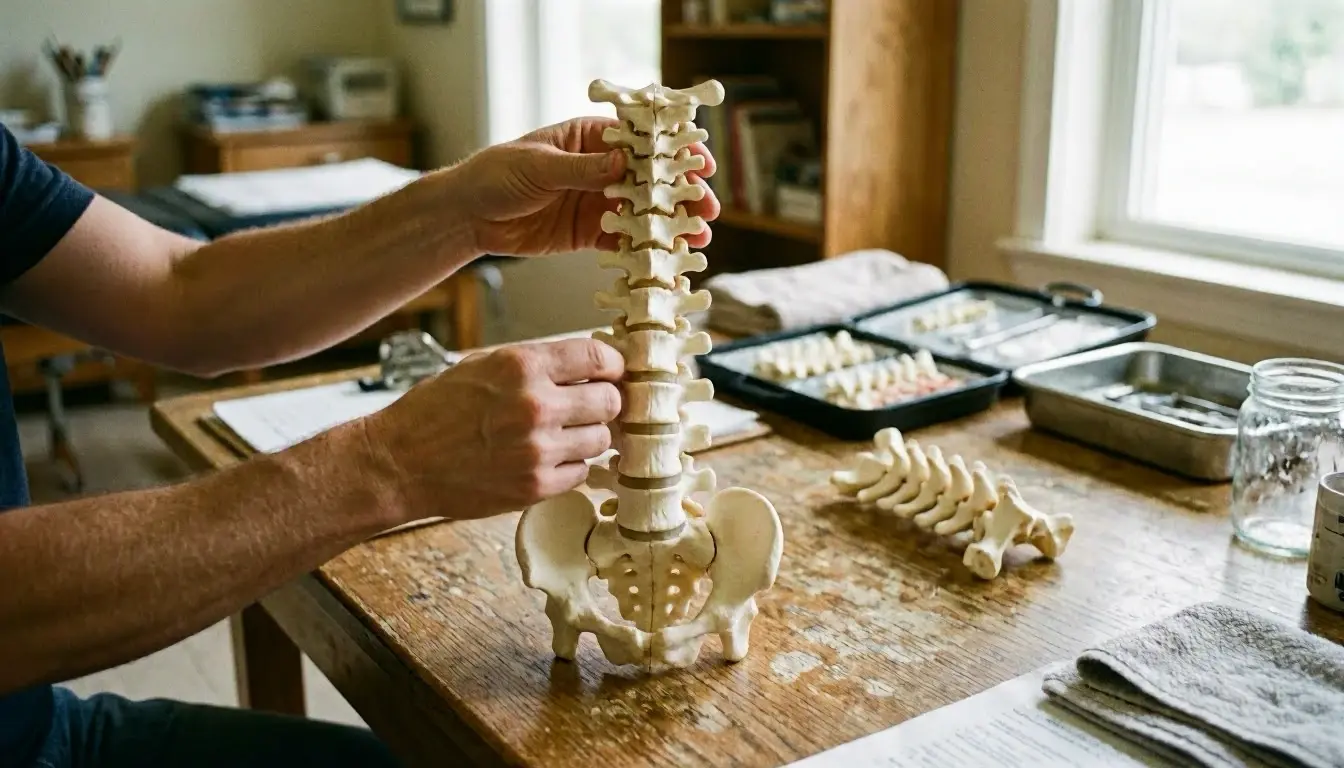
Lumbar Spine in Chiropractor: Lumbar Spine is the lower section of the human spine, consisting of—visual guide

Your lower back has a part called the lumbar spine. It sits between your ribs and hips.

Related glossary terms: Disc Herniation, Spinal Stenosis, Posture Correction.

It has five bones called vertebrae. They are named L1 to L5 from top to bottom.

These bones are big and strong. They hold up most of your body’s weight.

The lumbar spine connects to muscles and ligaments. These help your back stay steady.

They also let you bend, twist. And move. You can lean forward or to the side.

Each bone has a cushion called a disc. Discs stop bones from rubbing together.

They act like shock absorbers. This keeps your spine safe when you move.

The lumbar spine also protects your spinal cord. Nerves branch out to your legs and feet.

Some nerves go to organs in your pelvis too. This area carries lots of weight.

It moves a lot. So injuries happen often. Common problems are herniated discs or arthritis.

How the Lumbar Spine Works?

The lumbar spine acts like a support column. It also works like a flexible rod.

When you stand or sit, bones stack on top. They spread weight evenly.

It has a natural curve called lordosis. This curve helps absorb shock.

It also helps you keep your balance. Too much or too little curve causes pain.

Nerves from the lumbar spine go to your legs. They help you move and feel.

If a disc slips or a bone moves, it can press on nerves. This causes pain or numbness.

It can make your legs feel weak too. This problem is called sciatica.

Muscles in your belly, hips. And back support your spine. They work together when you lift.

They also help when you walk or sit. This keeps your spine steady.

Why the Lumbar Spine Matters?
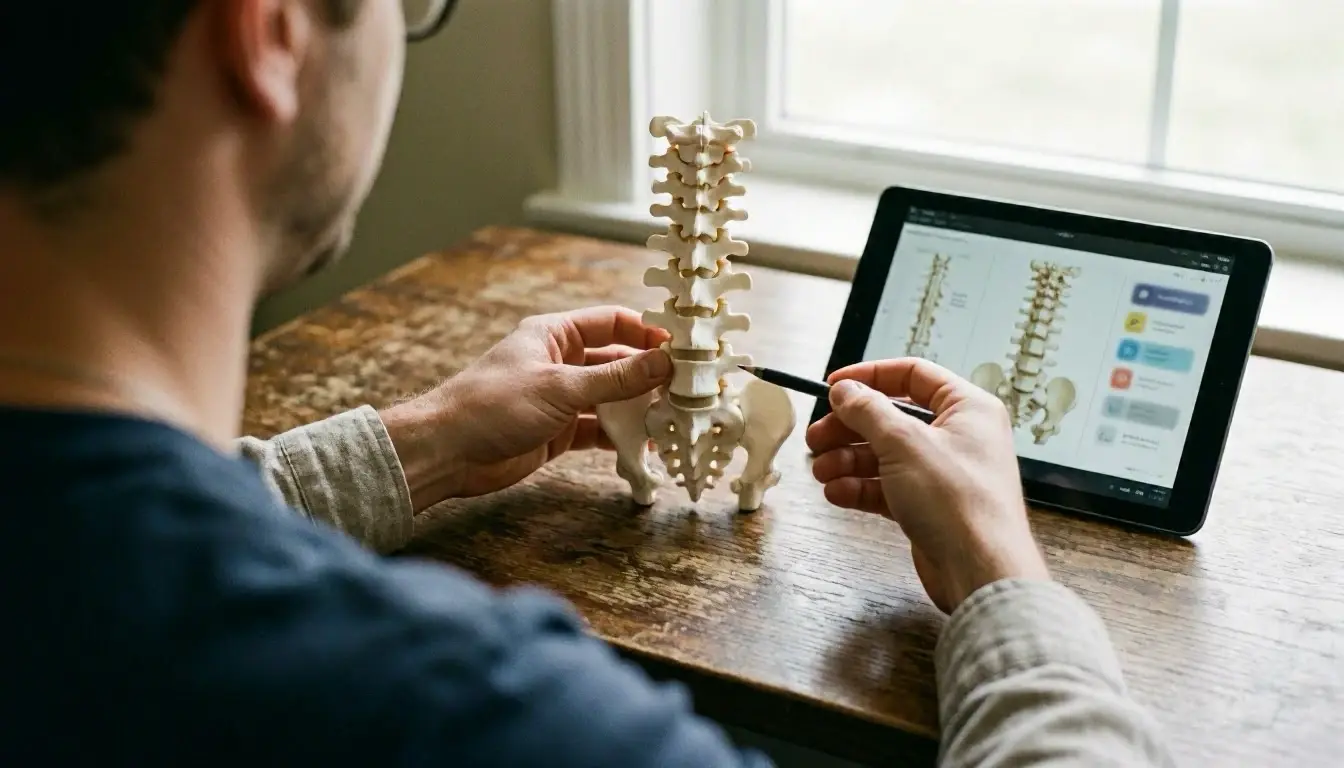
How Lumbar Spine applies to Chiropractor services in Brentwood Estates, United States—practical illustration

Your lumbar spine helps you every day. It lets you stand, walk. And lift things.

Without it, simple tasks would hurt. It carries lots of weight.

This makes it wear out faster than other spine parts. Bad posture can hurt it.

So can doing the same movements over and over. Sudden injuries can cause problems too.

Common issues are muscle strains or slipped discs. Another is spinal stenosis (a narrow spine).

A healthy lumbar spine stops long-term pain. Strong belly muscles help protect it.

Learn how to lift things the right way. Use chairs and desks that fit you well.

If problems happen, treatments can help. Chiropractic care (spine adjustments) works for many.

Physical therapy (exercises) can help too. Simple changes in daily life also ease pain.

Most people don’t need surgery. These treatments often fix the problem.

When Lumbar Spine Matters Most?

The lumbar spine matters most when you lift or bend. It also matters when you sit a lot.

Jobs like construction or nursing strain the lower back. Lifting heavy things causes stress.

Sitting too long weakens back muscles. This can make your back stiff or sore.

Sudden moves like twisting while lifting hurt the spine. Falls can injure it too.

Athletes, workers. And older adults get hurt more often. Common problems are slipped discs.

Arthritis (joint pain) and stenosis (narrow spine) also happen. These cause pain down the legs.

They make standing, walking. Or sleeping hard. Getting help early stops worse problems.

People in Brentwood Estates, TN, stay active. They play sports and work at desks.

Keeping the lumbar spine healthy helps them stay pain-free. Local chiropractors see many patients.

These patients have car accidents or work injuries. Some have wear and tear from daily life.
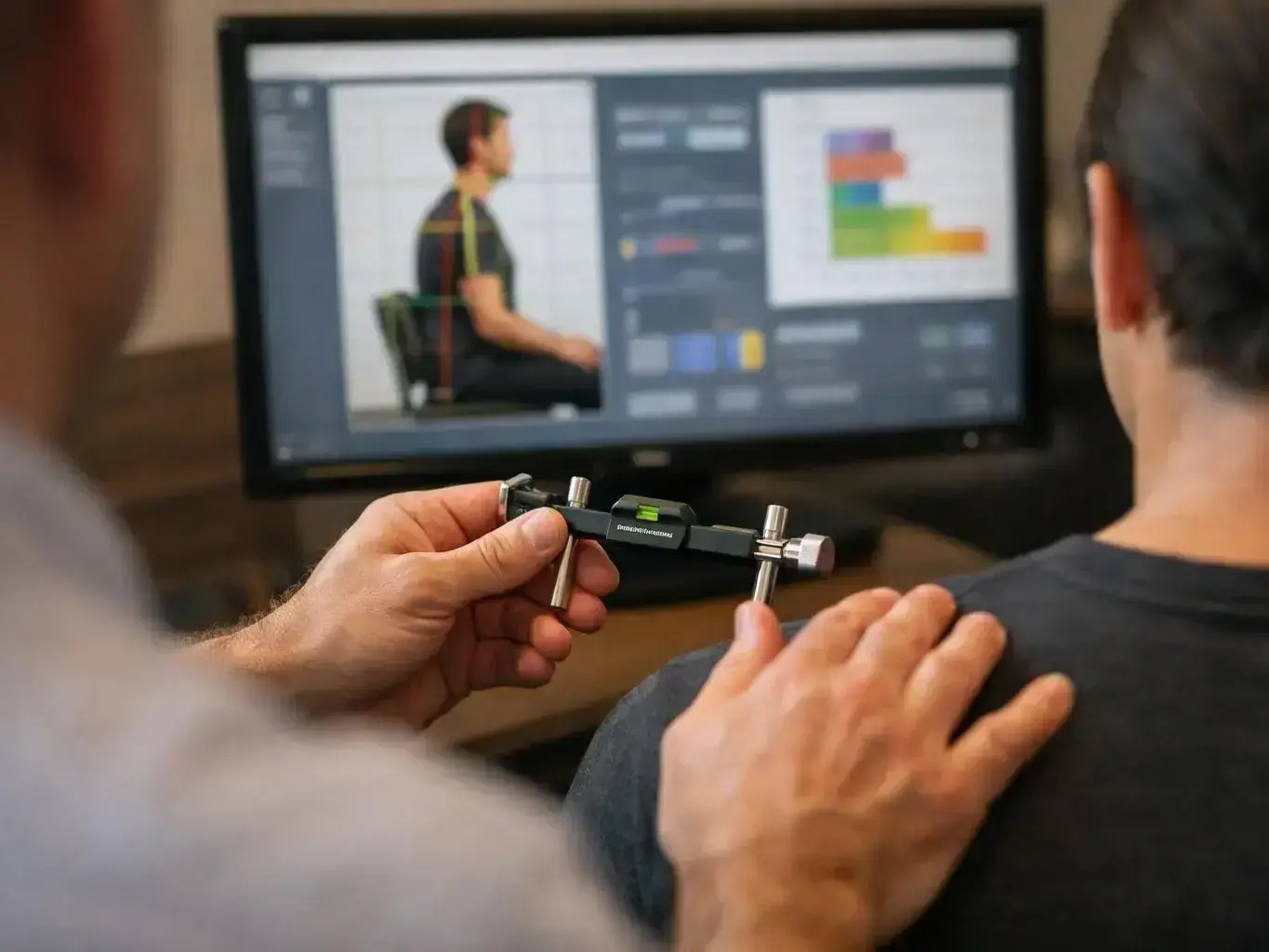
How to Evaluate Lumbar Spine?

Related Concepts Compared

Lumbar Spine vs. Thoracic Spine

The thoracic spine is the middle section of the spine, attached to the rib cage. And is less flexible than the lumbar spine.

Lumbar Spine vs. Cervical Spine

The cervical spine is the neck region, consisting of seven smaller vertebrae that support the head and allow head movement.

Lumbar Spine vs. Sacrum

The sacrum is a triangular bone at the base of the spine, below the lumbar spine, that connects to the pelvis.

Expert Note

The lumbar spine’s natural curve is essential for shock absorption. But excessive curvature (hyperlordosis) can strain muscles and discs. Gentle stretching and core strengthening often help restore balance.

Common Mistakes or Myths About Lumbar Spine

  • Ignoring lower back pain, assuming it will go away on its own.
  • Lifting heavy objects with a rounded back instead of bending the knees.
  • Sitting for hours without breaks or proper back support.
  • Confusing lumbar spine pain with kidney or hip problems.
  • Thinking surgery is the only fix for lumbar spine issues.

Lumbar Spine in Practice: A Real-World Example

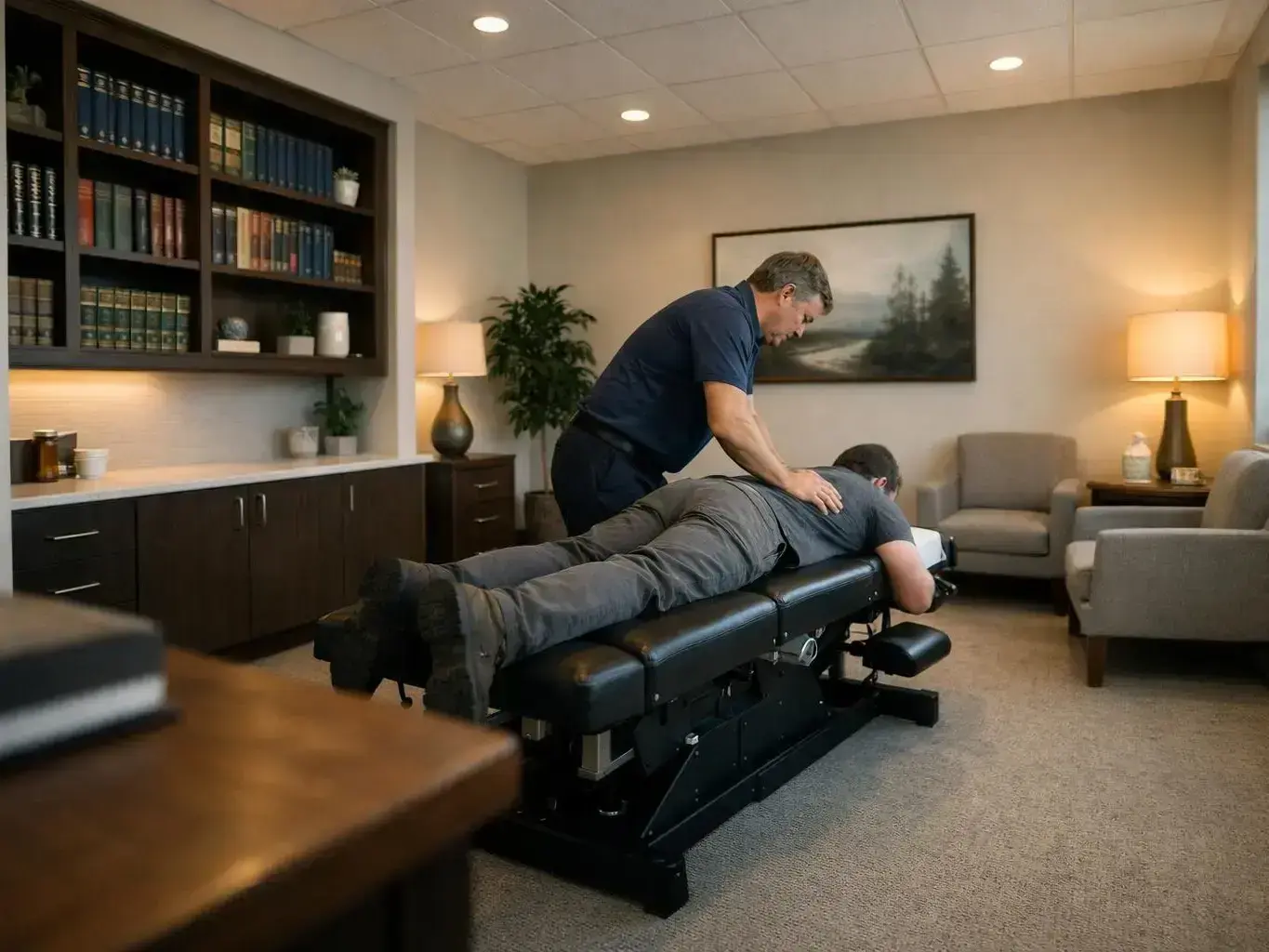
After lifting a heavy box at work, a patient feels sharp pain in their lower back that shoots down their left leg. An MRI shows a herniated disc pressing on a nerve in the lumbar spine, causing sciatica. Chiropractic adjustments and physical therapy help relieve the pressure and restore mobility.

Related Services

Related Terms

Disc Herniation

Disc Herniation is a spinal condition where the soft inner gel of a spinal disc leaks through a tear in the tough outer layer, often pressing on nearby nerves. This can cause pain, numbness. Or weakness in the back, arms. Or legs. Disc herniations commonly occur in the lower back or neck and result from aging, injury. Or repetitive strain.

Spinal Stenosis

Spinal Stenosis is a narrowing of the spaces within the spine, which can put pressure on the nerves that travel through it. This condition most commonly occurs in the lower back (lumbar spine) and neck (cervical spine) and often develops as people age due to wear-and-tear changes in the spine. Symptoms may include pain, numbness, muscle weakness.

Posture Correction

Posture Correction is the process of identifying and improving the alignment of the spine, shoulders, hips. And other body parts to reduce strain, prevent pain. And support long-term musculoskeletal health. It involves exercises, stretches, ergonomic adjustments.

Chiropractic Adjustment

Chiropractic Adjustment is a hands-on procedure where a trained chiropractor applies controlled force to a specific joint in the spine or other body parts. The goal is to improve joint motion, reduce pain. And support the body’s natural ability to heal. Adjustments are a core part of chiropractic care and are often used to treat back pain, neck pain, headaches.

ChiropractorBrentwoodEstates.com

Have Questions About Lumbar Spine?

Contact ChiropractorBrentwoodEstates.com for practical guidance on Lumbar Spine and related chiropractor work in Brentwood Estates.

+1 615-777-0624