Understanding Magnetic Resonance Imaging

MRI is a safe way to see inside your body. It stands for Magnetic Resonance Imaging. It doesn't cut or hurt you.
It uses a big magnet and radio waves. These make pictures of organs and muscles. They also show soft tissues.
These pictures help doctors and chiropractors. They can spot problems like herniated discs. They can also see nerve or joint damage.
X-rays or CT scans might miss these problems. MRI doesn't use radiation. It's safer for repeated use.
During an MRI, you lie on a table. The table slides into a big tube. The tube is the MRI machine.
The machine makes a strong magnetic field. This lines up your body's hydrogen atoms. Radio waves then knock them out of place.
When the atoms go back, they send out signals. A computer turns these into pictures. The pictures show slices of your body.
The scan doesn't hurt. But some people feel uncomfortable. The machine is small inside.
You must lie very still. The machine makes loud knocking sounds. You'll get earplugs or headphones.
How Magnetic Resonance Imaging Works?
MRI uses magnets and radio waves. Your body is mostly water. Water has hydrogen atoms.
The magnet lines up these atoms. Radio waves then knock them out of line. When they go back, they release energy.
The MRI scanner picks up this energy. It uses it to make pictures. These pictures are very detailed.
MRI can tell muscles apart from ligaments. It can also show spinal discs. Other scans can't do this as well.
The scanner takes pictures from many angles. It shows side views, front views. And top views. This gives a full look at the area.
This helps chiropractors and doctors. They can find problems more easily. They can also make better treatment plans.
Why Magnetic Resonance Imaging Matters?
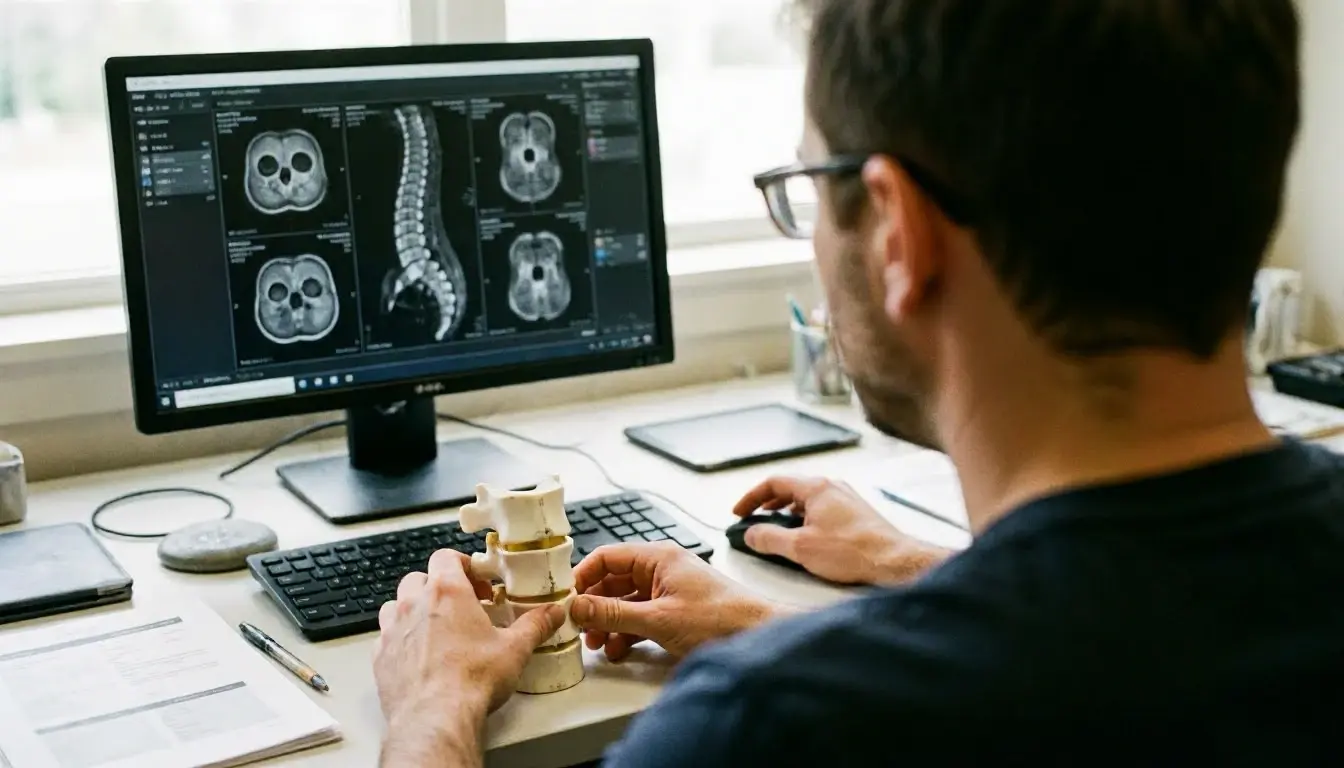
MRI scans show things other scans can't. X-rays are good for bones. But they don't show muscles or ligaments.
CT scans show soft tissues better. But they still don't match MRI. MRI is clearer for soft tissues.
This makes MRI great for some problems. It can spot disc herniations. It can also find nerve or muscle issues.
People often see chiropractors for these problems. MRI helps find them early. Early treatment can stop worse problems later.
MRI can also check on treatment. It can see how a herniated disc is doing. It shows if chiropractic care or therapy is helping.
When Magnetic Resonance Imaging Matters Most?
Doctors often order MRI scans. They do this when exams or X-rays aren't enough. For example, if back pain won't go away.
MRI can find hidden problems. These might be herniated discs or pinched nerves. It can also show spinal stenosis (a narrow spine).
MRI is used after bad injuries. Car accidents or sports injuries can hurt soft tissues. X-rays might miss these.
Sometimes MRI rules out serious problems. For example, sudden back pain with lost control. MRI can check for cauda equina syndrome.
This is a rare but serious problem. It needs surgery right away. Chiropractors may send patients for MRI if they suspect this.
They also use MRI for other reasons. It helps confirm a diagnosis. It shows if treatment is safe to start.