
What Is the Cervical Spine?
The cervical spine is the upper section of the spinal column located in the neck. It contains vertebrae, discs, joints, ligaments, muscles, and nerves that support the head and allow neck movement. This region also helps protect the upper spinal cord and connects the skull with the thoracic spine.
Quick Facts About Cervical Spine
Category
Anatomical region
Used for
Assessing neck structure and movement
Common confusion
The cervical spine is not the entire spinal column
Also called
Neck Spine, Cervical region
Often discussed with
Neck Pain Treatment, Auto Accident Injury Treatment
Key Takeaways About Cervical Spine
- The cervical spine is the neck portion of the spinal column.
- Its joints and discs help control head and neck movement.
- Neck pain does not always come from the spine itself.
How Cervical Spine Works
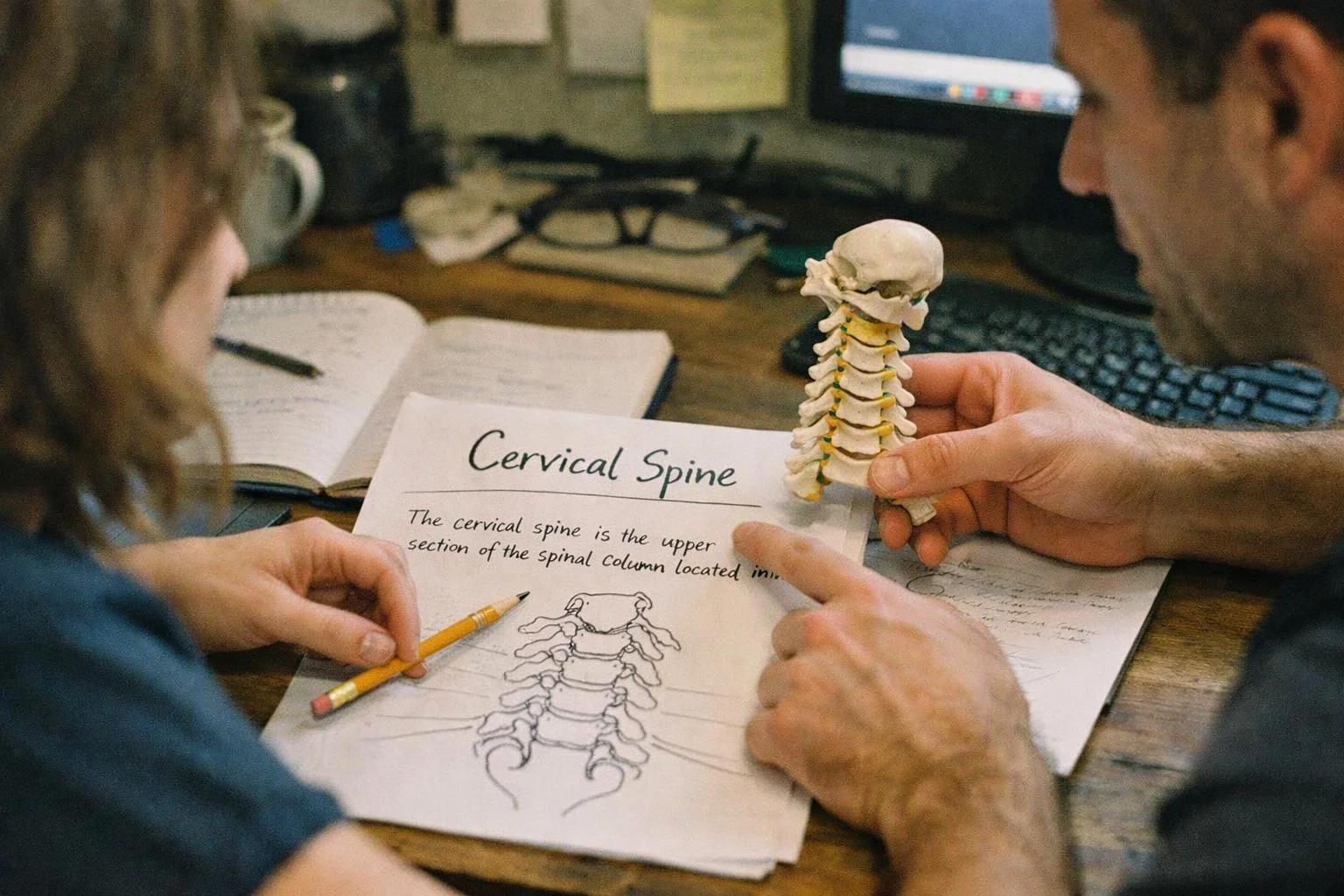
The cervical spine supports the head while allowing controlled bending, rotation, and side-to-side movement. Small joints guide motion between neighboring vertebrae. Discs between many vertebrae help distribute pressure during ordinary movement.
Related glossary terms: Cervical Lordosis, Thoracic Spine, Range of Motion.
Nerves leave the spinal cord through openings between the vertebrae and travel toward the shoulders, arms, and hands. Muscles and ligaments help control alignment and stability during movement. A clinical assessment may examine posture, neck range of motion, muscle activity, and symptoms that extend beyond the neck.
Cervical lordosis describes the natural inward curve of the neck. Changes in this curve can appear alongside altered posture, muscle tension, or movement limits, but the curve alone does not identify the source of pain.
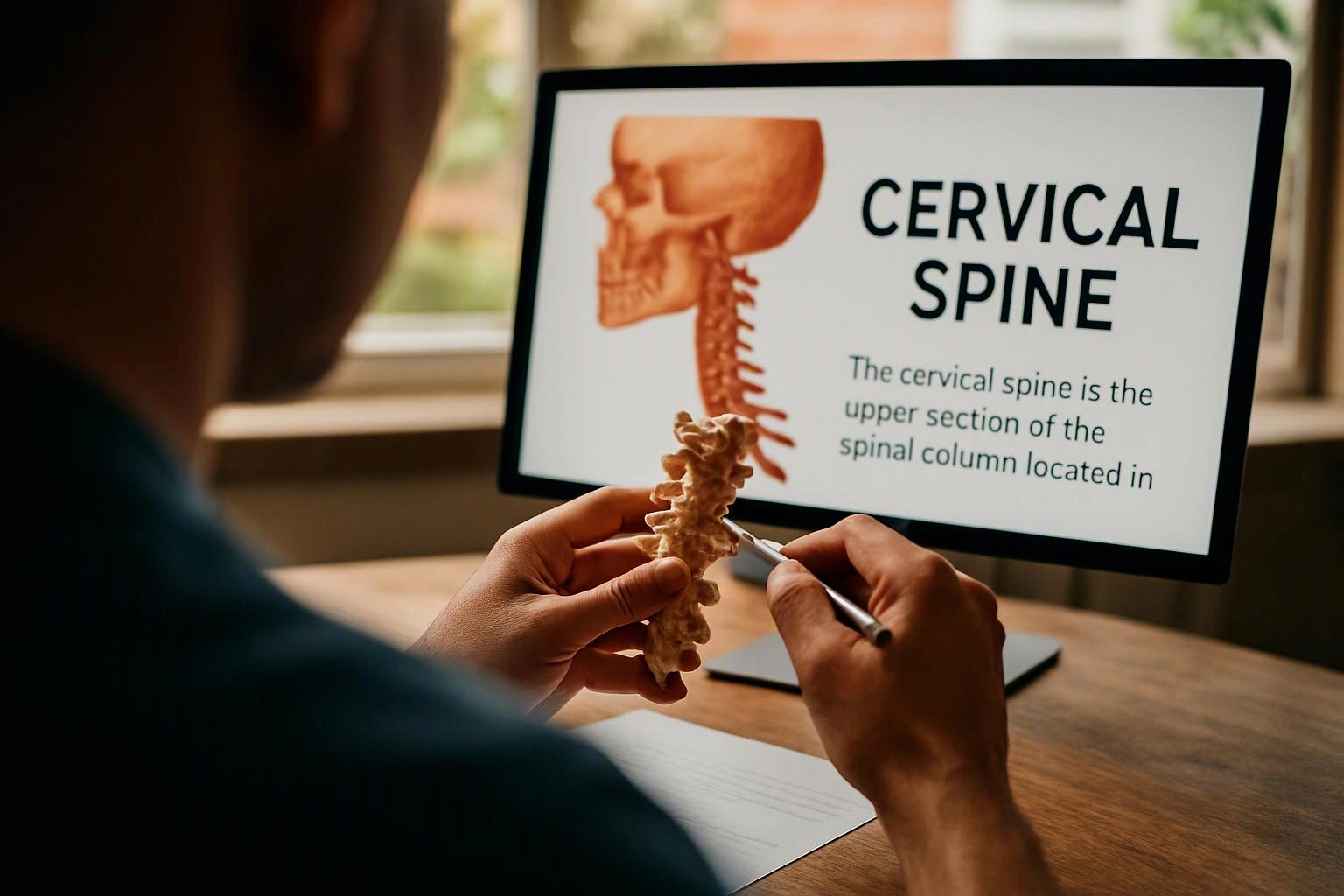
From the Advanced Injury Care Clinic team
When we assess the cervical spine during Neck Pain Treatment, we consider neck movement, posture, muscle response, and symptom patterns together. Our team also checks whether discomfort stays in the neck or travels into the shoulder, arm, or hand. These findings help guide the clinical plan.
Cervical Spine in Practice: A Real-World Example
A person with neck stiffness after a rear-end collision may have limited rotation and discomfort near the cervical spine. During Neck Pain Treatment, the assessment may compare movement in several directions and check whether symptoms extend into the arm.
Related Terms
Cervical Lordosis
Cervical Lordosis is the natural inward curve of the neck, formed by the cervical vertebrae when…
Thoracic Spine
Thoracic Spine is the middle section of the vertebral column, located between the cervical spine in…
Range of Motion
Range of Motion is the amount and direction a joint can move through its available movement…
Whiplash
Whiplash is a neck injury caused by rapid forward and backward movement of the head. The…
Advanced Injury Care Clinic
Have Questions About Cervical Spine?
Contact Advanced Injury Care Clinic for practical guidance on Cervical Spine and related chiropractor work in Brentwood.