
What Is Muscle Imbalance?
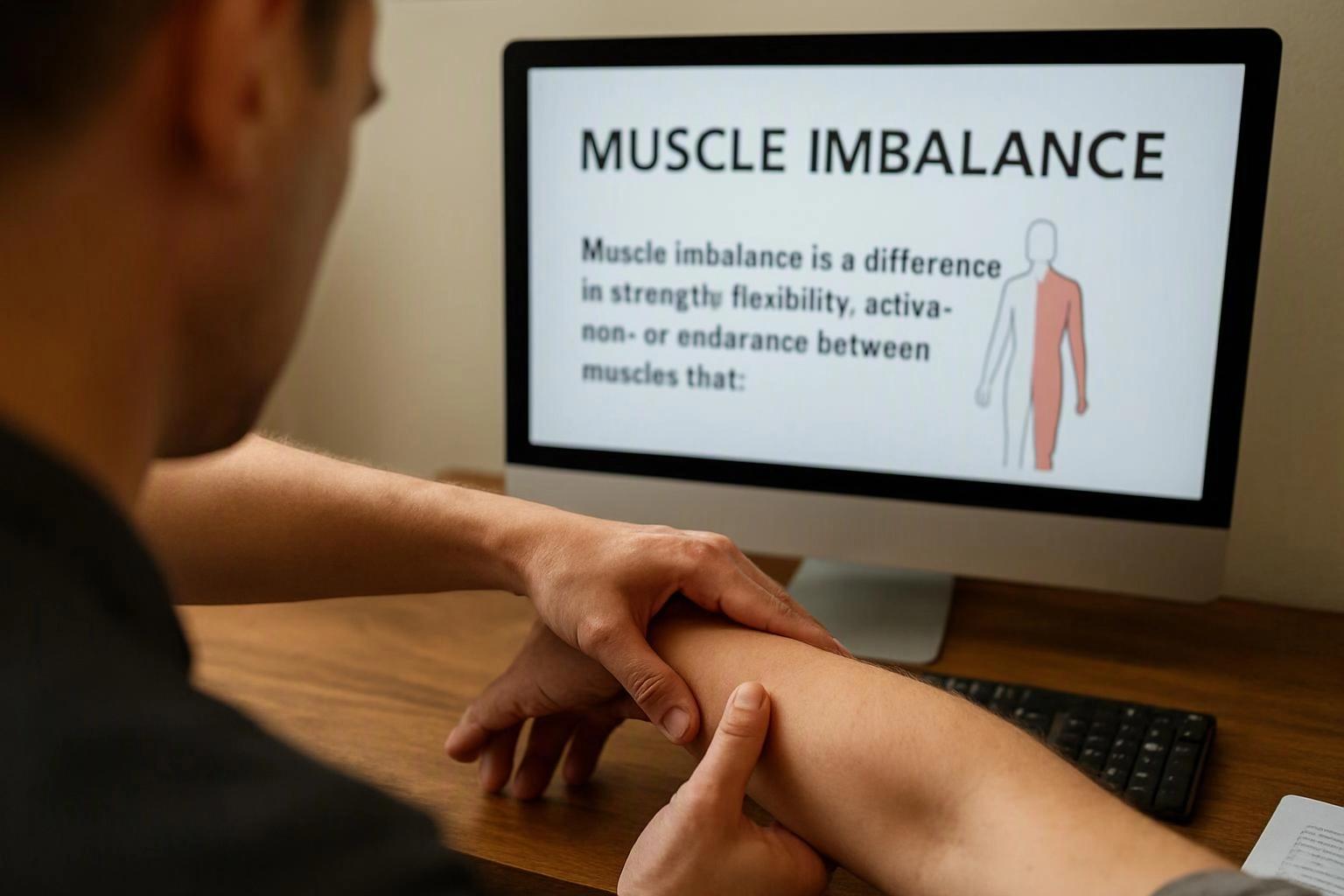
Muscle imbalance is a difference in strength, flexibility, activation, or endurance between muscles that share a movement or support a joint. One muscle group may work harder while another contributes less. The pattern can affect posture, movement control, and exercise technique without identifying a specific injury by itself.
Quick Facts About Muscle Imbalance
Category
Movement and muscle function
Used for
Exercise planning and movement analysis
Common confusion
Not a diagnosis of tissue damage
Also called
Muscular Imbalance, Muscle imbalance pattern
Often discussed with
Corrective Exercise Therapy, Postural Correction
Key Takeaways About Muscle Imbalance
- Muscles may differ in strength, flexibility, activation, or endurance.
- Movement patterns reveal how muscles share work.
- Muscle imbalance is not the same as a diagnosed injury.
How Muscle Imbalance Works
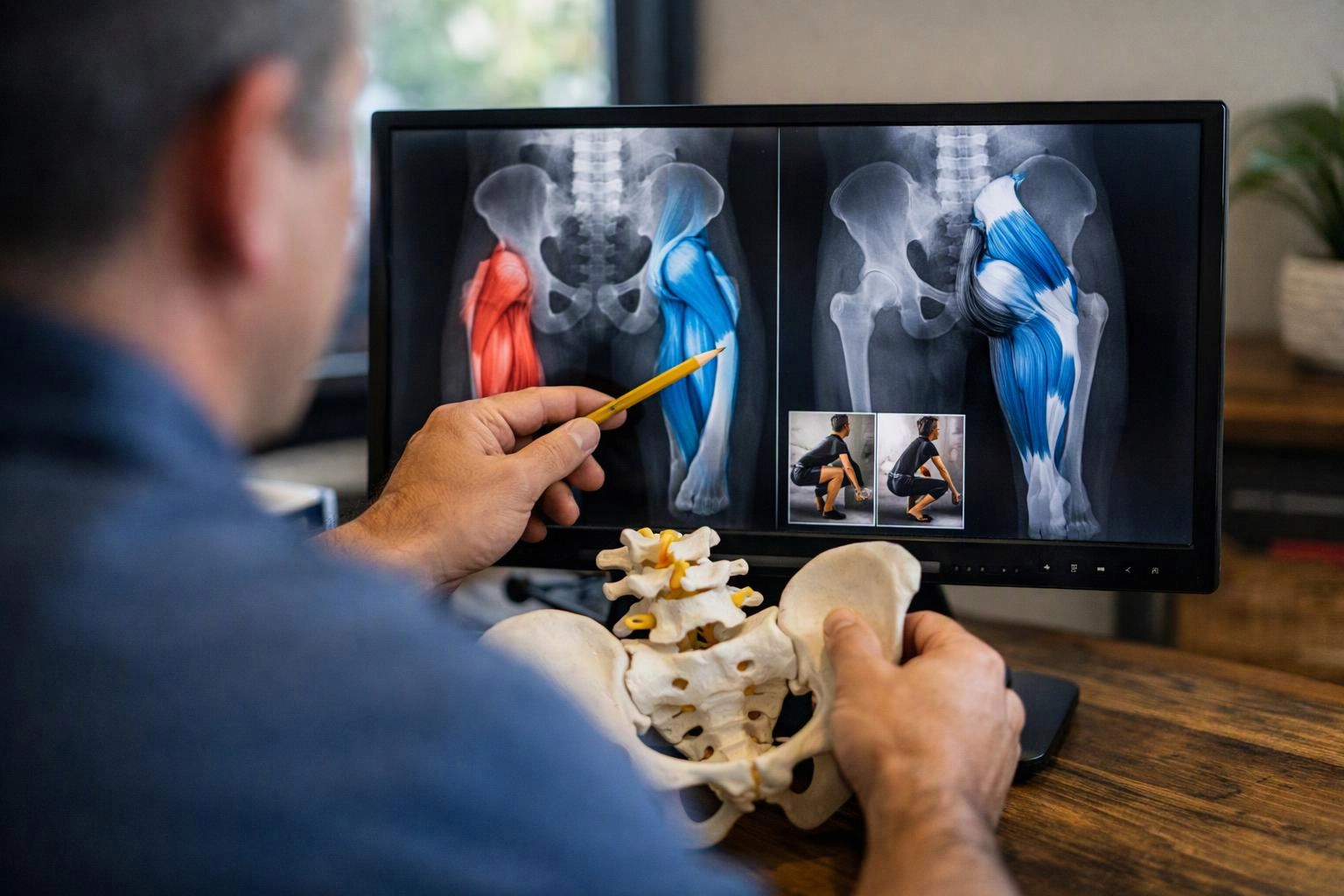
Muscle imbalance develops when muscles that share a task do not contribute evenly. Differences may involve strength, flexibility, timing, or endurance. A person may shift weight, change joint position, or recruit nearby muscles to complete a movement.
Related glossary terms: Core Stabilization, Posture Assessment, Neuromuscular Reeducation.
Assessment looks at movement quality and muscle performance during tasks such as a squat, lunge, reach, or posture check. The goal is to identify patterns that may affect control. Corrective Exercise Therapy may then pair mobility work with strengthening, coordination drills, or position changes. Progress depends on how consistently the body performs the intended movement.
From the Advanced Injury Care Clinic team
When we assess muscle imbalance, we watch how the body controls a familiar movement and compare muscle effort across the task. We then select corrective exercises that address the observed pattern, such as improving mobility, building strength, or practicing better coordination.
Muscle Imbalance in Practice: A Real-World Example
A person may shift the pelvis during a squat because one hip has less mobility and the opposite side contributes more effort. Corrective Exercise Therapy may pair hip mobility work with controlled strengthening and repeated movement practice.
Related Services
Related Terms
Core Stabilization
Core Stabilization is a corrective exercise approach that improves control of the muscles supporting the spine…
Posture Assessment
Posture Assessment is a clinical observation process that examines body alignment, balance, movement habits, and related…
Neuromuscular Reeducation
Neuromuscular Reeducation is a therapeutic exercise approach that retrains coordination between the nervous system and muscles…
Range of Motion
Range of Motion is the amount and direction a joint can move through its available movement…
Advanced Injury Care Clinic
Have Questions About Muscle Imbalance?
Contact Advanced Injury Care Clinic for practical guidance on Muscle Imbalance and related chiropractor work in Brentwood.