
What Is Disc Degeneration?
Disc Degeneration is a gradual change in the intervertebral discs between spinal bones. The discs may lose water, flexibility, and height, which can alter spinal movement and load sharing. Degeneration often develops with aging, but injury, repeated strain, and individual anatomy can also influence its progression and symptoms.
Quick Facts About Disc Degeneration
Category
Spinal disc condition
Used for
Describing disc structure and function
Common confusion
Not synonymous with disc herniation
Also called
Degenerative Disc Disease, DDD
Often discussed with
Back Pain Treatment, Spinal Decompression Therapy
Key Takeaways About Disc Degeneration
- Disc changes do not always explain pain.
- Movement and load tolerance can change over time.
- Degeneration is not the same as a disc herniation.
How Disc Degeneration Works
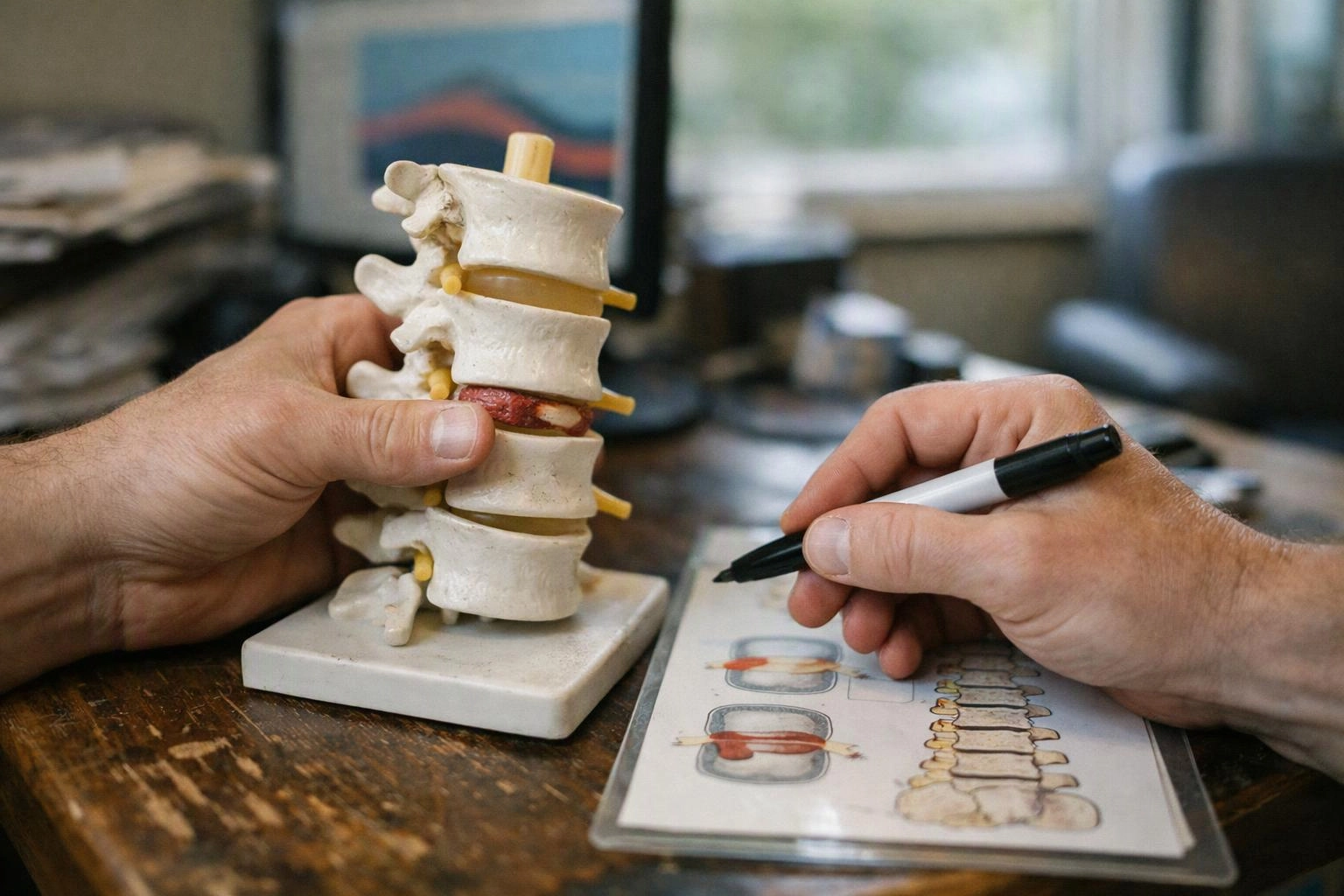
Disc Degeneration develops when an intervertebral disc changes in structure and function. The disc may hold less water and become less flexible, which can affect how nearby spinal joints share movement and pressure. These changes may occur without pain, while symptoms can also reflect surrounding muscles, joints, or nerves.
Related glossary terms: Intervertebral Disc, Disc Herniation, Lumbar Spine.
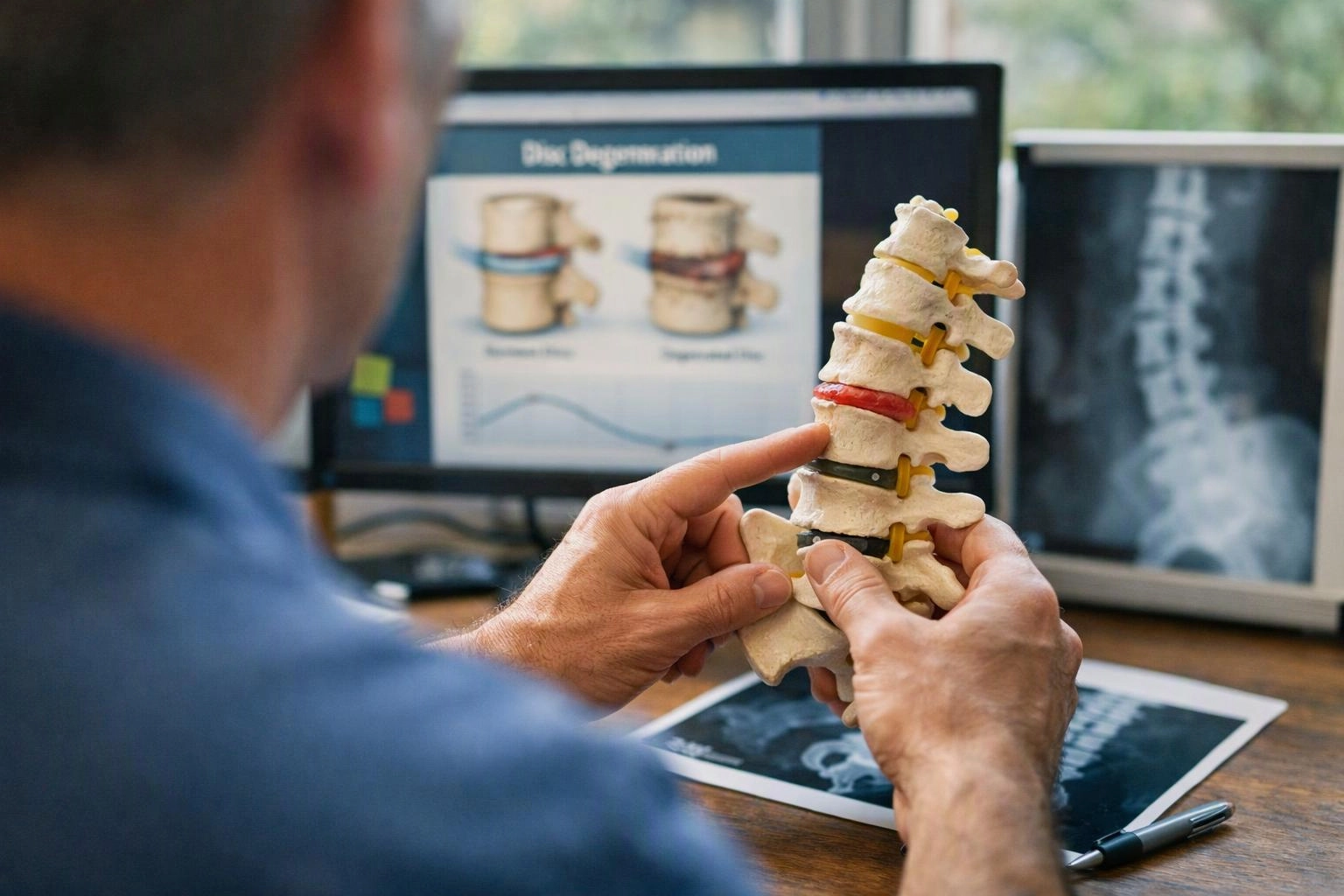
Clinicians consider the person’s symptoms, movement pattern, physical findings, and available imaging together. An X-ray may show changes in disc height or nearby bone, while other imaging can show soft tissues in greater detail. Imaging findings alone do not establish the cause of back pain. The practical goal is to connect structural findings with movement limits and the person’s reported symptoms.
From the Advanced Injury Care Clinic team
When we assess Disc Degeneration during back pain treatment, we consider the person’s symptoms alongside movement, strength, and functional tolerance. We use the term to describe a structural finding, not as a complete explanation for every symptom. Our team also watches for signs that suggest involvement of nearby joints, muscles, or nerves.
Disc Degeneration in Practice: A Real-World Example
A person with recurring low back pain may have imaging that shows disc height changes in the lumbar spine. During back pain treatment, the clinician also checks how bending, sitting, lifting, and walking affect symptoms before connecting the imaging finding to daily function.
Related Services
Related Terms
Intervertebral Disc
An Intervertebral Disc is a flexible, cushion-like structure between adjacent spinal bones, called vertebrae. Each disc…
Disc Herniation
Disc herniation is a condition in which the soft inner material of an intervertebral disc pushes…
Lumbar Spine
Lumbar Spine is the lower section of the spinal column between the thoracic spine and pelvis…
Spinal Stenosis
Spinal Stenosis is a narrowing of the spaces within the spine that can reduce room for…
Advanced Injury Care Clinic
Have Questions About Disc Degeneration?
Contact Advanced Injury Care Clinic for practical guidance on Disc Degeneration and related chiropractor work in Brentwood.