
What Is the Thoracic Spine?
Thoracic Spine is the middle section of the vertebral column, located between the cervical spine in the neck and the lumbar spine in the lower back. It contains the vertebrae that connect with the ribs and helps support the chest, protect the spinal cord, and coordinate movement between the upper back and trunk.
Quick Facts About Thoracic Spine
Category
Spinal region
Used for
Upper-back structure and movement
Common confusion
Not the neck or lower back
Also called
Mid Back Spine, Thoracic region
Often discussed with
Back Pain Treatment
Key Takeaways About Thoracic Spine
- Rib connections distinguish the thoracic spine from other spinal regions.
- Movement includes bending, rotation, and coordination with breathing mechanics.
- Thoracic pain does not always come from the spine itself.
How Thoracic Spine Works
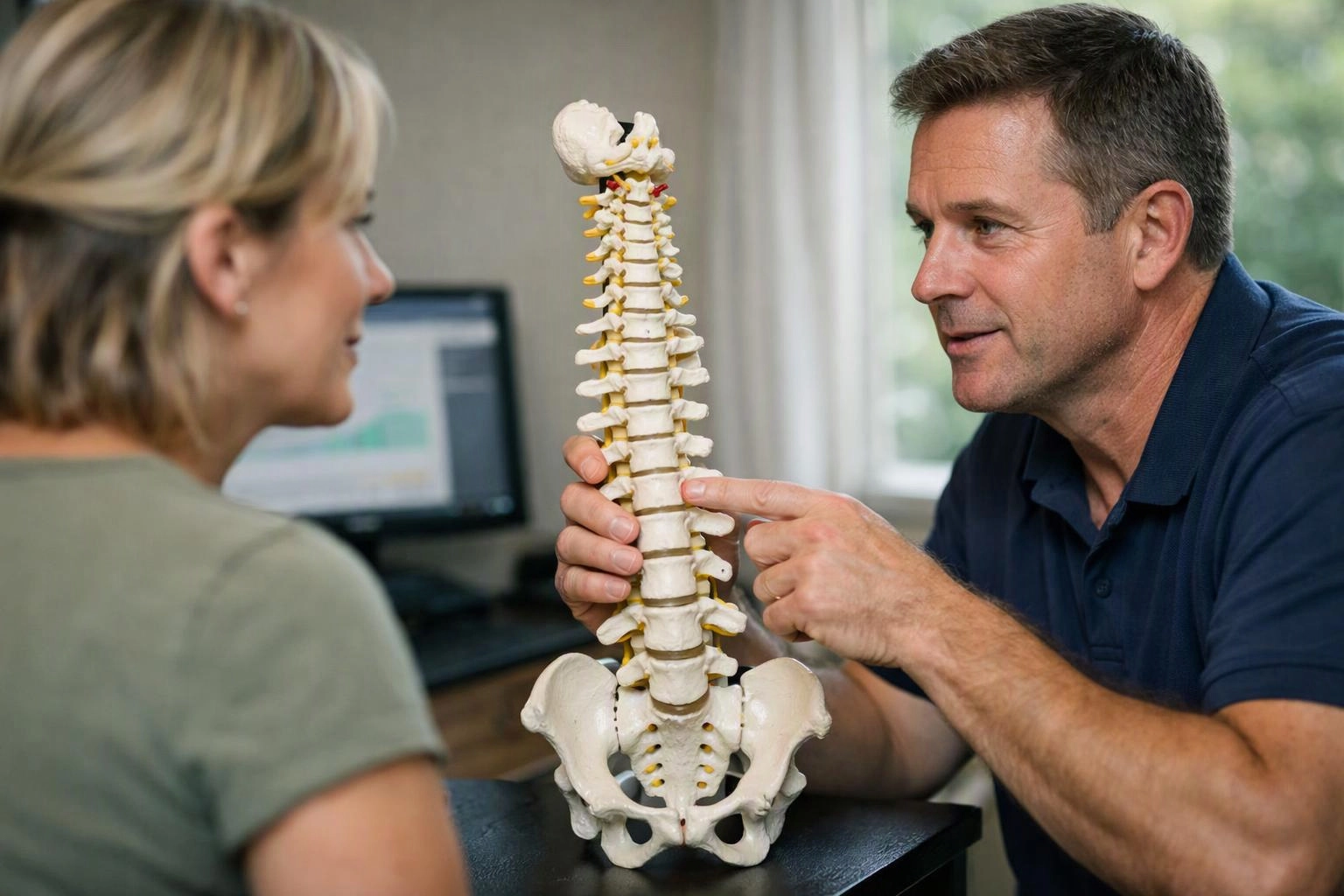
The thoracic spine works as a flexible support between the neck and lower back. Its vertebrae connect with the ribs, so movement in this region affects the chest wall and upper trunk. The spinal joints allow bending and rotation while maintaining protection for the spinal cord.
Related glossary terms: Cervical Spine, Lumbar Spine, Facet Joint.
Clinicians assess the thoracic spine through posture, joint movement, muscle control, and symptoms during specific activities. A facet joint may contribute to localized stiffness, while nearby muscles can affect how the region moves. The intervertebral disc also helps separate adjoining vertebrae and distribute physical loads. These findings help place upper-back discomfort in its broader movement and structural context.
From the Advanced Injury Care Clinic team
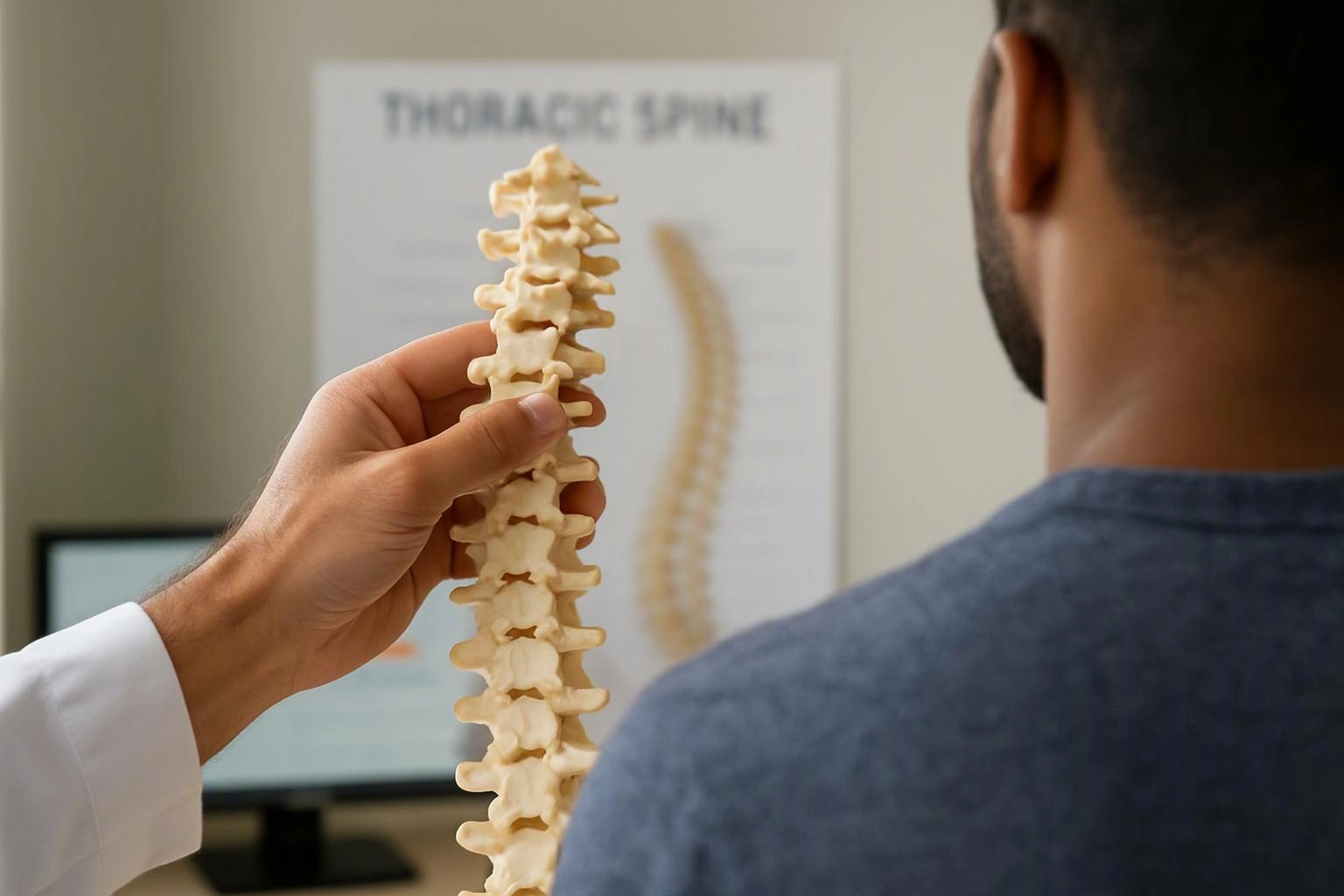
When we assess the thoracic spine during Back Pain Treatment, we examine posture, movement, rib motion, and nearby muscle function. We connect those findings with the person’s symptoms and daily activities. This approach helps us separate thoracic joint restrictions from discomfort linked to surrounding tissues.
Thoracic Spine in Practice: A Real-World Example
A person may feel upper-back stiffness after extended desk work, with discomfort during trunk rotation. During Back Pain Treatment, the thoracic spine is considered alongside posture, rib movement, and the function of the neck and lower back.
Related Services
Related Terms
Cervical Spine
The cervical spine is the upper section of the spinal column located in the neck. It…
Lumbar Spine
Lumbar Spine is the lower section of the spinal column between the thoracic spine and pelvis…
Facet Joint
A facet joint is a small synovial joint at the back of the spine that connects…
Intervertebral Disc
An Intervertebral Disc is a flexible, cushion-like structure between adjacent spinal bones, called vertebrae. Each disc…
Advanced Injury Care Clinic
Have Questions About Thoracic Spine?
Contact Advanced Injury Care Clinic for practical guidance on Thoracic Spine and related chiropractor work in Brentwood.