
What Is Cervical Lordosis?
Cervical Lordosis is the natural inward curve of the neck, formed by the cervical vertebrae when viewed from the side. This curve helps distribute forces through the neck and supports head position. Its shape may change with posture, injury, muscle tension, spinal wear, or other factors affecting the cervical spine.
Quick Facts About Cervical Lordosis
Category
Spinal alignment feature
Used for
Describing neck posture and alignment
Common confusion
Forward head posture
Also called
Neck Curve, Cervical curve
Often discussed with
Postural Correction
Key Takeaways About Cervical Lordosis
- The curve appears inward when the neck is viewed from the side.
- Posture and muscle tension can influence the curve’s appearance.
- Cervical lordosis is not the same as forward head posture.
How Cervical Lordosis Works
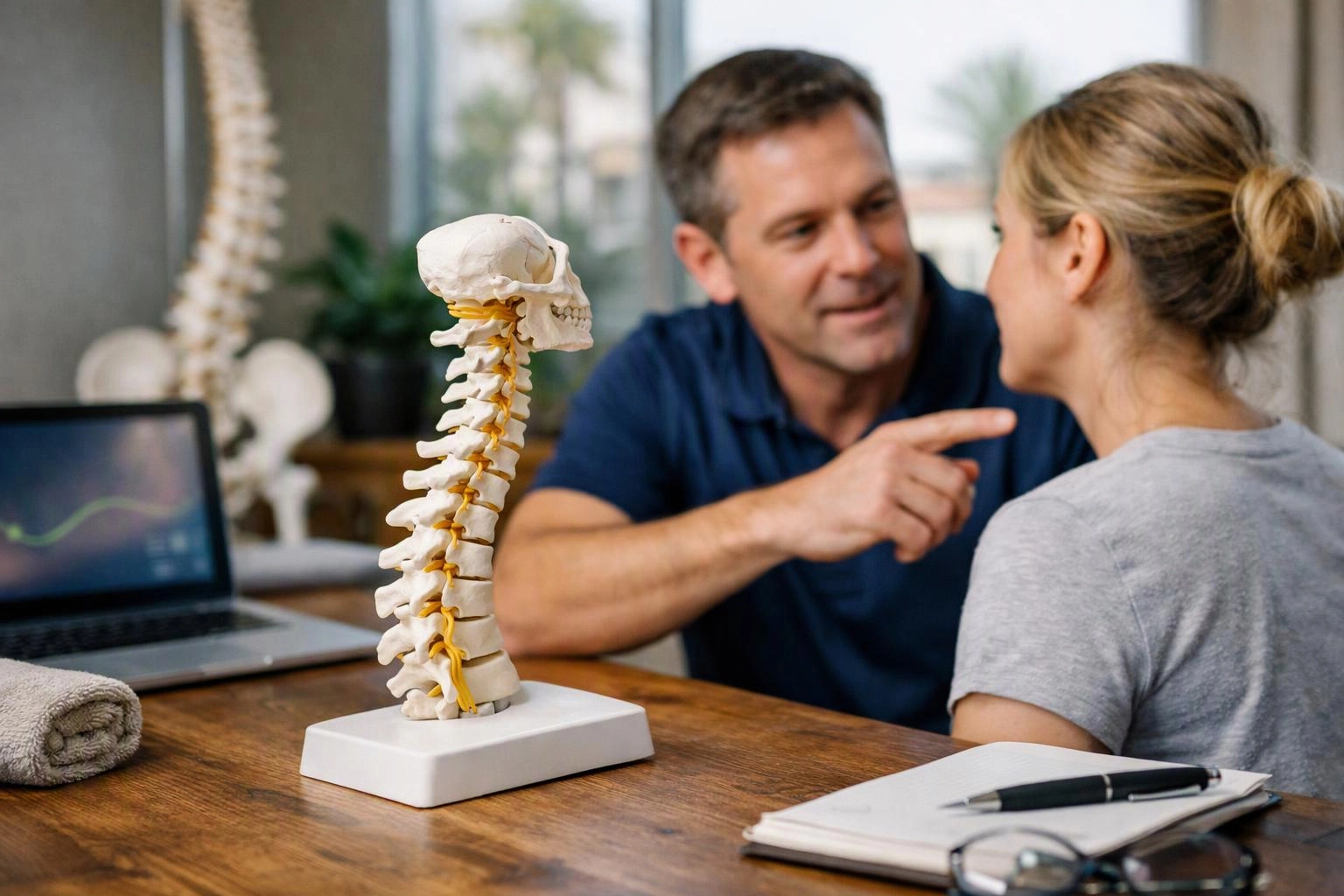
Cervical lordosis describes the way the neck vertebrae align in a gentle inward arc. The curve helps the cervical spine manage the head’s position and distribute physical forces during movement. Muscles, joints, discs, and posture all influence how this alignment appears.
Related glossary terms: Cervical Spine, Forward Head Posture, Posture Assessment.
Clinicians assess the curve through posture observation, movement testing, and imaging when appropriate. A reduced curve does not describe a single condition by itself. The finding gains meaning when considered with symptoms, movement patterns, injury history, and related features such as forward head posture.
Postural correction may address contributing movement habits, muscle control, and body positioning. The goal is to understand how the neck functions during ordinary activities, not to judge alignment from one observation alone.
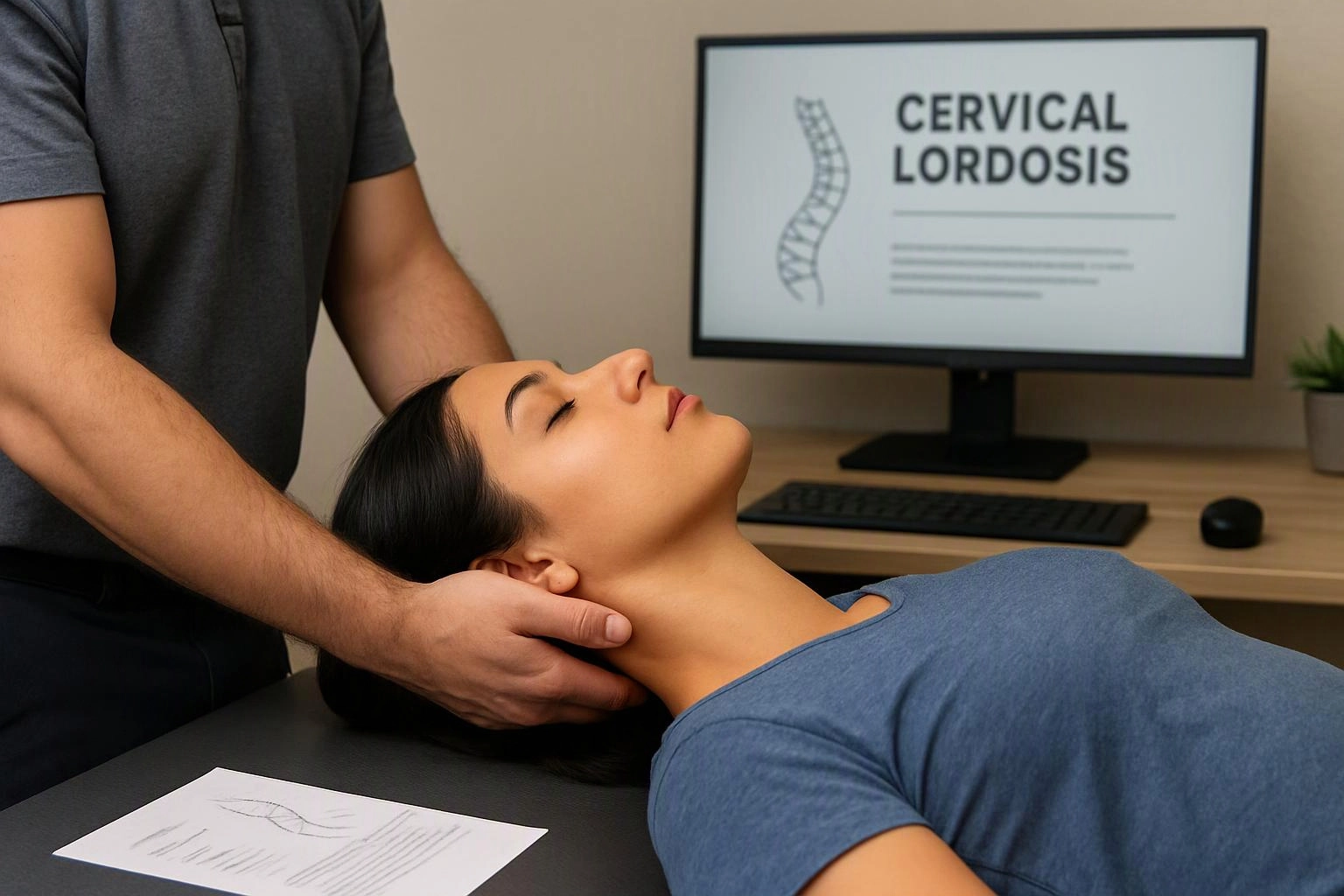
From the Advanced Injury Care Clinic team
When we assess cervical lordosis during Postural Correction, we consider the neck’s position alongside the head, shoulders, and upper back. We observe movement and muscle control during practical tasks. Our team uses the finding as part of a broader clinical picture, not as a diagnosis by itself.
Cervical Lordosis in Practice: A Real-World Example
A person who spends much of the day looking down at a laptop may show forward head posture and a changed cervical curve during assessment. Postural Correction may focus on head positioning, upper-back control, and movement habits that affect neck alignment.
Related Services
Related Terms
Cervical Spine
The cervical spine is the upper section of the spinal column located in the neck. It…
Forward Head Posture
Forward Head Posture is a postural pattern in which the head rests in front of the…
Posture Assessment
Posture Assessment is a clinical observation process that examines body alignment, balance, movement habits, and related…
Range of Motion
Range of Motion is the amount and direction a joint can move through its available movement…
Advanced Injury Care Clinic
Have Questions About Cervical Lordosis?
Contact Advanced Injury Care Clinic for practical guidance on Cervical Lordosis and related chiropractor work in Brentwood.