
What Is the Autonomic Nervous System?
Autonomic Nervous System is the part of the nervous system that controls body functions you do not manage consciously. It helps regulate heart rate, breathing, blood pressure, digestion, sweating, and body temperature. The system adjusts these functions as your body responds to rest, activity, stress, illness, and changes around you.
Quick Facts About Autonomic Nervous System
Category
Nervous system function
Used for
Regulating automatic body processes
Common confusion
Not the same as voluntary movement control
Also called
ANS
Often discussed with
Functional Medicine Consultation
Key Takeaways About Autonomic Nervous System
- It works automatically, unlike muscles you move on purpose.
- Its activity shifts as your body responds to stress or rest.
- It isn't the same as the spinal cord or brain.
How Autonomic Nervous System Works

Autonomic Nervous System activity helps the body adjust without a conscious command. Signals travel between the brain, spinal cord, nerves, and organs. These signals influence heart activity, breathing patterns, digestion, sweating, and blood vessel changes.
Related glossary terms: Nerve Compression, Spinal Nerve, Nerve Conduction Study.
The system shifts between alert and recovery states as conditions change. A person may notice a faster heartbeat during stress and calmer digestion during rest. A functional medicine consultation may review symptoms, health history, sleep, stress, and body responses to understand patterns linked with autonomic function.
How It Is Checked
Clinicians may consider reported symptoms and basic body signs together. They may also review heart rate patterns, blood pressure changes, breathing, temperature response, or digestion. These observations do not diagnose every nervous system problem by themselves.
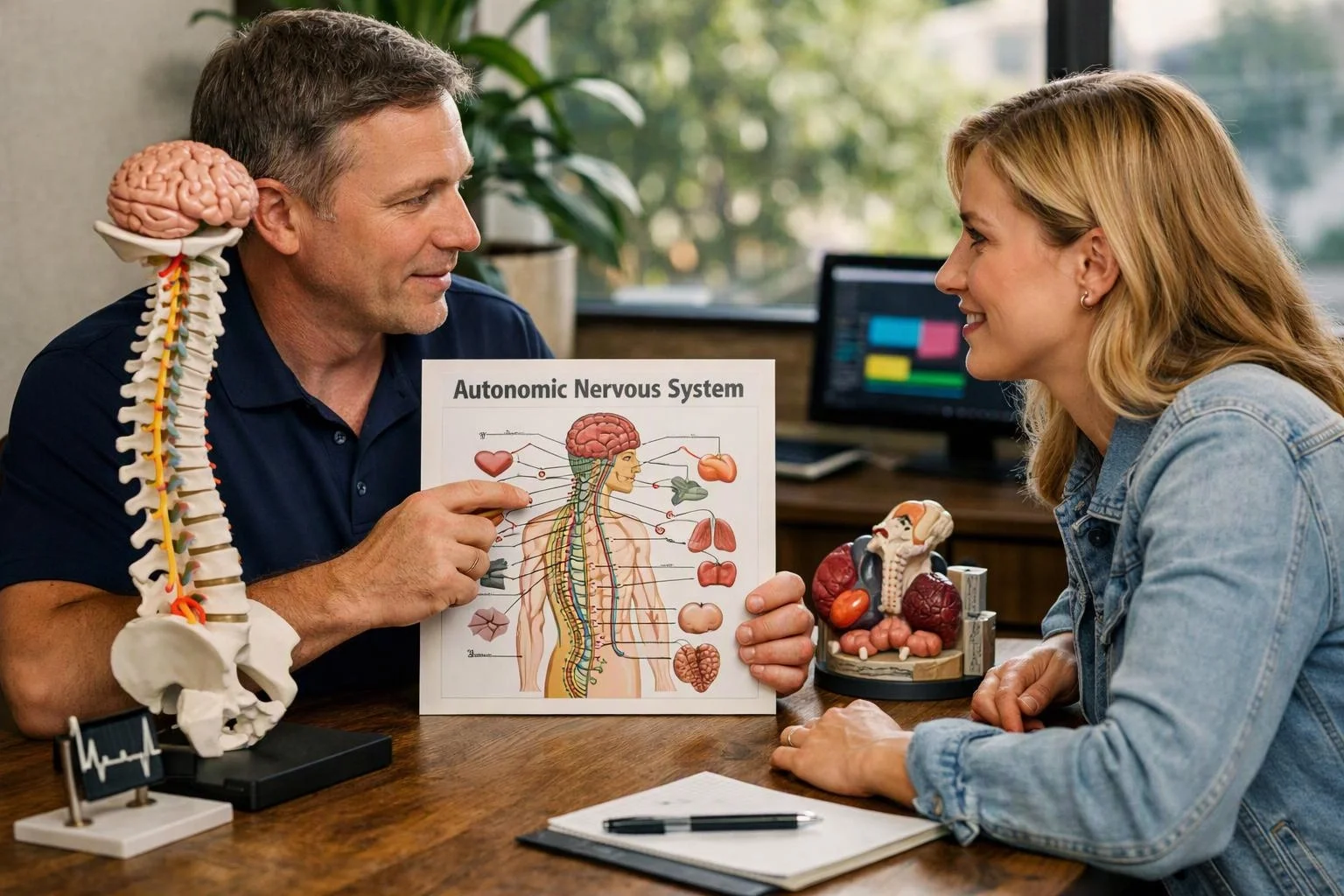
From the Advanced Injury Care Clinic team
When we discuss autonomic function during a Functional Medicine Consultation, we review patterns across sleep, digestion, stress response, and energy. We connect those patterns with the person's health history and other findings. Our team uses this context to guide a focused discussion, not to treat one symptom in isolation.
Autonomic Nervous System in Practice: A Real-World Example
During a Functional Medicine Consultation, a person may report a racing heartbeat during stress, poor sleep, and changes in digestion. We review when these patterns occur and how they relate to daily routines and other health concerns.
Related Services
Related Terms
Nerve Compression
Nerve Compression is pressure on a nerve that can disrupt normal signal flow between the body…
Spinal Nerve
A spinal nerve is a bundle of nerve fibers that carries messages between the spinal cord…
Nerve Conduction Study
Nerve Conduction Study is a diagnostic test that measures how well electrical signals travel through peripheral…
Proprioception
Proprioception is the body’s sense of position and movement. Signals from muscles, tendons, joints, and skin…
Advanced Injury Care Clinic
Have Questions About Autonomic Nervous System?
Contact Advanced Injury Care Clinic for practical guidance on Autonomic Nervous System and related chiropractor work in Brentwood.