
What Is a Spinal Nerve?
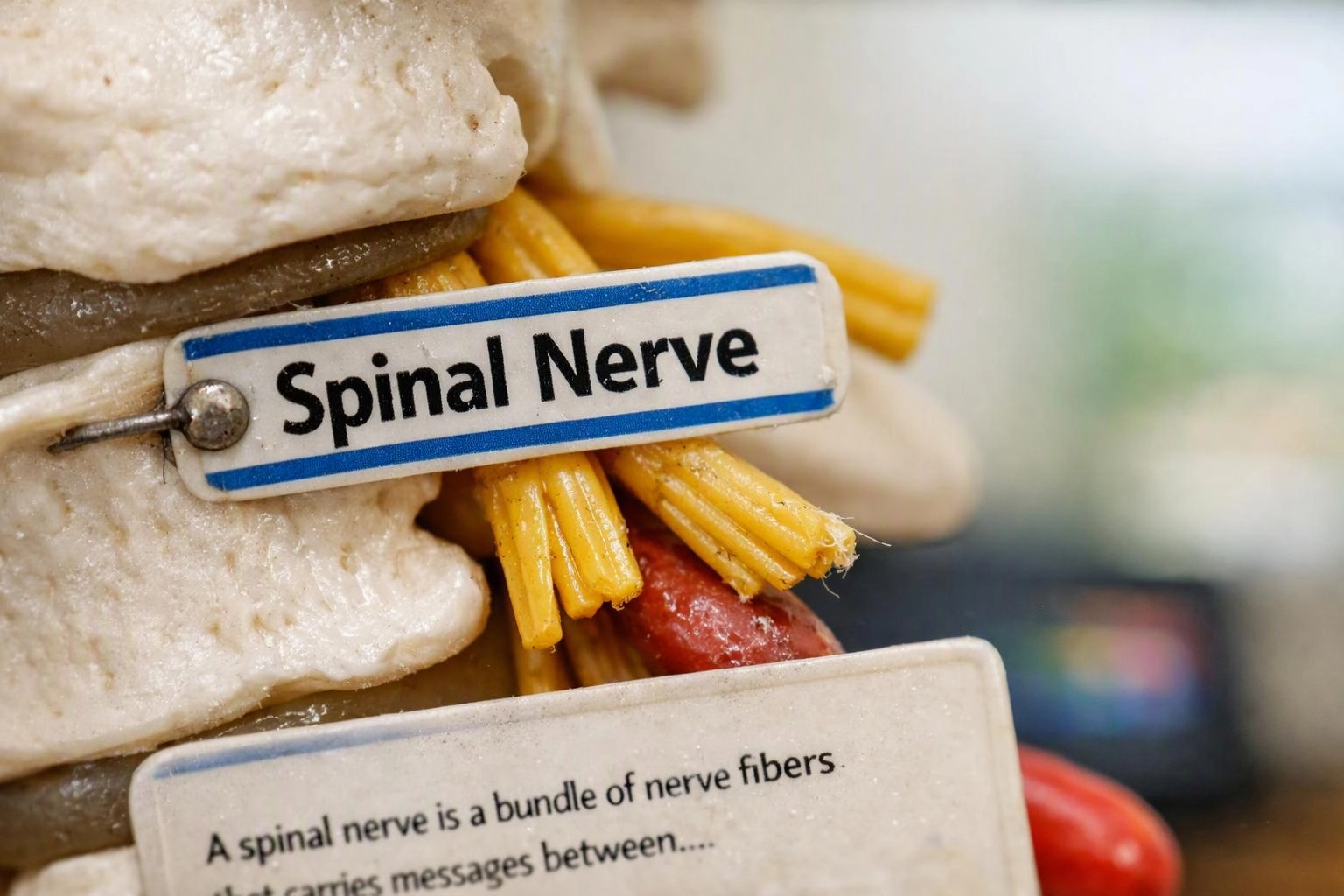
A spinal nerve is a bundle of nerve fibers that carries messages between the spinal cord and the body. Each nerve helps control movement, sensation, or automatic functions in a certain area. Irritation or pressure near a spinal nerve may cause pain, tingling, numbness, or weakness along its pathway.
Quick Facts About Spinal Nerve
Category
Nervous system structure
Used for
Movement and sensation
Common confusion
Spinal nerve versus spinal cord
Also called
Nerve Root
Often discussed with
Sciatica Treatment
Key Takeaways About Spinal Nerve
- Spinal nerves connect the spinal cord with specific body regions.
- Irritation may follow a nerve pathway into an arm or leg.
- A spinal nerve is not the same as a spinal cord.
How Spinal Nerve Works
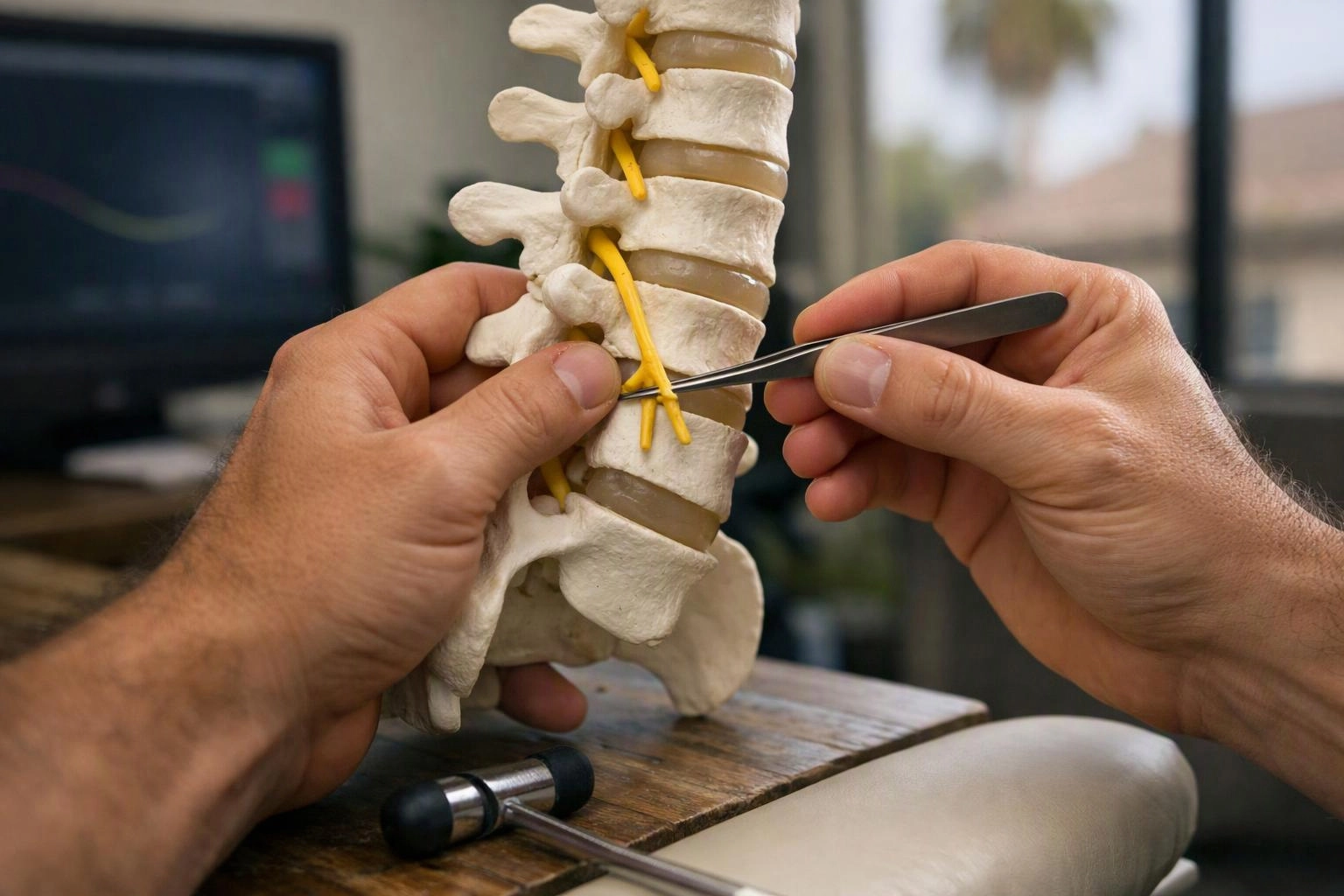
Spinal nerve tissue carries electrical signals through nerve fibers. Signals travel from the brain and spinal cord toward muscles. Other signals travel back with information about touch, pressure, temperature, or pain.
Related glossary terms: Lumbar Spine, Nerve Compression, Referred Pain.
Spinal nerves leave the spinal cord through openings between the vertebrae. Nearby discs, joints, muscles, or swelling can affect the space around a nerve. A clinician may compare symptoms with strength, sensation, reflexes, and movement during an exam.
The lumbar spine contains nerves that help serve the lower back and legs. The sciatic nerve forms from several nerve roots and can carry symptoms into the buttock or leg when nearby tissues become irritated.
From the Advanced Injury Care Clinic team
When we assess a spinal nerve during sciatica treatment, we match the symptom pattern with movement, strength, sensation, and reflex findings. We also consider nearby joints and muscles, because several tissues can create similar symptoms. Our team uses this information to guide the clinical exam and care plan.
Spinal Nerve in Practice: A Real-World Example
A person with lower back irritation may feel pain that travels through the buttock and down the leg. The symptom path can help the clinician check the related spinal nerve and nearby structures.
Related Services
Related Terms
Lumbar Spine
The lumbar spine is the lower section of the spinal column, located between the thoracic spine…
Nerve Compression
Nerve Compression is pressure on a nerve that can disrupt normal signal flow between the body…
Referred Pain
Referred Pain is discomfort felt in one body area even though the source lies elsewhere. Shared…
Advanced Injury Care Clinic
Have Questions About Spinal Nerve?
Contact Advanced Injury Care Clinic for practical guidance on Spinal Nerve and related chiropractor work in Brentwood.