
What Is a Nerve Conduction Study?
Nerve Conduction Study is a diagnostic test that measures how well electrical signals travel through peripheral nerves. Small sensors record the speed and strength of those signals after gentle electrical stimulation. The results can help identify patterns linked to nerve irritation, compression, or damage and can guide further evaluation.
Quick Facts About Nerve Conduction Study
Category
Diagnostic nerve test
Used for
Checking peripheral nerve function
Common confusion
It is different from an MRI
Also called
NCS, NCV test
Often discussed with
Neuropathy Treatment
Key Takeaways About Nerve Conduction Study
- It measures nerve signals, not muscle strength alone.
- Results may show slowed or weakened nerve communication.
- It is not the same as an imaging scan.
How Nerve Conduction Study Works
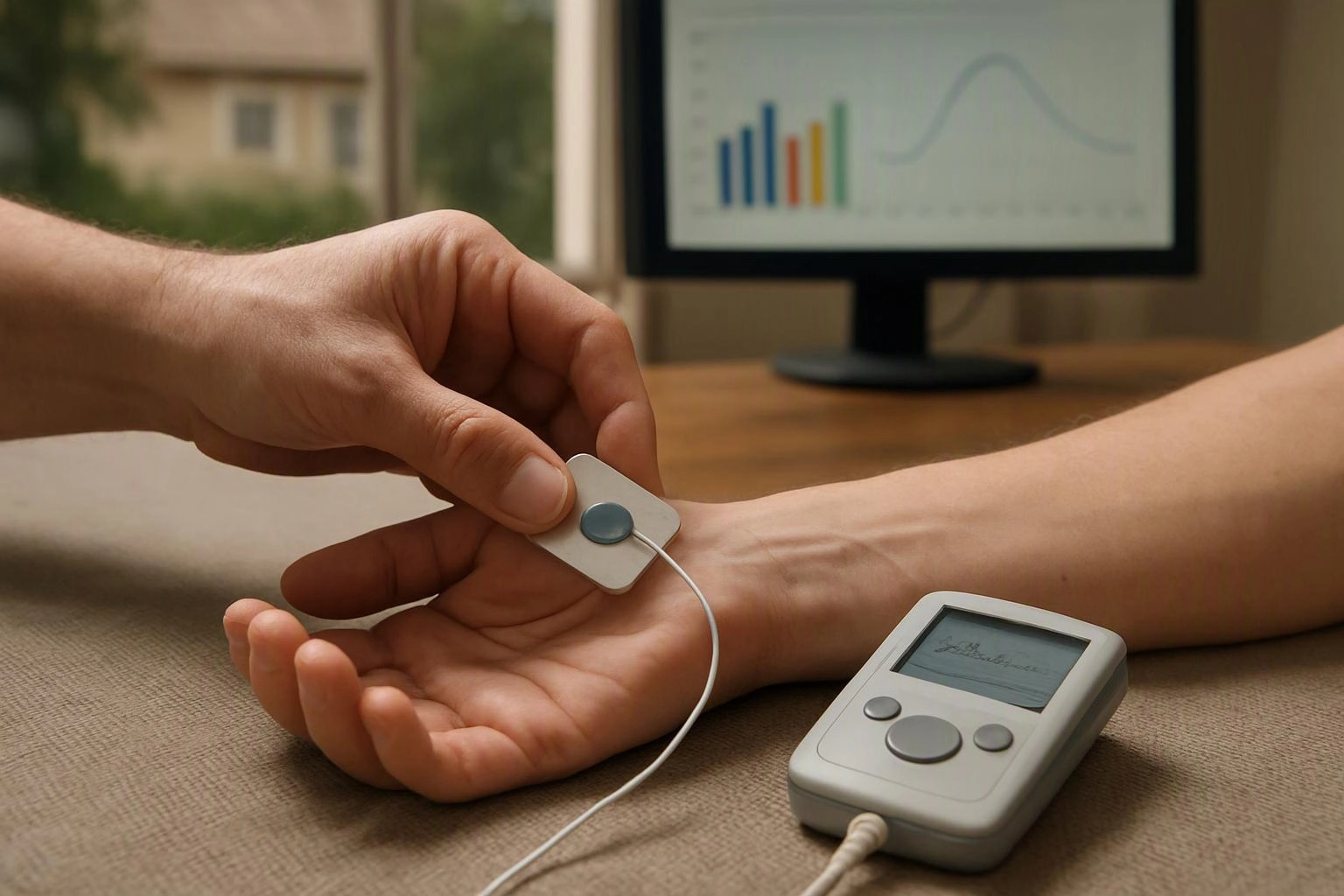
Nerve Conduction Study testing uses skin electrodes and a brief electrical stimulus. The electrodes record how quickly and strongly a signal moves along a nerve. A clinician may test sensory nerves, motor nerves, or both, depending on the concern.
Related glossary terms: Nerve Compression, Spinal Nerve, Referred Pain.
Results help show whether a nerve signal travels normally. Slower or weaker signals may fit patterns linked to compression, irritation, or nerve damage. The findings are reviewed with symptoms, physical examination results, and other health information. A nerve conduction study does not show bones or discs like an X-ray or other imaging test.
An electromyogram may be performed during the same evaluation. That test checks electrical activity in muscles, while nerve conduction testing focuses on nerve signals.
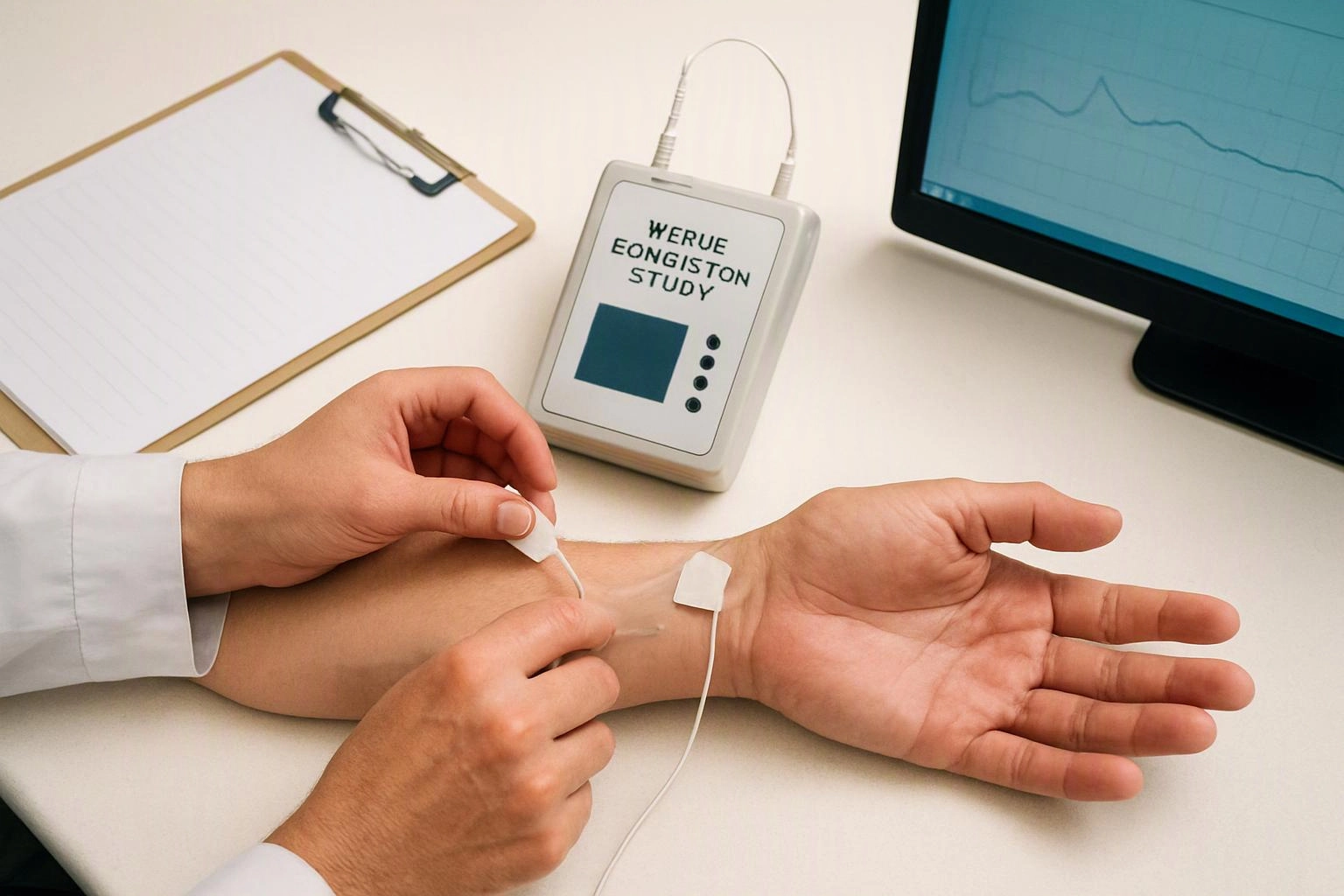
From the Advanced Injury Care Clinic team
When we review nerve-related symptoms, we connect nerve conduction findings with the person’s history and examination. Our team looks for patterns that may help explain numbness, tingling, burning, or weakness. We use that information within neuropathy treatment planning and recognize that test results need clinical context.
Nerve Conduction Study in Practice: A Real-World Example
A person with burning and tingling in the hand may receive a nerve conduction study to check how signals move through the affected nerves. The findings can help show whether nerve compression or another nerve problem needs further evaluation.
Related Services
Related Terms
Nerve Compression
Nerve Compression is pressure on a nerve that can disrupt normal signal flow between the body…
Spinal Nerve
A spinal nerve is a bundle of nerve fibers that carries messages between the spinal cord…
Referred Pain
Referred Pain is discomfort felt in one body area even though the source lies elsewhere. Shared…
Advanced Injury Care Clinic
Have Questions About Nerve Conduction Study?
Contact Advanced Injury Care Clinic for practical guidance on Nerve Conduction Study and related chiropractor work in Brentwood.