
What Is Proprioception?
Proprioception is the body’s sense of position, movement, and force. Sensory receptors in muscles, tendons, joints, and skin send information to the nervous system. The brain uses these signals to help coordinate posture, balance, and controlled movement without requiring constant visual attention.
Quick Facts About Proprioception
Category
Sensory and movement function
Used for
Balance, posture, and movement control
Common confusion
Proprioception is not flexibility
Also called
Body Position Awareness, Kinesthesia
Often discussed with
Corrective Exercise Therapy
Key Takeaways About Proprioception
- It provides internal feedback about joint position and movement.
- It supports balance and coordinated exercise.
- It is not the same as flexibility or strength.
How Proprioception Works
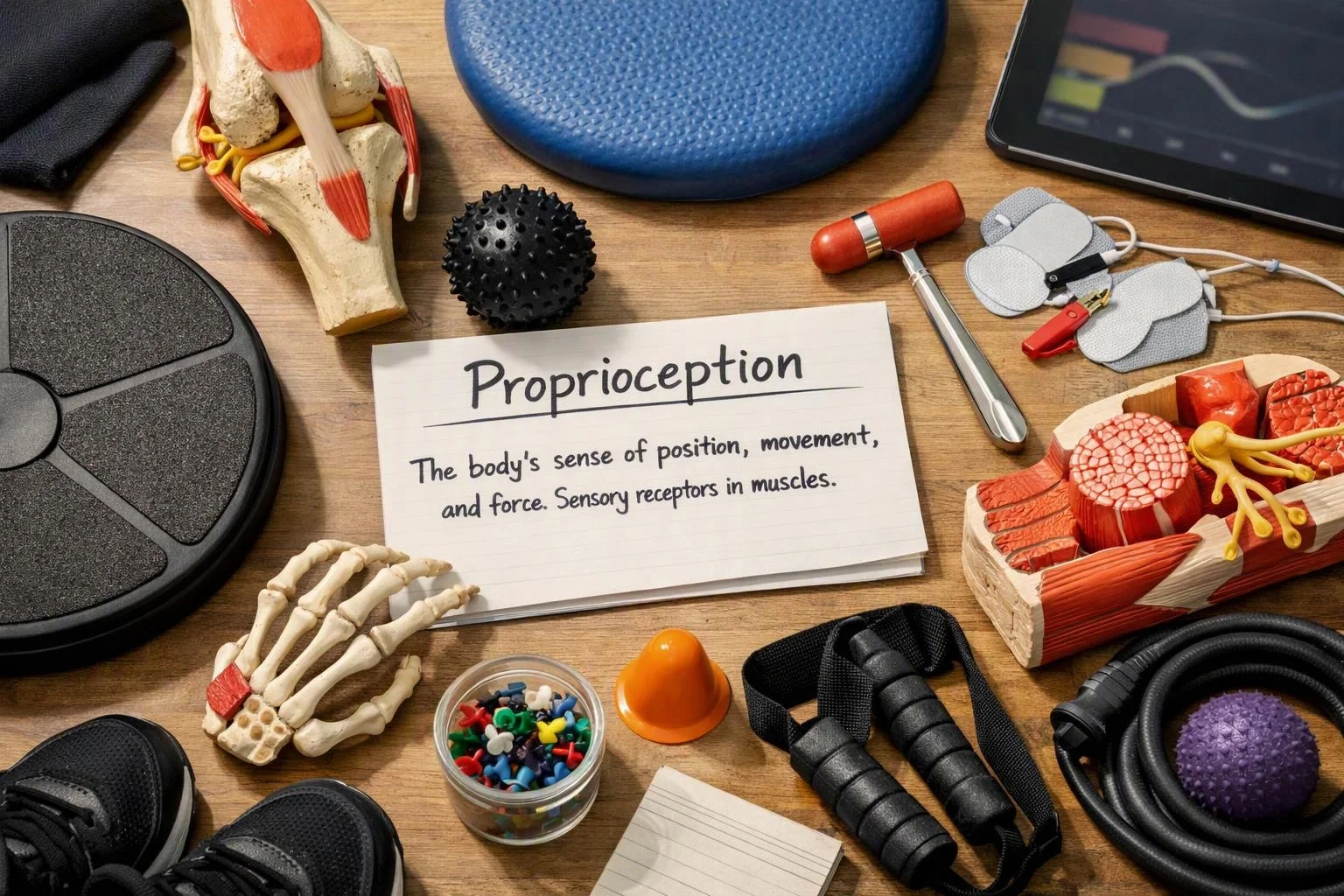
Proprioception begins with sensory receptors that detect changes in muscle length, tendon tension, joint position, and pressure on the skin. Those receptors send signals through the nervous system, while the brain combines the information with visual and balance signals. The result is an ongoing sense of where the body is positioned.
Related glossary terms: Neuromuscular Reeducation, Range of Motion, Posture Assessment.
Corrective Exercise Therapy can include movements that challenge this feedback system in a controlled setting. A person may shift weight, control a joint through a planned range, or maintain alignment while the task changes. Neuromuscular Reeducation often focuses on improving the timing between sensory feedback and muscle action. A clinician may observe balance, movement control, and consistency during an exercise.
From the Advanced Injury Care Clinic team
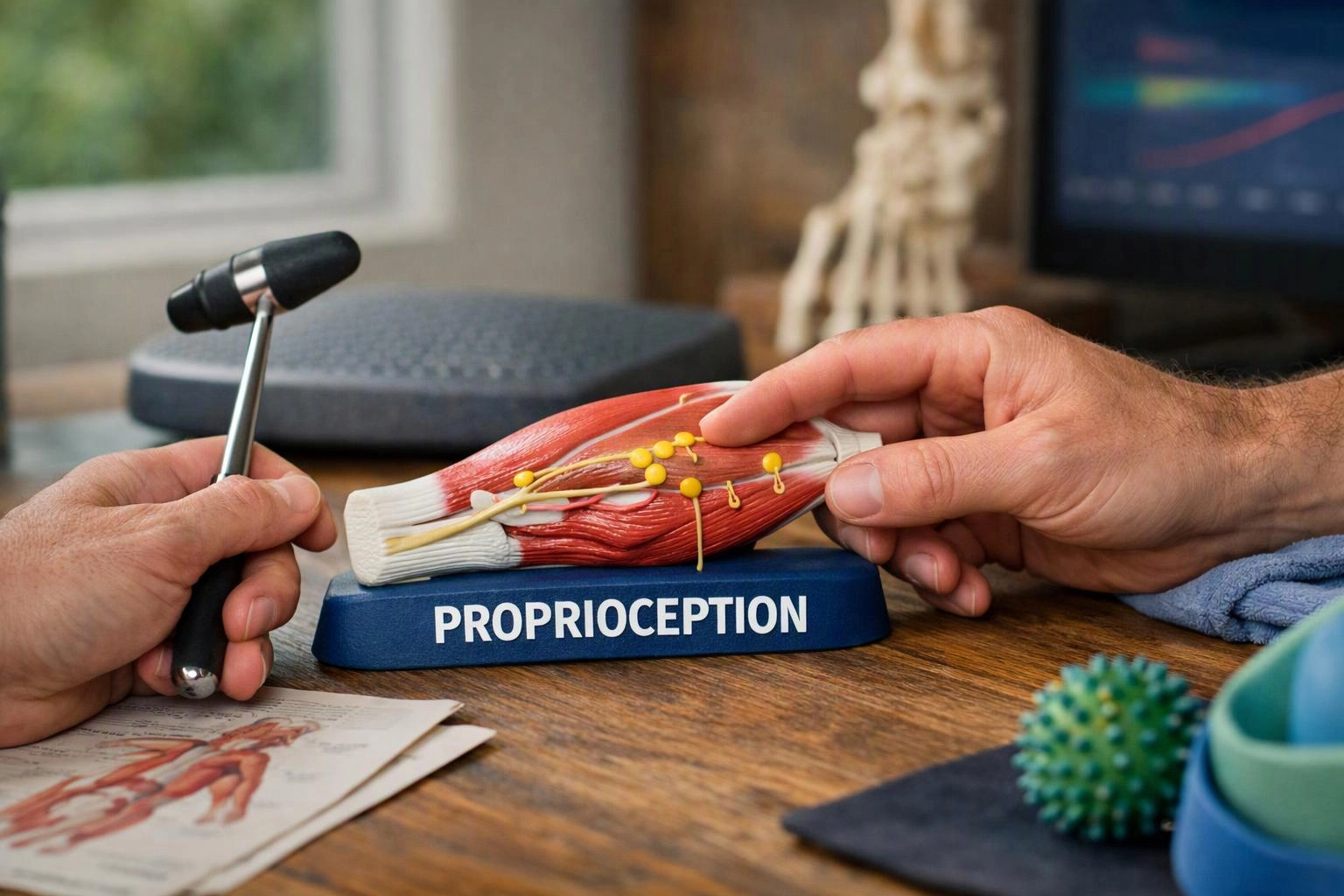
When we plan Corrective Exercise Therapy, we observe how a person senses position during controlled movement. Our team may adjust the exercise surface, stance, visual input, or movement direction to examine how the body responds. We focus on movement quality and control during the task.
Proprioception in Practice: A Real-World Example
During Corrective Exercise Therapy, a person may stand on one leg while reaching toward a target. The exercise asks the body to sense joint position and adjust muscle activity while maintaining controlled alignment.
Related Services
Related Terms
Neuromuscular Reeducation
Neuromuscular Reeducation is a therapeutic exercise approach that retrains coordination between the nervous system and muscles…
Range of Motion
Range of Motion is the amount and direction a joint can move through its available movement…
Posture Assessment
Posture Assessment is a clinical observation process that examines body alignment, balance, movement habits, and related…
Core Stabilization
Core Stabilization is a corrective exercise approach that improves control of the muscles supporting the spine…
Advanced Injury Care Clinic
Have Questions About Proprioception?
Contact Advanced Injury Care Clinic for practical guidance on Proprioception and related chiropractor work in Brentwood.