Skip to content

Postural Correction in Oak Hill, Tennessee

Core strengthening can support postural correction for patients in Oak Hill. We pair movement checks with care that fits your goals.

Upfront, Transparent PricingServing 18 CommunitiesMon-Fri: 9 am–7 pm, Sat: 9 am–2 pm, Sun: ClosedFast Scheduling

Quick Summary: postural correction in Oak Hill, Tennessee

Postural Correction in Oak Hill is provided by Advanced Injury Care Clinic for posture-related pain and mobility concerns. Care includes an evaluation, spinal adjustments when appropriate, corrective exercises, and rehabilitation guidance across Brentwood, Williamson County, and the greater Nashville area.

  • What we do: Advanced Injury Care Clinic provides Postural Correction in Oak Hill, Tennessee through evaluation, movement care, corrective exercises, and rehabilitation guidance.
  • What is included: Key capabilities include posture assessment, spinal adjustments, soft-tissue therapy, corrective exercises, shoulder mobility work, and neck exercises.
  • What you get: Postural Correction gives the patient a clearer care plan for improving movement and daily function.

What exercises support postural correction when neck or back discomfort keeps returning?

Core strengthening supports postural correction by improving control around the spine and pelvis. Back extensions, shoulder mobility work, and neck exercises may also fit a plan after an evaluation.

Postural Correction in Oak Hill for Better Movement Planning

Postural correction focuses on how the spine, shoulders, hips, and muscles work together during daily movement. The service fits people with back pain, neck pain, headaches, sciatica, or mobility concerns after an accident, workplace injury, sports injury, or other event.

The key decision is whether posture is part of the problem you want to address. Our team checks movement and health history first, then explains which parts of care fit your goals. The plan may include adjustments, soft-tissue therapy, exercises, or wellness guidance.

This page focuses on exercise and movement choices within postural correction. It does not promise one routine for every patient. Individual response differs, and some symptoms need further medical assessment before treatment begins.

  • Ask how posture, joint motion, and muscle control relate to your symptoms.
  • Discuss core strengthening, back extensions, shoulder mobility, and neck exercises.
  • Review whether an evaluation should come before exercise changes.
  • Choose care that matches your goals, symptoms, and health history.
A folded white towel sits beside a teal cushion on a light green upholstered surface

Service Overview

Postural correction is a care approach that addresses movement habits, joint motion, and muscle control linked to posture.

  • Postural correction differs from a single spinal adjustment because it can include exercises and rehabilitation guidance for continued movement practice.
  • Advanced Injury Care Clinic provides this care for patients in Oak Hill and the greater Nashville area.

What postural correction includes for your care plan

Advanced Injury Care Clinic provides comprehensive Postural Correction in Oak Hill. Here's what you get:

  • We complete a new patient intake, health history, and physical examination.
  • We assess posture, spinal motion, joint function, and muscle control.
  • We discuss core strengthening and other exercises that fit your needs.
  • We may use spinal adjustments and soft-tissue therapy when clinically appropriate.
  • We provide corrective exercise and rehabilitation guidance for practice between visits.
  • We review progress and adjust the care plan as your response becomes clearer.

What your movement plan can help you work toward

A clear assessment can show which movement limits deserve attention first.

Exercise guidance can help you practice better control during daily tasks.

Shoulder mobility work may support smoother upper-body movement.

Neck exercises may help address movement limits linked to neck discomfort.

A personalized plan keeps care focused on your goals and current symptoms.

Process

How we build a postural correction care plan

1

Review your health history

The new patient intake covers symptoms, injuries, daily concerns, and your main movement goals.

2

Check posture and movement

We examine posture, spinal motion, joint function, muscle control, and related areas such as the shoulders and neck.

3

Explain the care options

We discuss findings and outline a personalized treatment plan that may include adjustments, soft-tissue therapy, or exercises.

4

Practice selected exercises

We may guide core strengthening, back extensions, shoulder mobility, or neck exercises when they fit your needs.

5

Review your response

Follow-up checks help us see how your movement responds and whether the plan needs adjustment.

A client scenario this service addresses

A patient in Oak Hill may seek care after an accident, workplace injury, or sports injury and notice that posture changes with pain or stiffness. We check the spine, joints, muscles, and movement pattern before choosing exercises or hands-on care. The consultation helps decide whether postural correction fits the concern.

How we approach postural correction decisions

Movement checks before exercise choices

We look at posture, joint motion, and muscle control before suggesting exercises. Customers get a plan tied to their findings, not a routine chosen without an exam.

Care that connects clinic and home

Corrective exercises and rehabilitation guidance can help you practice movement between appointments. Your response helps shape later care.

A clear limit for this service

Postural correction is the wrong starting point for symptoms that need urgent medical care or a different evaluation. We discuss those concerns during the health history and exam.

How movement care options differ

These options address different parts of a postural correction plan.

Care optionMain focusWhen it may fit
Spinal adjustmentsJoint motionWhen the examination supports hands-on spinal care
Soft-tissue therapyMuscles and related tissuesWhen tissue tension affects movement or comfort
Corrective exercisesStrength, mobility, and controlWhen guided movement practice fits the care plan

The Advanced Injury Care Clinic Standard

  • Patient Assessment
  • Personalized Care Plans
  • Clear Treatment Explanations
  • Progress Monitoring

Questions about postural correction and exercise care

What exercises support postural correction?

Core strengthening supports postural correction by improving control around the spine and pelvis. Back extensions, shoulder mobility work, and neck exercises may also fit the plan after an evaluation. We consider pain, joint motion, muscle control, and your goals before suggesting movements. Individual response differs, so exercises should match your findings.

What happens at each stage of postural correction?

The care process starts with a new patient intake and health history exam. It then moves through:

  1. Posture and movement checks.
  2. A report of findings and treatment planning.
  3. Hands-on care or exercises when appropriate.
  4. Progress review and plan changes.

Patients receive explanations before the plan moves forward.

What does the care team look at first?

The first assessment looks at your health history, symptoms, posture, and movement limits. Our team also checks spinal motion, joint function, and muscle control. Those findings help connect an exercise choice to your needs. X-rays may be considered if clinically indicated.

What should be checked before postural correction is scheduled?

A health history and physical examination should come before exercise-based care is scheduled. The assessment checks symptoms, injuries, joint motion, and warning signs that could call for another type of medical evaluation. Patients can discuss accident details, workplace concerns, and current goals during the consultation.

Which care is used for posture-related neck discomfort?

Neck discomfort may involve movement assessment, soft-tissue therapy, corrective exercises, or spinal adjustments when appropriate. We first check the neck, shoulders, spine, and related muscle control. The care plan depends on the examination and your symptoms. Persistent or changing symptoms deserve a clear clinical review.

Why might an adjustment alone not address posture concerns?

An adjustment may address joint motion, but posture concerns can also involve muscle control and movement habits. Exercise and rehabilitation guidance add practice between visits. We decide whether those tools fit after reviewing your health history, movement, and goals. Care remains specific to the findings.
Contact

Discuss postural correction in Oak Hill

Contact Advanced Injury Care Clinic to discuss your movement concerns and request a Free Consultation. The first conversation covers your symptoms, goals, and the evaluation needed to plan care.

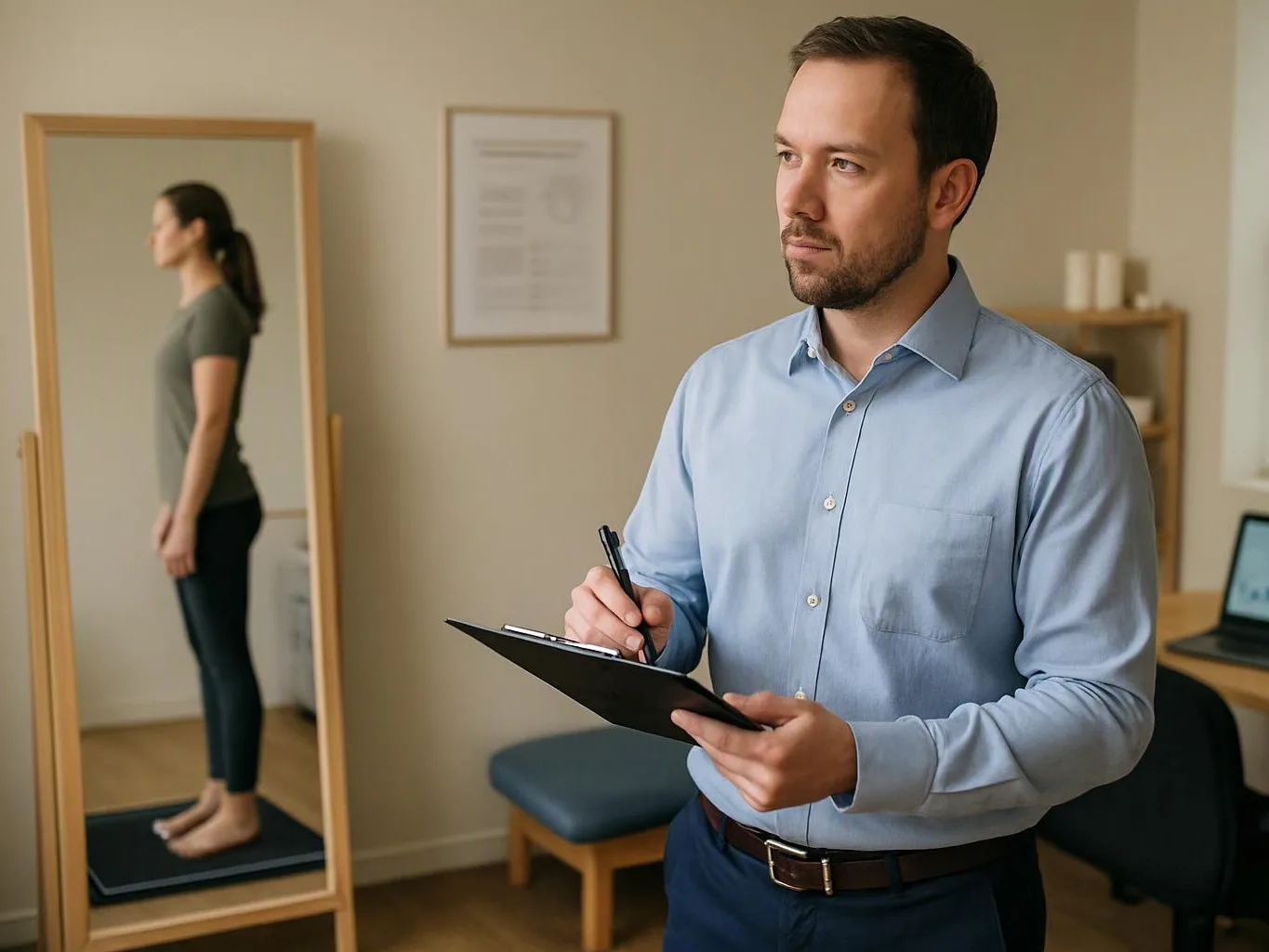
A man in a light blue shirt writes on a clipboard while a woman stands beside a mirror in a quiet room

The health and wellness information on this website is for general informational purposes only and is not medical advice. It does not create a provider-patient relationship. Always consult a qualified licensed provider in Brentwood Estates, Tennessee, United States about your specific condition before making care decisions. Individual results vary.

(615) 265-0412