Skip to content

Postural Correction in Hermitage, Tennessee

Workstation setup shapes postural correction care in Hermitage. We offer free consultations and chiropractor-led care for desk-related neck strain and shoulder tension.

Upfront, Transparent PricingServing 18 CommunitiesMon-Fri: 9 am–7 pm, Sat: 9 am–2 pm, Sun: ClosedFast Scheduling

Quick Summary: Postural Care in Hermitage, Tennessee

Postural Correction in Hermitage is provided by Advanced Injury Care Clinic for desk posture concerns, neck strain, shoulder tension, and mobility limits. Care includes an evaluation, spinal adjustments when appropriate, soft-tissue therapy, and corrective exercises across Hermitage and surrounding communities.

  • What we do: Advanced Injury Care Clinic provides Postural Correction for desk posture concerns in Hermitage, Tennessee, using evaluations, spinal adjustments, soft-tissue therapy, and corrective exercises.
  • What is included: Key capabilities include health history review, movement assessment, spinal adjustments, soft-tissue therapy, corrective exercises, and rehabilitation guidance.
  • What you get: The goal is a clear care plan that supports better posture, easier movement, and improved daily function.

Can postural correction help desk-related discomfort?

Yes, postural correction may help desk-related discomfort when neck strain or shoulder tension relates to movement habits and joint or soft-tissue limits. An evaluation helps identify the factors involved and guides the care plan.

Postural correction for desk posture in Hermitage

Postural correction focuses on how your body moves during work, rest, and routine tasks. It suits people with desk-related neck strain, shoulder tension, headaches, back pain, or reduced mobility.

The work begins with a health history and exam. We look at posture, joint movement, muscle tension, and symptoms that affect your daily routine. A workstation setup can guide the discussion, but the care plan also considers injuries, sports demands, and accident-related concerns.

This service has limits. Severe or changing symptoms need prompt medical assessment, especially after an accident or with signs of serious illness. Our team can assess chiropractic concerns and guide the next step when another type of care is more suitable.

  • Review your desk posture, daily movement, and main discomfort.
  • Check neck, shoulder, back, and joint movement during the examination.
  • Discuss spinal adjustments, soft-tissue therapy, and corrective exercises when they fit your needs.
  • Set a follow-up approach based on your goals and progress.
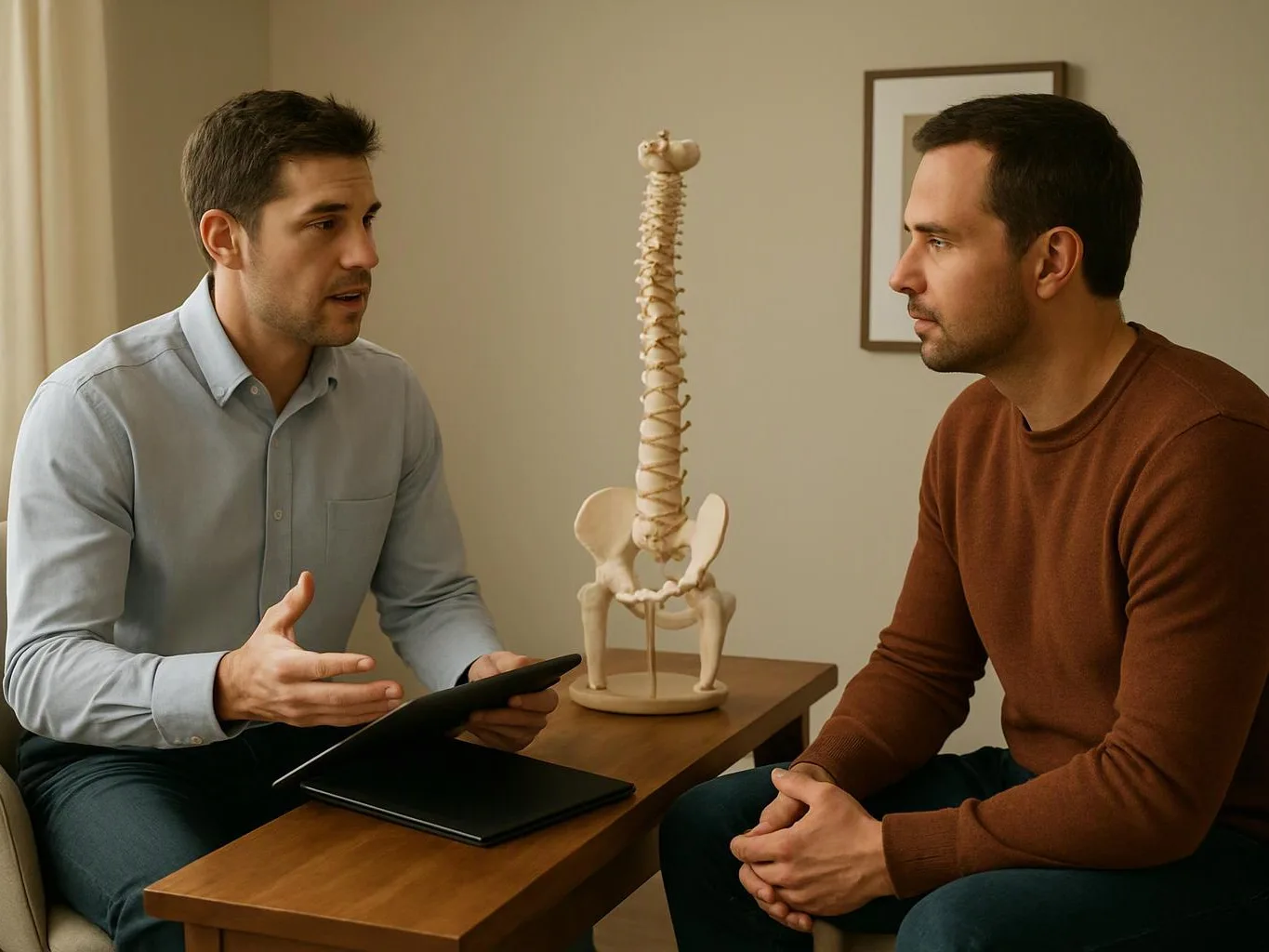
A man and woman sit at a table talking, with a spine model and notebook in a bright room

Service Overview

Postural correction is a chiropractic service that addresses movement habits, joint alignment, and muscle tension linked to posture.

  • It differs from massage therapy because the care plan may include spinal adjustments and corrective exercises alongside soft-tissue work.
  • We provide postural correction for patients in Hermitage and surrounding communities.

What postural care can change for you

You receive a clearer link between desk habits, movement limits, and discomfort.

Corrective exercises give you practical ways to support better movement between visits.

Soft-tissue therapy may help reduce muscle tension that affects neck and shoulder motion.

A personalized plan keeps care focused on your goals and daily function.

Regular maintenance may help you keep useful movement habits after active care.

How we approach desk-related posture concerns

Start with the movement problem

The first visit connects your symptoms with posture, joint motion, and work demands. Postural correction is the wrong fit when symptoms need urgent medical care or a different clinical service.

Match care to your findings

A chiropractor-led care team may combine spinal adjustments, soft-tissue therapy, and corrective exercises. The mix follows your examination and goals.

Keep daily function in view

Rehabilitation guidance links treatment to sitting, standing, lifting, and other tasks. Progress re-examination helps us review how your movement is changing.

Process

How we plan postural correction care

1

Review your work and health history

We discuss desk tasks, symptoms, injuries, activity levels, and your main care goals.

2

Examine posture and movement

The examination checks joint motion, muscle tension, posture, and related symptoms in the neck, shoulders, and back.

3

Explain the care findings

We discuss what may contribute to your discomfort and whether chiropractic care fits the concern.

4

Build the treatment plan

The plan may include spinal adjustments, soft-tissue therapy, corrective exercises, and rehabilitation guidance.

5

Review progress and daily function

Follow-up care reviews movement and symptoms, then adjusts the plan when your needs change.

What your postural care visit includes

Advanced Injury Care Clinic provides comprehensive Postural Correction in Hermitage. Here's what you get:

  • A health history and physical examination focused on posture, movement, and symptoms.
  • A review of desk posture and work habits that may add strain.
  • Spinal adjustments when they fit the findings and your care goals.
  • Soft-tissue therapy for muscle tension and related movement limits.
  • Corrective exercises and rehabilitation guidance for daily use.
  • A personalized treatment plan with progress re-examination when appropriate.

Postural care methods for desk discomfort

These methods address different parts of desk-related discomfort and may be combined after an assessment.

Care methodMain focusWhen it may fit
Spinal adjustmentsJoint movementWhen examination findings support this approach
Soft-tissue therapyMuscle tensionWhen tight tissue affects comfort or movement
Corrective exercisesMovement practiceWhen daily habits need active support

The Advanced Injury Care Clinic Standard

  • Patient Assessment
  • Personalized Care Plans
  • Clear Treatment Explanations
  • Progress Monitoring

Questions about posture and desk discomfort

How is postural correction matched to the workstation setup before work starts?

Workstation setup is matched through a health history, movement exam, and discussion of your daily work position. We review sitting habits, screen use, arm position, and symptom patterns. The assessment guides corrective exercises and other care choices. You can bring notes about which tasks increase neck strain or shoulder tension.

What should be ready before postural correction starts?

Your symptom history and main care goal should be ready before postural correction starts. Bring relevant medical records or injury details when available, and describe your work tasks clearly. A new patient intake and health history help us plan the examination. You do not need to diagnose the cause yourself.

Which condition changes the time needed for postural correction?

The condition that changes the time needed is the complexity of your symptoms and movement limits. Recent injuries, headaches, sciatica, or restricted joint motion can require a broader assessment. We review those factors during the visit and explain the care steps. No fixed duration applies to every patient.

Why does neck strain keep returning after desk work?

Neck strain can return when work posture, muscle tension, joint motion, or daily movement habits keep adding stress. We check those factors during the examination and relate them to your symptoms. Corrective exercises and rehabilitation guidance may support changes between visits. Persistent or worsening symptoms need appropriate clinical review.

What is the difference between spinal adjustments and soft-tissue therapy?

Spinal adjustments address joint movement, while soft-tissue therapy addresses muscle tension and related tissue restrictions. We may use either approach or combine them after reviewing your findings. Corrective exercises can support the movement work between visits. The right mix depends on your symptoms, examination, and care goals.

Who provides postural correction for workplace injuries?

Advanced Injury Care Clinic provides postural correction for workplace injuries and related mobility concerns. Our team begins with a health history and examination, then reviews whether chiropractic care fits. The plan may include spinal adjustments, soft-tissue therapy, corrective exercises, and rehabilitation guidance. Individual response differs across patients.
Contact

Discuss postural correction in Hermitage

If desk posture is affecting your neck, shoulders, or daily movement, contact Advanced Injury Care Clinic to ask about a free consultation. We’ll discuss your symptoms and the next appropriate step.

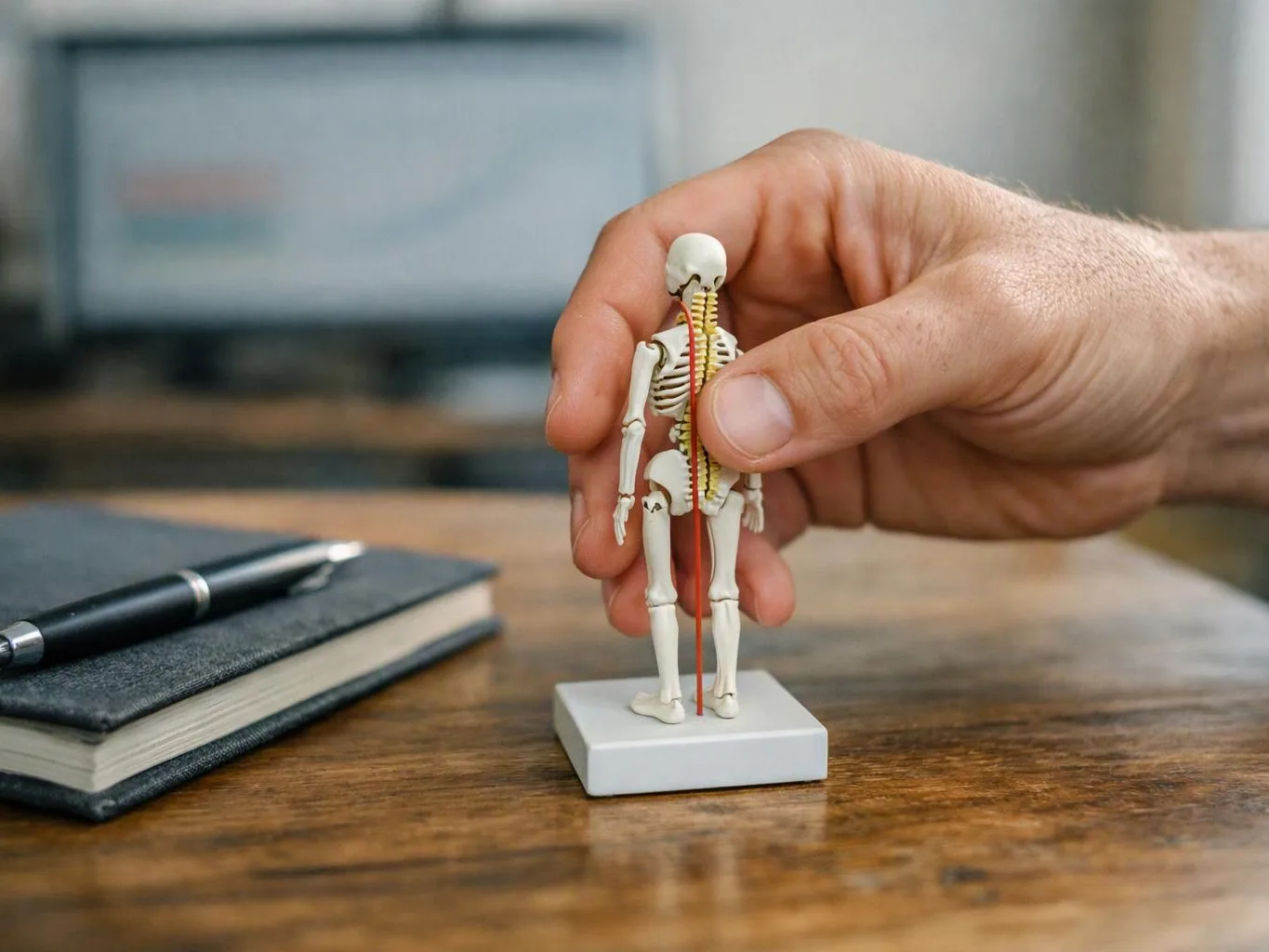
A hand holds a tiny skeleton model beside a notebook and pen on a wooden table

ZIP Codes We Serve in Hermitage, Tennessee

37076

The health and wellness information on this website is for general informational purposes only and is not medical advice. It does not create a provider-patient relationship. Individual results vary.

(615) 265-0412