Skip to content

Kinesiology Taping in Smyrna, Tennessee

Muscle pain or a sense of joint weakness can call for elastic tape in Smyrna. We assess the area and choose taping based on your movement goals.

Upfront, Transparent PricingServing 18 CommunitiesMon-Fri: 9 am–7 pm, Sat: 9 am–2 pm, Sun: ClosedFast Scheduling

Quick Summary: Elastic taping in Smyrna, Tennessee

Kinesiology Taping in Smyrna is provided by Advanced Injury Care Clinic for muscle support, joint stability, and movement concerns. The service fits accident injuries, sports-related pain, and other mobility concerns across Smyrna and surrounding communities, with a thorough evaluation before treatment.

  • What we do: Advanced Injury Care Clinic provides Kinesiology Taping in Smyrna, Tennessee, after assessing movement and injury-related symptoms.
  • What is included: Muscle support, joint stability, movement correction, and care planning.
  • What you get: The patient receives a taping approach matched to the affected area and stated movement goals.

Why does kinesiology taping support injured muscles?

Elastic tape may support injured muscles by guiding movement and adding light external support. It does not replace an evaluation, exercise plan, or care for a serious injury.


Kinesiology Taping for muscle support in Smyrna

Kinesiology Taping focuses on how an injured area moves during daily activity, exercise, or recovery. Our team may use it for muscle strain, joint discomfort, whiplash, back pain, neck pain, or sports-related injuries.

The main decision is fit. Taping may support movement, but it cannot repair every injury or replace care for a fracture, severe swelling, open wound, or urgent medical concern. We review your symptoms and goals before choosing taping or another treatment.

A chiropractic evaluation gives the visit purpose. We may combine kinesiology tape with soft-tissue therapy, corrective exercises, or rehabilitation guidance when those options suit your needs.

  • Discuss the muscle or joint that feels weak, sore, or less stable.
  • Review movement limits and the activity that brings on symptoms.
  • Ask how taping fits with soft-tissue therapy or corrective exercise.
  • Confirm the next care step after the tape is applied.
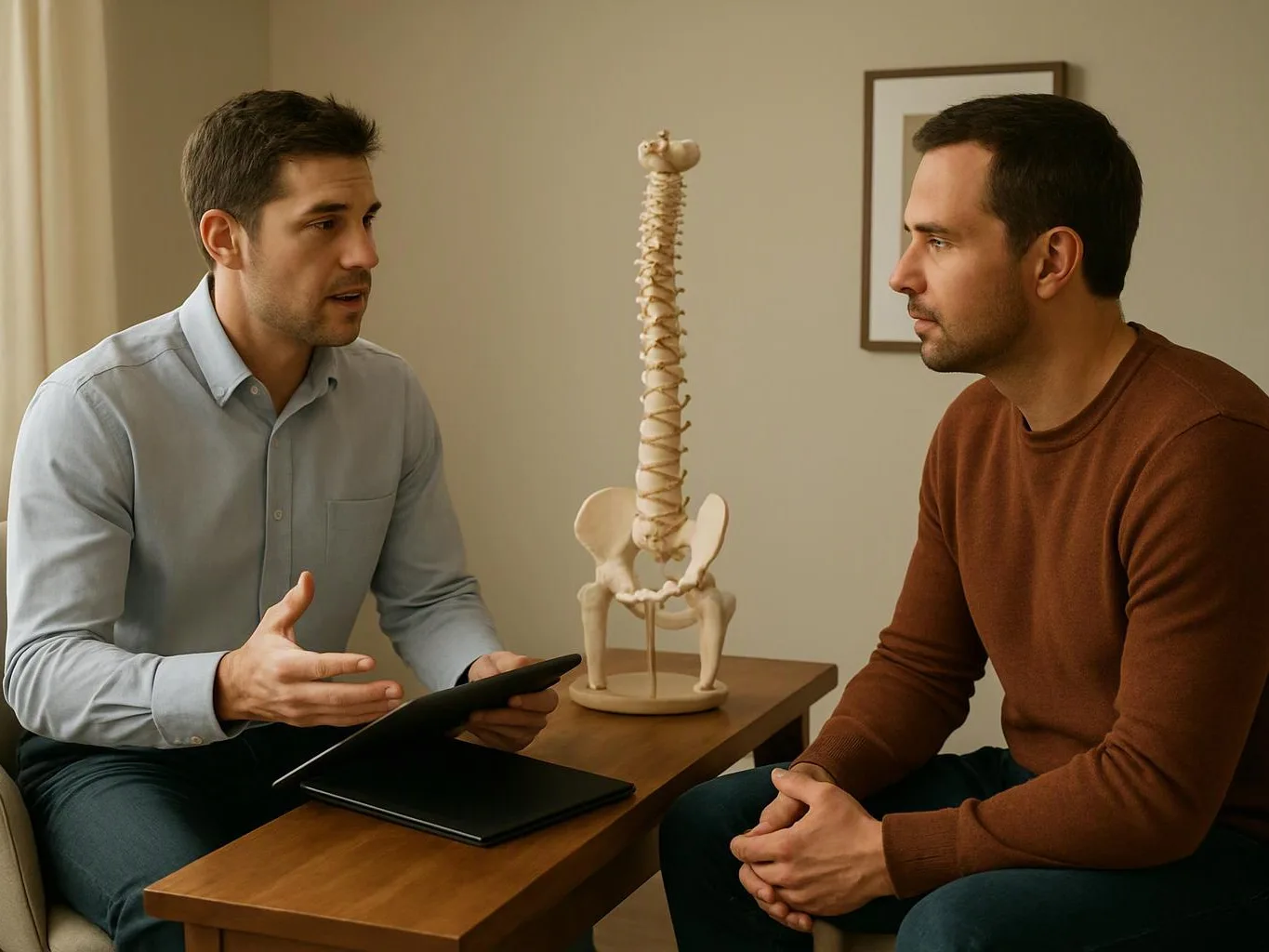
A pregnant woman and a man sit facing each other, talking in a calm living room

Service Overview

Kinesiology Taping is a supportive treatment that places elastic tape on the skin to guide movement around muscles and joints.

  • Unlike soft-tissue therapy, taping stays on the body between visits and provides external support during selected movements.
  • We provide this service for patients in Smyrna and surrounding communities.
Process

How we apply kinesiology tape

1

Review the injury and symptoms

We discuss your health history, pain, activity limits, and the movement that causes concern.

2

Check the affected movement

We observe the involved muscle or joint and assess how it responds to selected movements.

3

Choose the support approach

The assessment guides tape placement and shows whether soft-tissue therapy or corrective exercise should also be considered.

4

Apply and explain the tape

We apply kinesiology tape to the selected area and explain how it supports your care plan.

5

Plan the next care step

We discuss follow-up needs, movement goals, and whether another treatment should guide the next visit.

What to consider before choosing muscle taping

Start with the movement problem

The taping plan follows the area involved and the movement that causes trouble. We assess those details before applying tape.

Pair support with active care

Taping often works best as one part of care that may include corrective exercises or soft-tissue therapy. It is not a substitute for a full evaluation.

Know when taping is not enough

Severe injury signs, open skin, or symptoms that need urgent medical attention call for another level of care. We help identify whether taping is an appropriate option.

What muscle support can change for you

External support may help you move the affected area with greater control.

A taping plan can give you added support during selected daily activities.

Movement feedback may help you notice habits that place stress on an injured area.

Care planning connects taping with exercises and other treatment when needed.

What kinesiology taping includes for your visit

Advanced Injury Care Clinic provides comprehensive Kinesiology Taping in Smyrna. Here's what you get:

  • We review your health history, symptoms, and movement concerns before taping.
  • We assess the involved muscle, joint, or movement pattern.
  • We apply kinesiology tape to support the selected area.
  • We explain how the tape fits with your broader care plan.
  • We may add soft-tissue therapy, corrective exercise, or rehabilitation guidance when appropriate.

Taping and related care choices

These options address different parts of an injury care plan.

Care optionMain focusWhen it may fit
Kinesiology tapingLight external support during movementA muscle or joint needs added support as part of care
Soft-tissue therapyMuscle and related tissue concernsTissue sensitivity or tension needs hands-on care
Corrective exercisesMovement control and strengthThe care plan includes active movement work

The Advanced Injury Care Clinic Standard

  • Patient Assessment
  • Personalized Care Plans
  • Clear Treatment Explanations
  • Progress Monitoring

Questions about muscle taping and injury support

How does kinesiology taping support injured muscles?

Advanced Injury Care Clinic uses elastic tape to give selected injured muscles light external support during movement. The tape may guide motion and improve awareness of the affected area. We first assess symptoms, muscle function, and activity goals. Taping does not replace care for a serious injury, and individual response differs.

What does the first taping visit include?

The first visit includes a health history, symptom review, and movement assessment. We then discuss the affected muscle or joint and decide whether taping fits the care plan. If appropriate, we apply the tape and explain its role. Corrective exercises or soft-tissue therapy may also be discussed.

Which part of the injury decides the taping scope?

The affected muscle or joint decides the taping scope because placement follows the movement problem. Pain location, muscle control, skin condition, and activity goals guide the assessment. Our team checks those factors before selecting tape placement. The plan may change if symptoms point to a different source.

Which material changes how long taping takes?

The amount of kinesiology tape and the area being treated influence the visit time. Larger areas or more involved movement patterns may require more assessment and placement work. We discuss the planned area during the consultation. No fixed duration applies to every patient or injury.

How does a taping visit move from the first call to the last step?

A taping visit moves from consultation to assessment, tape placement, and care planning. You describe the injury and movement concern first. We examine the area, choose a suitable approach, and explain how taping fits with exercises or soft-tissue therapy. The final step covers follow-up needs and your movement goals.

When should I ask about taping after an accident?

Ask about taping after an accident when muscle support or movement control remains a concern. A full injury evaluation should come first, especially with whiplash, neck pain, back pain, or headaches. We review the accident-related symptoms and decide whether taping belongs in the broader plan.

Why might taping not suit my injury?

Taping may not suit an injury with open skin, severe symptoms, or signs that need urgent medical care. Skin sensitivity can also affect whether tape is appropriate. We review the area and your health history before treatment. Our team can discuss another care option when taping is not a good fit.
Contact

Discuss kinesiology taping in Smyrna

Start with a Free Consultation and a focused review of the muscle or joint causing concern. Advanced Injury Care Clinic can discuss whether taping fits your care plan.

A woman in black scrubs stands with folded arms in a softly lit massage room

ZIP Codes We Serve in Smyrna, Tennessee

37167

The health and wellness information on this website is for general informational purposes only and is not medical advice. It does not create a provider-patient relationship. Always consult a qualified licensed provider in Brentwood Estates, Tennessee, United States about your specific condition before making care decisions. Individual results vary.

(615) 265-0412