Postural Correction and Corrective Exercise: What Care Should You Choose?
Postural correction and corrective exercise therapy serve different roles: Advanced Injury Care Clinic assesses movement and posture, then may combine hands-on correction with targeted exercises based on your needs, symptoms, functional goals, and response to care.
Request an EstimateWhat Is the Difference Between Postural Correction and Corrective Exercise Therapy?
Postural correction focuses on identifying and addressing contributing alignment or movement issues, while corrective exercise therapy uses targeted movements to improve strength, mobility, control, and functional posture.
Postural correction may examine spinal alignment, joint mobility, muscle tension, and movement compensation across the musculoskeletal system. Corrective exercise therapy builds active control through planned movements that support better movement patterns during work, exercise, and daily activities.
We may use both approaches when your assessment shows that hands-on care and active movement retraining support the same treatment goals.
Postural Correction vs Corrective Exercise Therapy at a Glance
The better option depends on whether your main need is assessment and hands-on correction, active movement retraining, or a coordinated plan using both approaches.
Our team compares your symptoms, movement findings, functional goals, and ability to follow a home plan before recommending care.
| Factor | Postural Correction | Corrective Exercise Therapy | Best Fit |
|---|---|---|---|
| Treatment goals | Address alignment, mobility, and contributing movement issues. | Build strength, flexibility, control, and usable posture. | The option that matches your assessment findings. |
| Assessment | Emphasizes posture, spinal alignment, joint mobility, and muscle tension. | Emphasizes movement control, strength, mobility, and exercise response. | People with specific posture or movement concerns. |
| Hands-on care | May include hands-on chiropractic care when appropriate. | Usually centers on active movement practice. | People who need correction, retraining, or both. |
| Corrective exercises | May support changes identified during care. | Forms the main active treatment approach. | People ready to practice between visits. |
| Cost drivers | Assessment findings and hands-on services selected. | Exercise complexity, coaching, and plan adjustments. | A plan based on your individual needs. |
| Treatment timeline | Depends on findings and how movement changes. | Depends on exercise response, practice, and plan progression. | People with goals that can be reviewed over time. |
| Maintenance | Posture awareness and efficient daily movement. | A home exercise program and ongoing movement practice. | People who can use the plan consistently. |
What Does Postural Correction Therapy Involve?
Postural correction therapy involves examining how alignment, mobility, muscle tension, and movement habits contribute to posture-related stress before selecting appropriate chiropractic care.
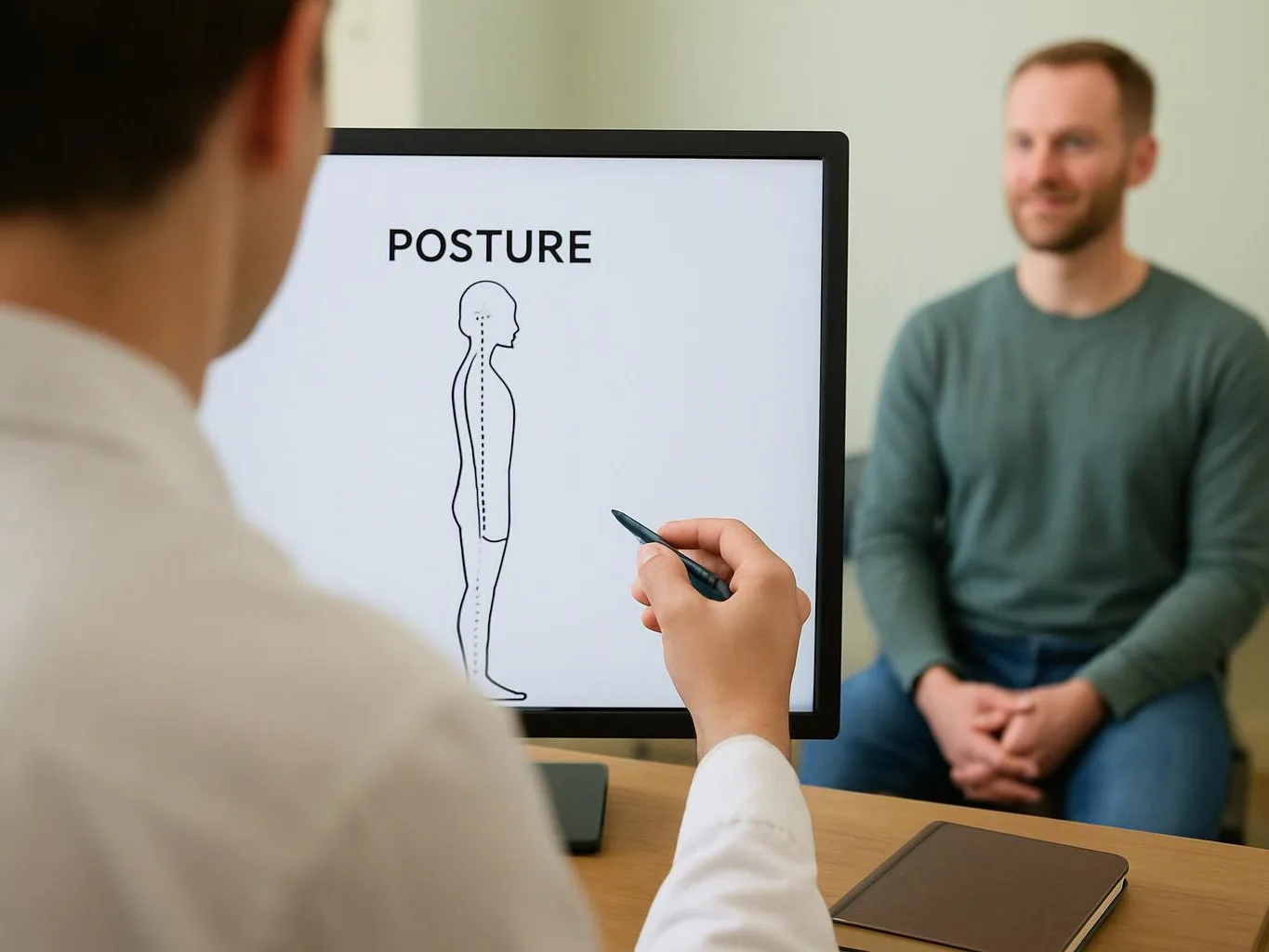
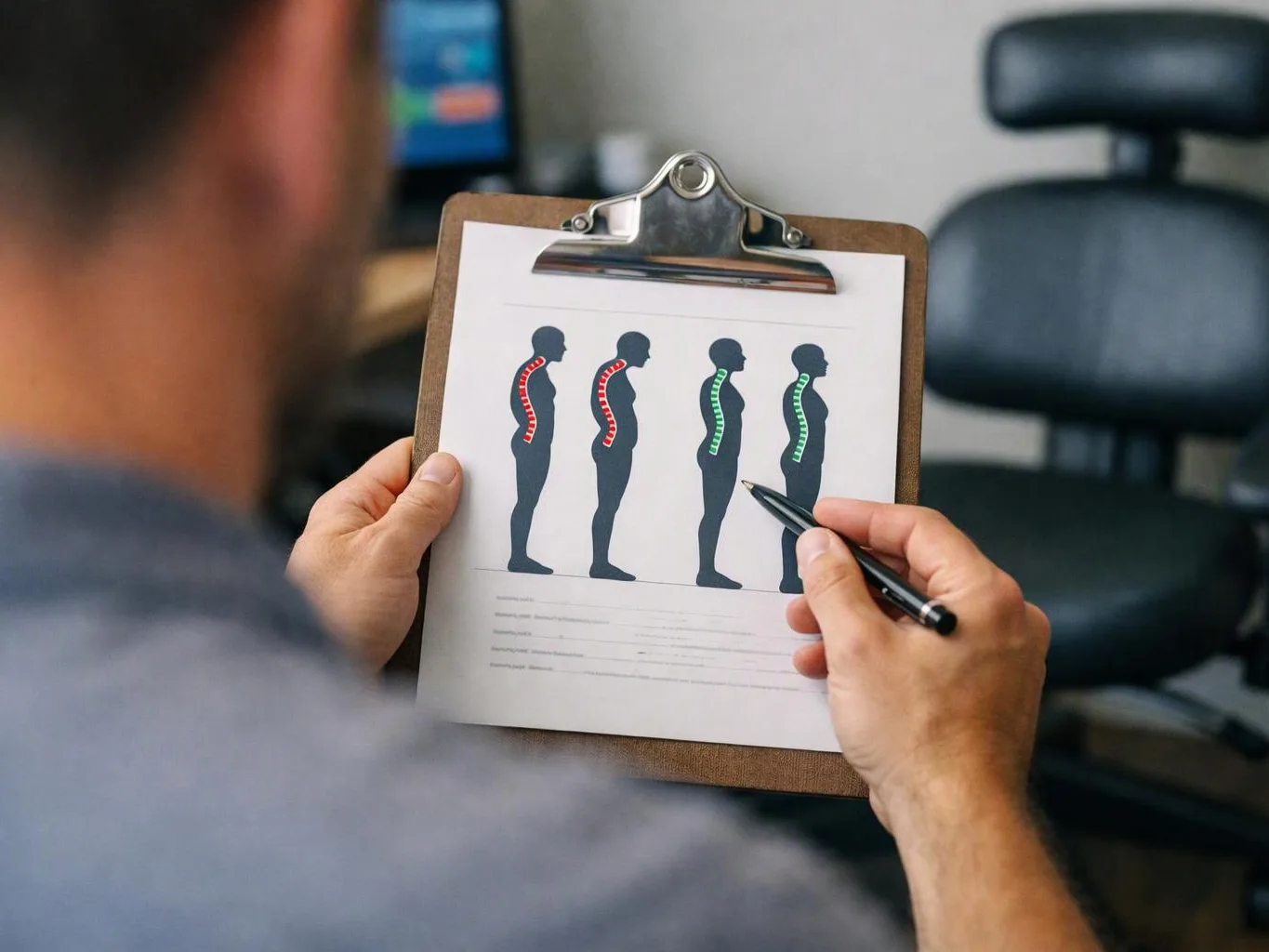
We begin with a posture assessment that may consider spinal alignment, the position of the pelvis and shoulders, joint mobility, and muscle tension. We also look for movement compensation that may place extra demand on nearby joints or muscles.
Our approach may include manual therapy, movement advice, and exercises that support the findings of the chiropractic assessment. The goal is to address contributing factors instead of focusing only on how posture looks at one moment.
Postural Correction may be appropriate when alignment concerns, restricted movement, or posture-related discomfort affect daily function.
What Are Corrective Exercises for Posture?
Corrective exercises for posture are planned movements that build usable strength, mobility, and motor control for better alignment during daily activities.
We may select exercises for core stability, muscle balance, joint mobility, or movement control. The right choices depend on your range of motion, muscle weakness, symptoms, and functional goals.
Corrective exercise therapy can also address ergonomics and daily movement habits. We teach you how to use the exercises during real activities, such as sitting, lifting, walking, or working.
Active practice matters because posture improvement depends on how well your body can control movement outside the clinic.
How Do We Assess Which Approach Fits Your Posture Needs?
Advanced Injury Care Clinic assesses your symptoms, posture, movement, mobility, and goals before recommending postural correction, corrective exercise therapy, or a coordinated approach.
Advantages of Postural Correction
Postural correction can help clarify which alignment and movement factors may contribute to restricted function or discomfort.
Best for: Postural correction is often a good fit for people who need a detailed assessment or hands-on care as part of their plan.
Advantages of Corrective Exercise Therapy
Corrective exercise therapy gives you an active way to build movement capacity and carry posture improvements into daily life.
Best for: Corrective exercise therapy is often a good fit for people who are ready to practice movement skills and build active control.
Which Care Should You Choose for Posture Concerns?
Choose care based on the findings of a posture and movement assessment, because some people need hands-on correction, some need active exercise training, and some benefit from both.
Postural correction may suit you when joint mobility, alignment, muscle tension, or movement restrictions are central concerns. Corrective exercise therapy may suit you when strength, flexibility, core stability, or motor control need more attention.
Combined care can connect hands-on treatment with active rehabilitation. We build the individual treatment plan around your symptoms, functional limitations, movement patterns, and goals.
What Changes the Cost and Time of a Posture Treatment Plan?
The cost and time of a posture treatment plan depend on the assessment findings, the services selected, the complexity of the exercises, and how the plan is adjusted as movement changes; Advanced Injury Care Clinic explains the plan and provides exact pricing through a Free Consultations appointment.
Treatment goals, hands-on treatment needs, exercise coaching, and the home exercise program can all affect the care plan. Plans may also change when your range of motion, symptoms, or functional performance changes.
When you contact us, ask what the assessment includes, which services are recommended, how exercises will be progressed, and how follow-up decisions are made. We use those details to explain the plan and the cost before care begins.
How Can You Maintain Postural Improvements?
You can maintain postural improvements by following the prescribed exercise plan, practicing efficient movement habits, and addressing the daily activities that contribute to recurring strain.
A home exercise program can support strength maintenance, mobility, and motor control between visits. We may also review workstation ergonomics, lifting habits, sleep positions, and other daily movement habits that influence posture.
Posture awareness works best when it helps you move comfortably and efficiently. Follow-up care can help us adjust your plan when symptoms, activity demands, or functional goals change.
Questions About Postural Correction and Corrective Exercise
Can postural correction and corrective exercise therapy be used together?
Yes, postural correction and corrective exercise therapy can be used together when the assessment supports both hands-on care and active movement retraining. Advanced Injury Care Clinic coordinates the plan around your symptoms, movement findings, and functional goals.
Is corrective exercise therapy hands-on treatment?
No, corrective exercise therapy mainly uses active movements that you perform with guidance. Hands-on care may be included in a combined plan when assessment findings show that it could support movement and exercise participation.
What should I bring to a posture assessment?
Bring a clear description of your symptoms, relevant health history, current activity demands, and the functional goals you want to address. Comfortable clothing can also make it easier for our team to observe posture and movement.
How do posture habits affect corrective exercise results?
Posture habits affect corrective exercise results because daily positions and movement patterns give your body repeated practice. We connect exercises to workstation ergonomics, movement habits, and functional tasks so the plan supports your routine.
Advanced Injury Care Clinic can review your posture, movement patterns, symptoms, and functional goals to explain which care approach fits your needs.
Request a Free Consultations appointment to discuss your individual treatment plan.