Pain with Bending, Lifting, or Exercise: When to Get It Checked
Movement-related back or neck pain may require chiropractic evaluation and targeted treatment. Advanced Injury Care Clinic assesses the spine, movement patterns, and functional limits to guide appropriate care when symptoms persist, worsen, or include warning signs.
Request an Estimate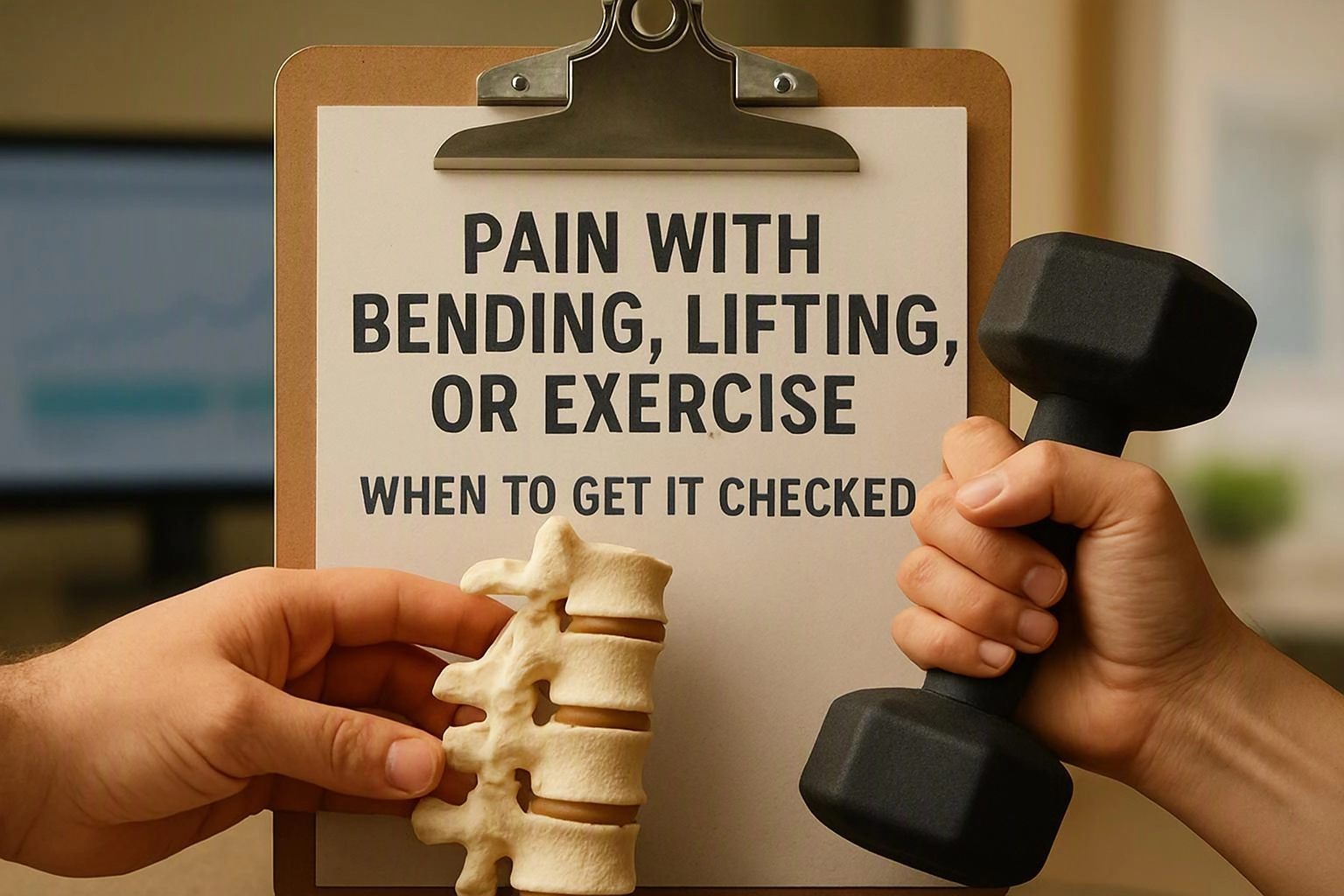
Why Bending, Lifting, or Exercise Can Cause Back or Neck Pain
Movement-related pain can occur when the spine, muscles, joints, discs, or nerves are placed under stress. Pain when bending may involve the low back, while pain when lifting can also reflect poor coordination between the hips, spine, and core.
Neck pain can develop when spinal movement is limited or when rotation places stress on irritated joints and muscles. Muscle strain, joint irritation, and changes in movement mechanics can affect how the spine handles everyday activity.
Our clinical assessment connects the painful motion with your symptoms and functional limits. That approach helps us distinguish common mechanical pain from symptoms that need another level of medical attention.
Common Causes of Pain During Movement
Pain during exercise or daily activity can have several causes. We look at the specific motion, the symptom pattern, and how the problem changes with rest or activity.
Signs Your Movement-Related Pain Should Be Checked
Movement-related pain should be evaluated when symptoms persist, progress, or affect normal function. These signs can help you decide when self-care is no longer enough.
When Exercise-Related Pain Needs Prompt Medical Attention
Exercise-related pain needs prompt medical attention when it follows significant trauma, causes neurological changes, or appears with serious systemic or bowel and bladder symptoms.
Severe pain after a sudden injury can signal a problem that needs urgent assessment. Loss of strength or sensation also needs prompt medical attention, especially when symptoms are new or progressing.
Bowel or bladder changes, numbness in the groin area, or pain after major trauma require immediate medical guidance. We can help assess musculoskeletal symptoms, but emergency warning signs should be directed to emergency medical services.
Should You Keep Exercising When Movement Hurts?
You should stop or modify an exercise that increases pain, spreads symptoms, or reduces function until the cause and safe activity level are assessed.
Exercise modification may include reducing resistance, changing the range of motion, or choosing low-impact movement that does not increase symptoms. Rest can help settle an irritated area, but prolonged inactivity may also make movement harder.
Our team uses your pain response and functional movement to guide activity progression. A safe return to activity usually starts with comfortable movement and advances as control, strength, and tolerance improve.
How Chiropractic Evaluation Identifies the Source of Pain
A chiropractic evaluation identifies movement-related pain by reviewing symptoms, checking spinal and joint motion, and observing how movement affects function.
During a chiropractic examination, we review the location, timing, and triggers of your pain. We may assess posture, spinal alignment, range of motion, joint motion, and functional movement.
Neurological screening helps us look for changes linked to nerve irritation, including radiating pain, numbness, tingling, or weakness. These findings help determine whether chiropractic care is appropriate or whether you need another medical evaluation.
How Corrective Exercise Therapy Supports Safer Movement
Corrective Exercise Therapy supports safer movement by addressing mobility, strength, and control deficits that can contribute to painful bending, lifting, or exercise.
Corrective Exercise Therapy may focus on core stability, mobility, strengthening, motor control, and movement retraining. We select exercises based on your examination findings and the movements that trigger symptoms.
Our team progresses the plan as your control and tolerance improve. The goal is to support functional movement and help you return to needed activities without repeatedly provoking pain.
Steps to Reduce Movement-Related Back or Neck Pain
Movement modification can reduce stress while you monitor how your back or neck responds. These steps are general guidance and do not replace an evaluation when symptoms persist or worsen.
How Advanced Injury Care Clinic Plans Care for Movement-Related Pain
Advanced Injury Care Clinic plans care by connecting examination findings with the movement that triggers symptoms and selecting appropriate chiropractic treatment or corrective exercise.
Our clinical assessment considers your symptoms, spinal movement, range of motion, posture, neurological findings, and functional limits. We use those findings to shape an individualized care plan.
Care may include Back Pain Treatment, Neck Pain Treatment, joint and soft-tissue care, movement modification, or Corrective Exercise Therapy. We explain what we find and how each part of the plan supports safer movement.
Contact us to discuss your symptoms and arrange an evaluation. The right next step depends on the trigger, severity, symptom pattern, and effect on daily function.
Questions About Pain During Bending, Lifting, and Exercise
Can a chiropractor help with pain that happens only during exercise?
Yes, Advanced Injury Care Clinic can evaluate pain that occurs only during exercise by checking the painful movement, spinal and joint motion, neurological signs, and functional limits. We then guide appropriate chiropractic care, exercise modification, or referral when the symptoms need another type of medical assessment.
Is pain when bending forward a sign of a back injury?
Pain when bending forward can reflect muscle strain, joint irritation, disc irritation, or another movement-related problem, but the motion alone does not identify the cause. A clinical assessment helps connect the pain with range of motion, nerve symptoms, strength, and function.
Why does neck pain limit my range of motion?
Neck pain can limit range of motion when muscle tension, joint irritation, inflammation, or nerve irritation makes movement uncomfortable or guarded. Our examination looks at neck movement, posture, strength, sensation, and symptoms that travel into the arm.
Can lifting technique contribute to recurring back pain?
Yes, poor lifting mechanics can repeatedly load the low back when the hips, legs, trunk, and load are not working together. We assess the lifting pattern and help guide movement modification, strengthening, and gradual activity progression.
What should I tell a chiropractor about pain during movement?
Tell the chiropractor which movement triggers the pain, where the symptoms travel, what changes the pain, and whether numbness, tingling, or weakness occurs. Include any recent injury, changes in exercise, and limits on work, walking, lifting, or daily activity.