Posture Concerns: Signs to Address Beyond Slouching
Posture concerns can involve forward head posture, rounded shoulders, muscle imbalance, and recurring discomfort, and Advanced Injury Care Clinic addresses these concerns through postural correction and corrective exercise therapy.
Request an Estimate
What Posture Concerns Go Beyond Slouching?
Poor posture goes beyond slouching when altered alignment affects the head, shoulders, spine, pelvis, or movement patterns. Postural alignment describes how these body regions relate to one another during rest and movement.
Changes in spinal position can place extra demand on certain muscles while other muscles do less work. This muscle imbalance may affect movement quality, comfort, and spinal mobility.
What Signs Can Point to a Posture Problem?
Posture problems can show up through visible alignment changes and physical symptoms. The following signs may point to a need for closer assessment:
A visible sign does not explain the full cause by itself. We consider symptoms, movement patterns, and how the body responds during daily activities.
What Causes Poor Posture?
Poor posture often develops from repeated habits that keep the body in one position or make certain muscles work harder. Common contributing factors include:
These factors can combine with muscle tension and reduced mobility. Our movement assessment helps identify which habits and physical limitations may be affecting your posture.
How Can You Prevent Posture Concerns?
Posture concerns can often be reduced by changing daily habits and building better movement support. Practical prevention steps include:
Good posture is not a rigid position that must be held all day. We focus on comfortable alignment, regular movement, and control across daily tasks.
Can Rounded Shoulders Be Linked to Neck or Upper-Back Discomfort?
Yes, rounded shoulders can be associated with neck or upper-back discomfort when altered shoulder position increases strain during movement or sustained activities.
Rounded shoulders can change how the shoulder blades, neck, and upper back share movement. That change may contribute to muscle tension, especially during prolonged sitting or screen use.
We assess shoulder position along with range of motion and movement control. This helps us determine whether postural correction and exercise therapy fit the concern.
When Should Posture Problems Be Evaluated?
Posture problems should be evaluated when discomfort, stiffness, movement changes, numbness, or weakness persist or interfere with daily activities.
Persistent discomfort and recurring stiffness may indicate that daily posture habits are not the only factor. Movement limitations, numbness, or weakness also deserve careful attention.
Our postural assessment considers symptoms in context and helps identify whether further medical care is needed. Sudden or severe symptoms should receive prompt medical attention.
How We Assess and Address Poor Posture
Advanced Injury Care Clinic uses chiropractic evaluation, postural correction, and corrective exercise therapy to address posture-related movement concerns. We review how the head, shoulders, spine, pelvis, and limbs work together during common movements.
Our team checks range of motion, spinal mobility, muscle balance, and movement patterns. We then use the findings to guide care that matches your symptoms, activity needs, and movement goals.
What Does Postural Correction Involve?
Postural correction involves improving spinal alignment, joint mobility, and movement patterns that support comfortable daily activity.
We may address restricted motion and areas that carry too much strain. The goal is to help your body use more balanced movement during sitting, standing, walking, and other tasks.
Can Corrective Exercises Help With Posture Concerns?
Yes, corrective exercises can help improve posture concerns by developing strength, mobility, and control in the muscles that support aligned movement.
Corrective exercise therapy may target the core muscles and scapular muscles while also addressing flexibility and motor control. We choose exercises based on your movement assessment rather than applying the same routine to every person.
What to Expect From a Chiropractic Posture Evaluation
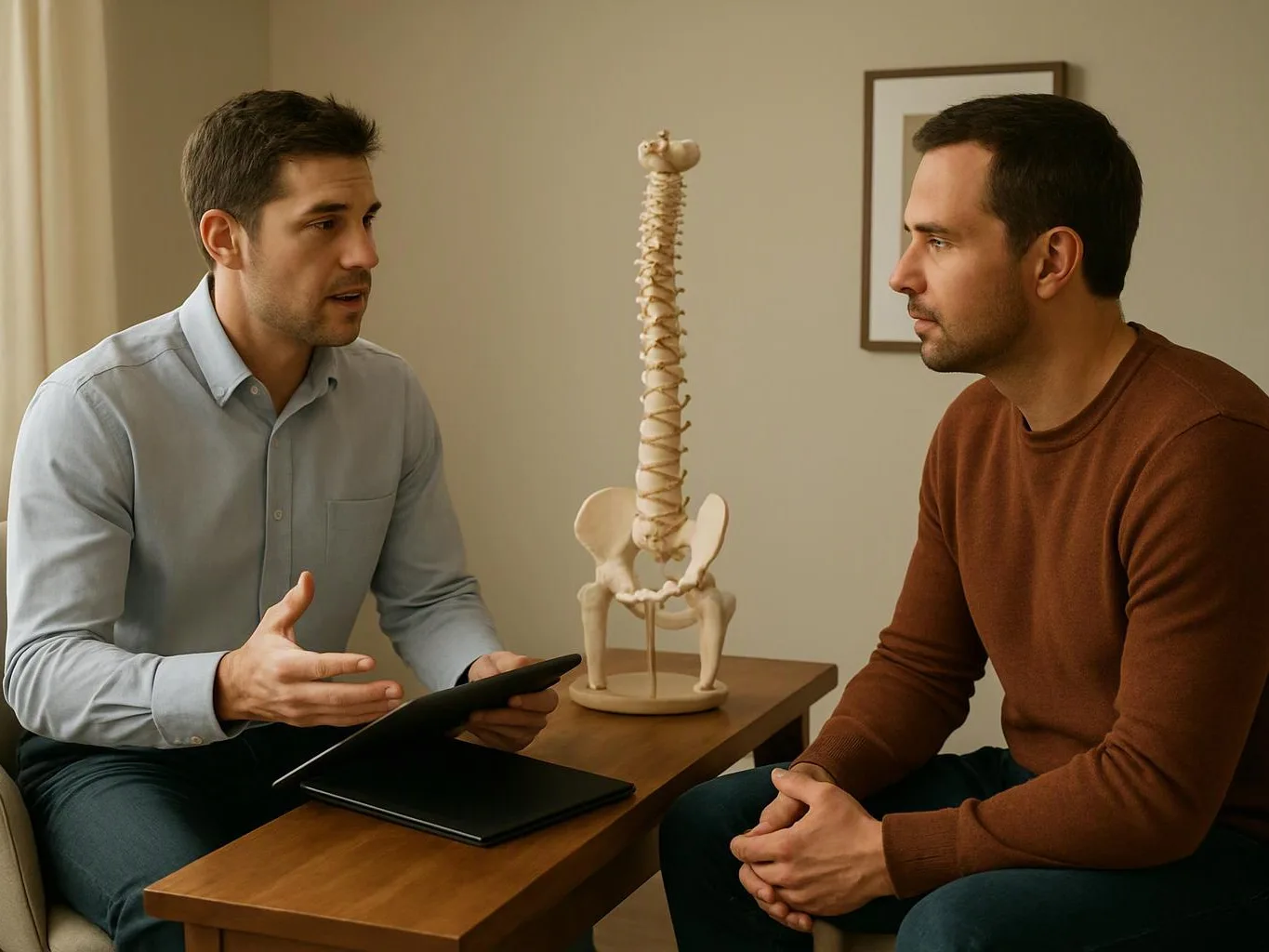
A chiropractic posture evaluation reviews your history, alignment, movement, and exercise needs in a clear sequence. Our team uses the findings to build an individualized plan.
The evaluation is designed to connect visible posture signs with how your body moves and feels. We adjust recommendations as your movement and comfort change.
How Do You Know Whether Chiropractic Posture Care Fits Your Concern?
Chiropractic posture care may fit concerns involving alignment, recurring muscle tension, restricted movement, or discomfort linked to daily posture habits.
Neck discomfort, upper-back discomfort, rounded shoulders, and limited mobility can all be discussed during an assessment. We help determine whether chiropractic care, corrective exercise, or another type of evaluation best matches the concern.
If you want to discuss your symptoms with our team, contact Advanced Injury Care Clinic through our contact page.
Questions About Posture Concerns
Is forward head posture a sign of poor posture?
Yes, forward head posture can be a sign of poor posture when the head rests ahead of the shoulders during standing or sitting. Advanced Injury Care Clinic evaluates head and neck position with movement patterns, mobility, and muscle balance.
Can poor posture cause shoulder tension?
Yes, poor posture can contribute to shoulder tension when altered alignment makes the shoulder and upper-back muscles work harder during sustained activities. A movement assessment can help identify the factors involved.
What exercises help rounded shoulders?
Exercises that build upper-back and scapular control, improve flexibility, and support core strength may help rounded shoulders. The right corrective exercises depend on your range of motion, strength, and movement patterns.
Can a chiropractor evaluate posture-related discomfort?
Yes, chiropractic care can include an evaluation of posture-related discomfort, joint mobility, muscle balance, and movement control. The assessment helps guide appropriate postural correction and corrective exercise recommendations.
Related Resources
Postural Correction Companies Worth Comparing in Brentwood (2026)
Compared ToChiropractor or Physical Therapist: Which Should You See?
Compared ToPostural Correction and Corrective Exercise: What Care Should You Choose?
What Goes With ItCorrective Exercise and Chiropractic Care: Building Movement and Function