
What Is Torticollis?
Torticollis is a condition that causes the head and neck to tilt or turn because neck muscles, joints, or nearby tissues are not moving normally. In infants, the head may favor one direction. In older children, torticollis can develop after strain, illness, or another health problem and may limit comfortable neck movement.
Quick Facts About Torticollis
Category
Neck movement condition
Used for
Describing a tilted or turned head position
Common confusion
Often mistaken for simple neck soreness
Also called
Wry Neck, Twisted neck
Often discussed with
Pediatric Chiropractic Care
Key Takeaways About Torticollis
- Head position may favor one side.
- Infant cases can affect neck movement during daily activities.
- Torticollis isn't the same as ordinary soreness.
How Torticollis Works
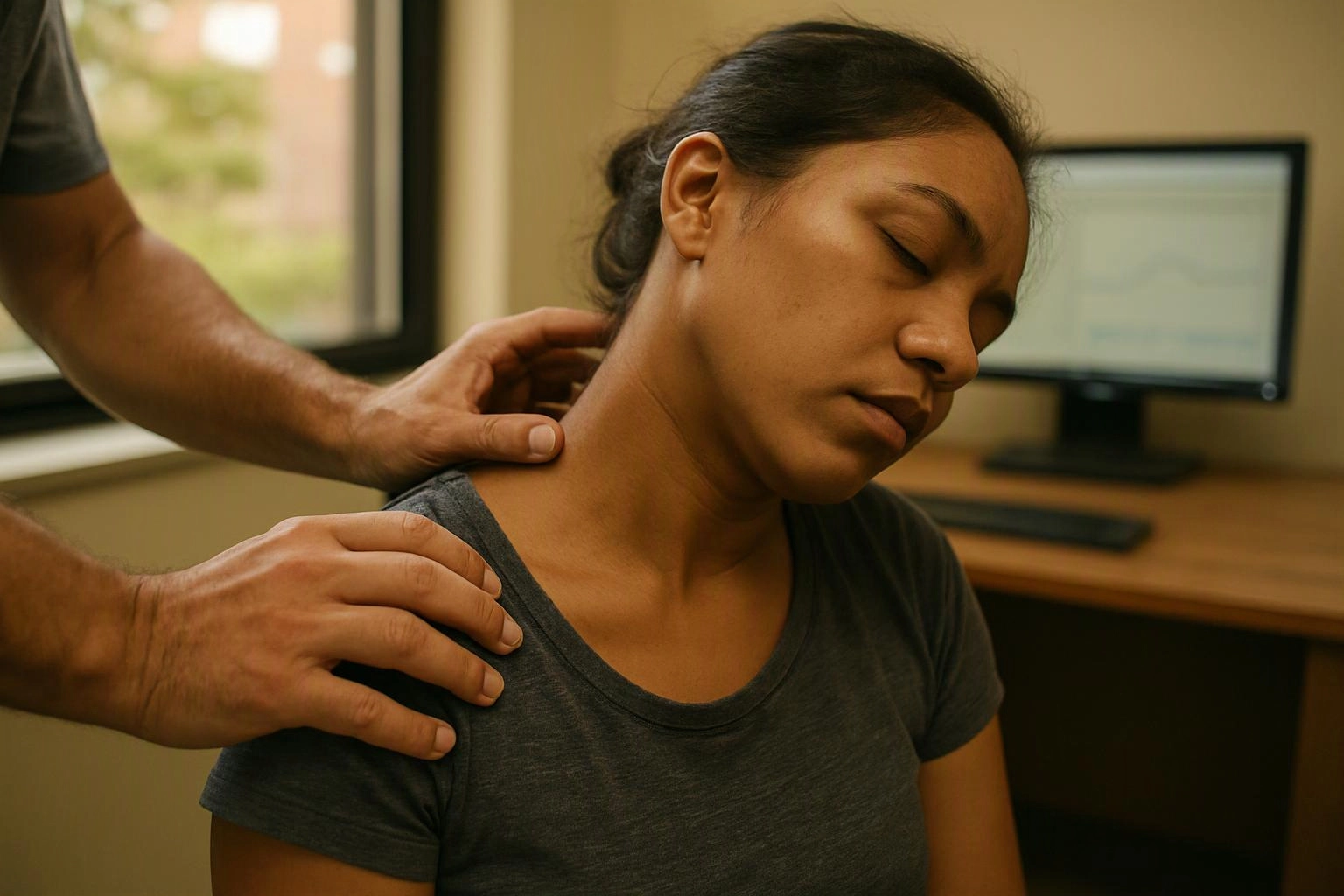
Torticollis changes how the neck muscles and joints guide head position. Tightness on one side can pull the head toward that side, while limited motion can make turning difficult. The condition may appear at birth, after a strain, or alongside another health concern.
Related glossary terms: Cervical Spine, Joint Mobility, Muscle Spasm.
In pediatric care, a provider looks at head position, neck motion, muscle balance, and how the child moves during ordinary tasks. The child may turn the whole body to look around. Infants may show a preferred feeding side or difficulty holding the head evenly.
Care focuses on the findings behind the uneven movement. Gentle movement work, position changes, and age-appropriate exercises may help restore more balanced motion when they fit the child’s needs.
From the Advanced Injury Care Clinic team
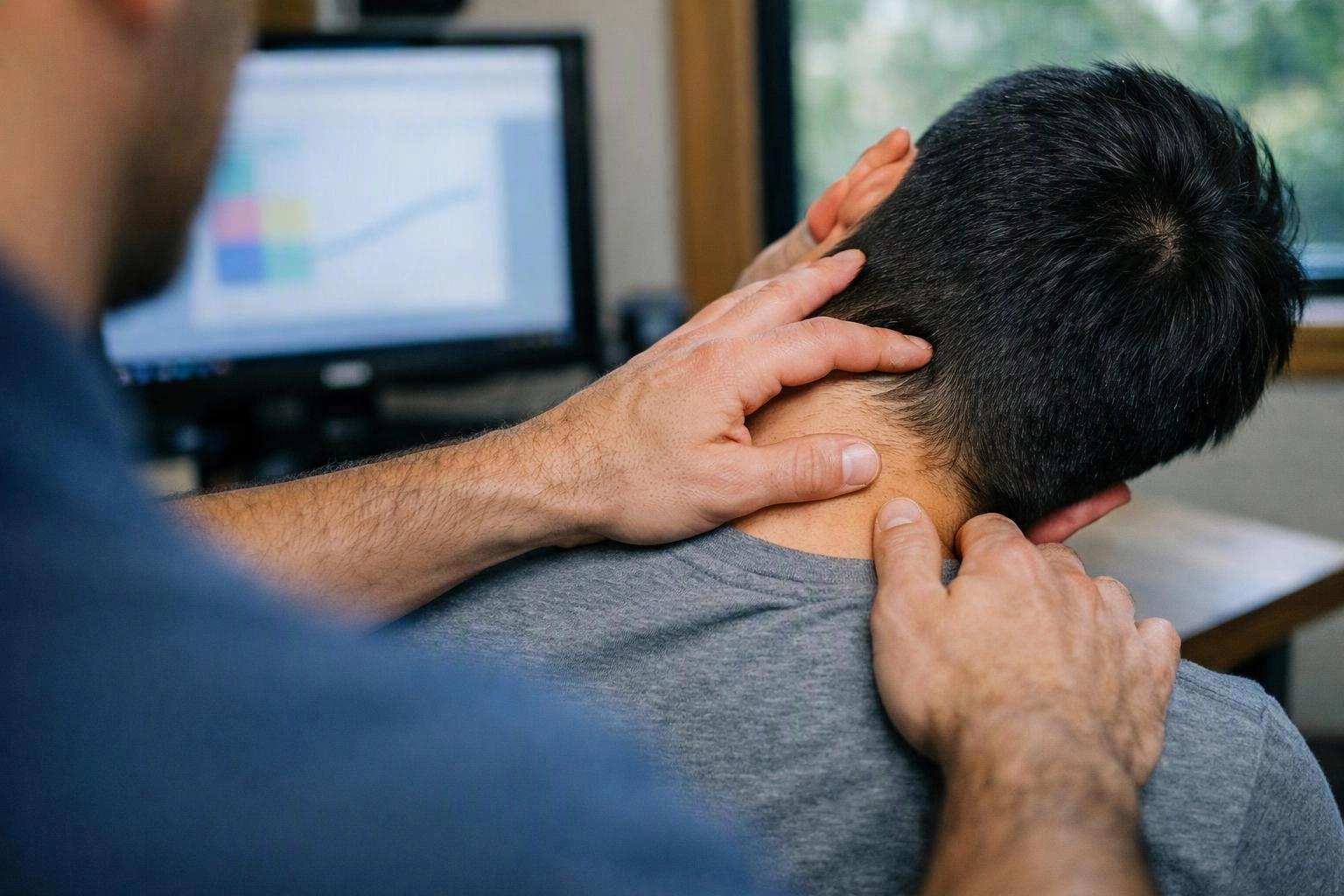
When we check torticollis, we observe head position, neck motion, and how a child responds during movement. We also look for differences between sides and consider how feeding, sleep position, play, or recent strain may affect the pattern.
Torticollis in Practice: A Real-World Example
A baby consistently turns the head toward the right and resists looking left during play. In Pediatric Chiropractic Care, the team checks the child’s movement pattern and considers gentle, age-appropriate care based on the findings.
Related Services
Related Terms
Cervical Spine
Cervical Spine is the upper section of the spinal column in the neck. It connects the…
Joint Mobility
Joint mobility is the amount and quality of movement available at a joint. It depends on…
Muscle Spasm
Muscle Spasm is an involuntary tightening of a muscle that can feel sudden, painful, or hard…
Range of Motion
Range of Motion is the available movement at a joint or body region. It describes how…
Advanced Injury Care Clinic
Have Questions About Torticollis?
Contact Advanced Injury Care Clinic for practical guidance on Torticollis and related chiropractor work in Brentwood.