
What Is a Muscle Spasm?
Muscle Spasm is an involuntary tightening of a muscle that can feel sudden, painful, or hard to release. The affected area may feel firm, tender, or restricted during movement. A spasm can involve a small muscle group or a larger region, such as the neck, back, or shoulder.
Quick Facts About Muscle Spasm
Category
Muscle response
Used for
Describing tight, painful muscle activity
Common confusion
Often confused with a trigger point
Also called
Muscle Cramp, Involuntary muscle contraction
Often discussed with
Dry Needling
Key Takeaways About Muscle Spasm
- Spasms involve involuntary muscle tightening.
- The affected area may feel firm or tender.
- A spasm is not the same as a trigger point.
How Muscle Spasm Works
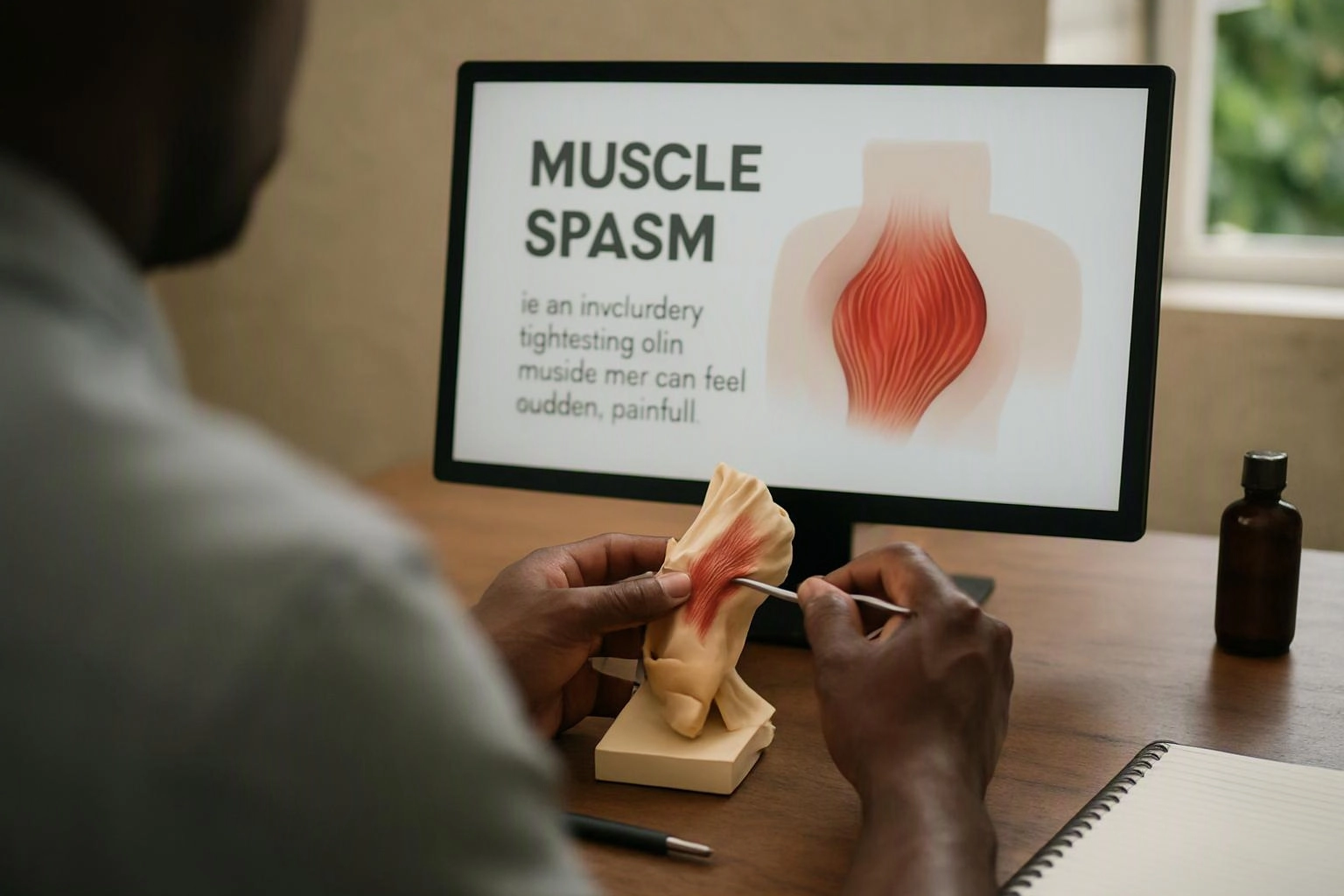
Muscle Spasm happens when muscle fibers tighten without conscious control. The muscle may stay contracted briefly or remain tense during movement. People often notice a firm spot, soreness, or a reduced ability to move comfortably.
Related glossary terms: Trigger Point, Range of Motion, Joint Mobility.
During Dry Needling, a provider checks the muscle, nearby joints, and movement pattern. The needle is placed in selected tight tissue to help assess and address the area. The response may include a brief twitch or a change in muscle tension. A spasm describes the muscle response, while a trigger point describes a sensitive spot within a muscle.
From the Advanced Injury Care Clinic team
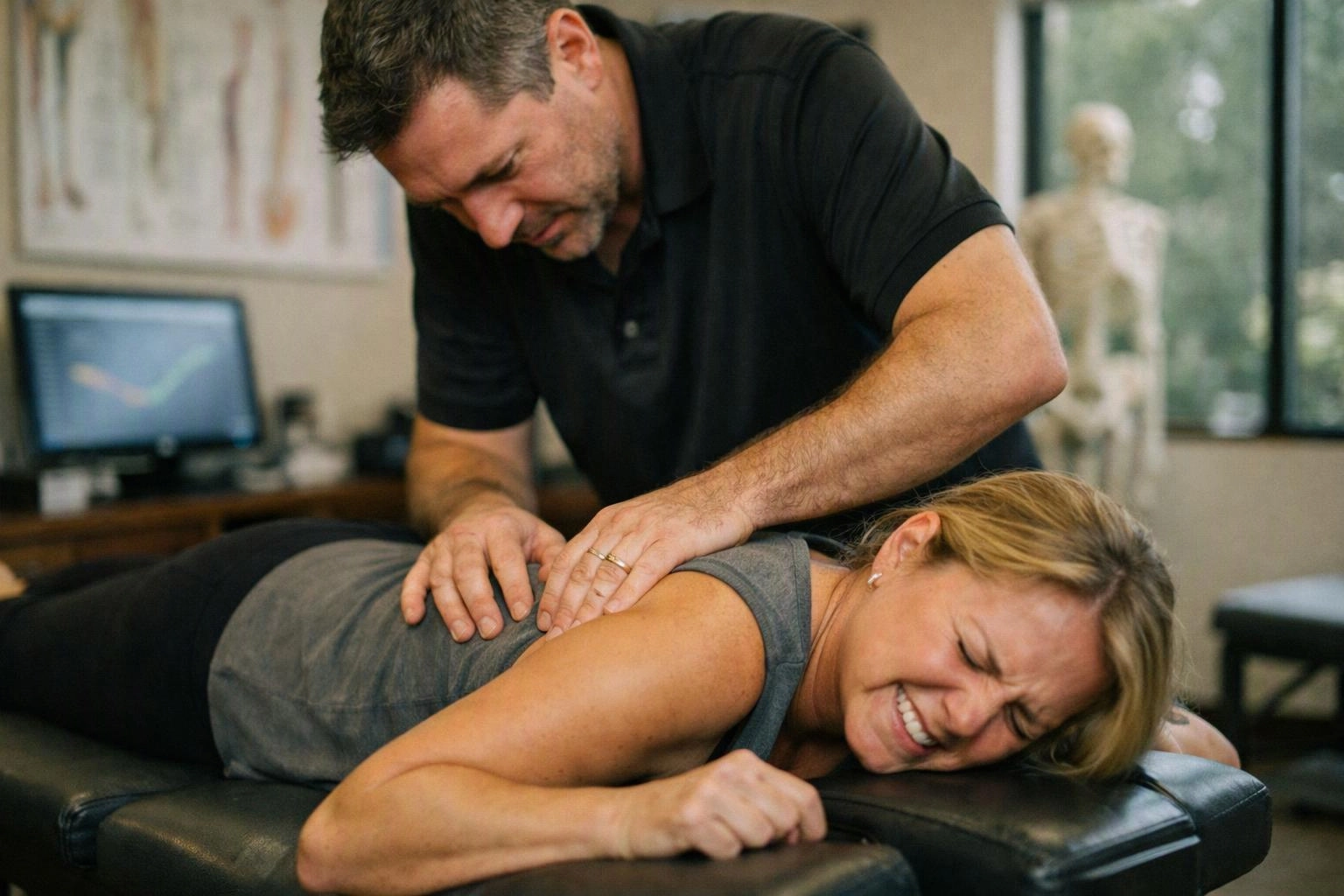
When we assess a muscle spasm, we check its location, tenderness, movement limits, and connection to nearby joints. During dry needling, we use those findings to select the treatment area and watch how the muscle responds. We also consider whether the tightness reflects a broader movement problem.
Muscle Spasm in Practice: A Real-World Example
A person develops a tight neck muscle after spending hours at a desk. During dry needling, the provider identifies the tense area and checks whether muscle tension changes with movement.
Related Services
Related Terms
Trigger Point
A trigger point is a sensitive spot within a tight band of muscle that can cause…
Range of Motion
Range of Motion is the available movement at a joint or body region. It describes how…
Joint Mobility
Joint mobility is the amount and quality of movement available at a joint. It depends on…
Cervical Spine
Cervical Spine is the upper section of the spinal column in the neck. It connects the…
Advanced Injury Care Clinic
Have Questions About Muscle Spasm?
Contact Advanced Injury Care Clinic for practical guidance on Muscle Spasm and related chiropractor work in Brentwood.