
What Is the Atlas Vertebra?
The atlas vertebra is the first cervical vertebra at the top of the neck. It supports the skull and forms a specialized joint with the axis vertebra, allowing much of the head’s nodding and turning movement. Its ring-like shape differs from the other cervical vertebrae because it lacks a typical vertebral body.
Quick Facts About Atlas Vertebra
Category
Upper cervical vertebra
Used for
Skull support and head movement
Common confusion
Often confused with the axis vertebra
Also called
C1 Vertebra, First cervical vertebra
Often discussed with
Neck Pain Treatment
Key Takeaways About Atlas Vertebra
- Its ring-like structure distinguishes it from most spinal vertebrae.
- The atlas helps connect the skull with the rest of the cervical spine.
- The atlas is not the same structure as the axis vertebra.
How Atlas Vertebra Works
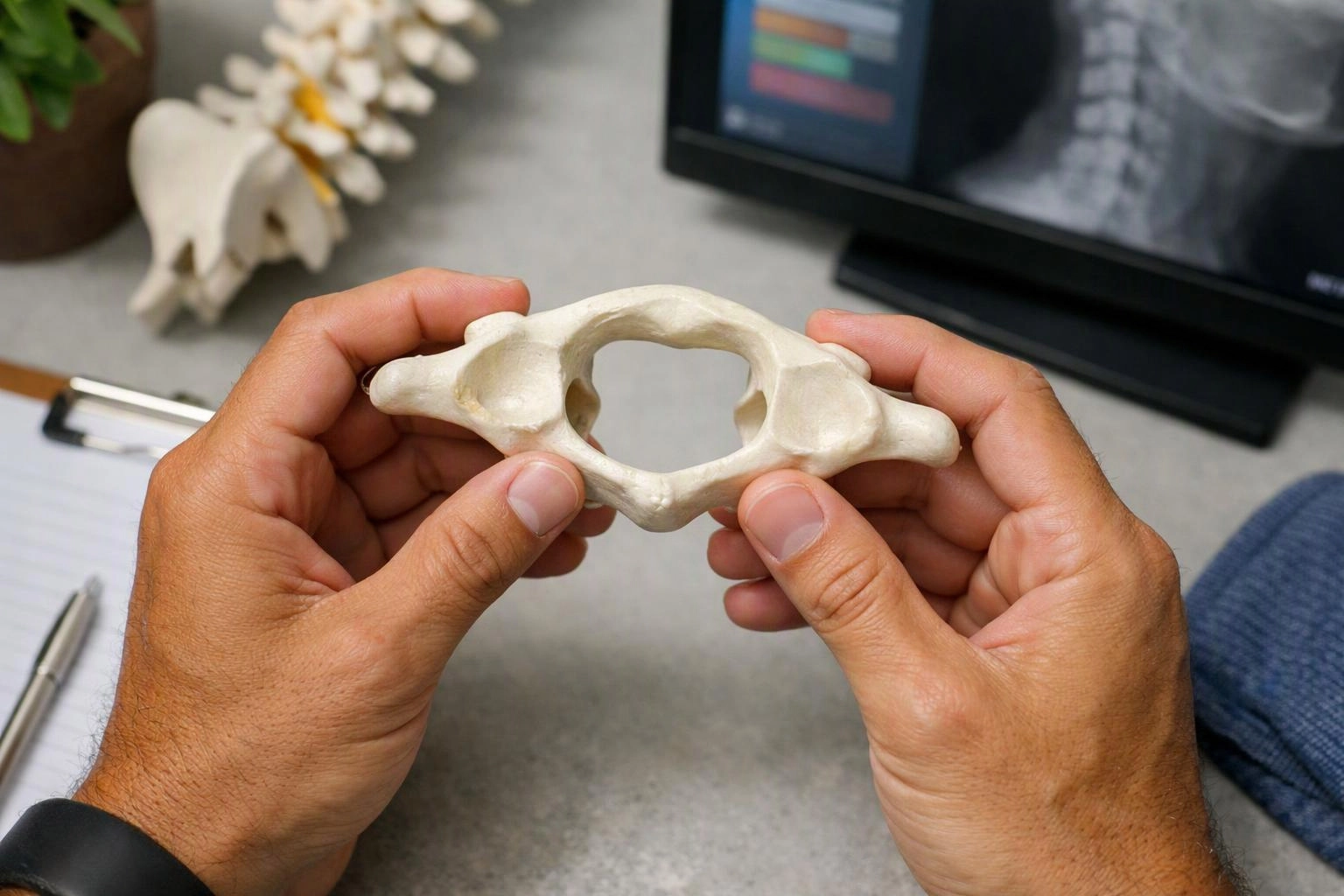
The atlas vertebra supports the base of the skull through paired joints called the atlanto-occipital joints. Its broad ring surrounds the upper spinal cord, while its openings allow important nerves and blood vessels to pass through the area. This design gives the upper neck a specialized role in head movement.
Related glossary terms: Cervical Spine, Range of Motion, Whiplash.
The atlas also connects with the axis vertebra below it. The axis has a tooth-like projection that fits within the atlas and acts as a pivot for rotation. Clinicians consider the atlas alongside the cervical spine, nearby muscles, joint motion, posture, and symptoms when examining neck pain. The atlas itself does not work as an isolated structure.
From the Advanced Injury Care Clinic team
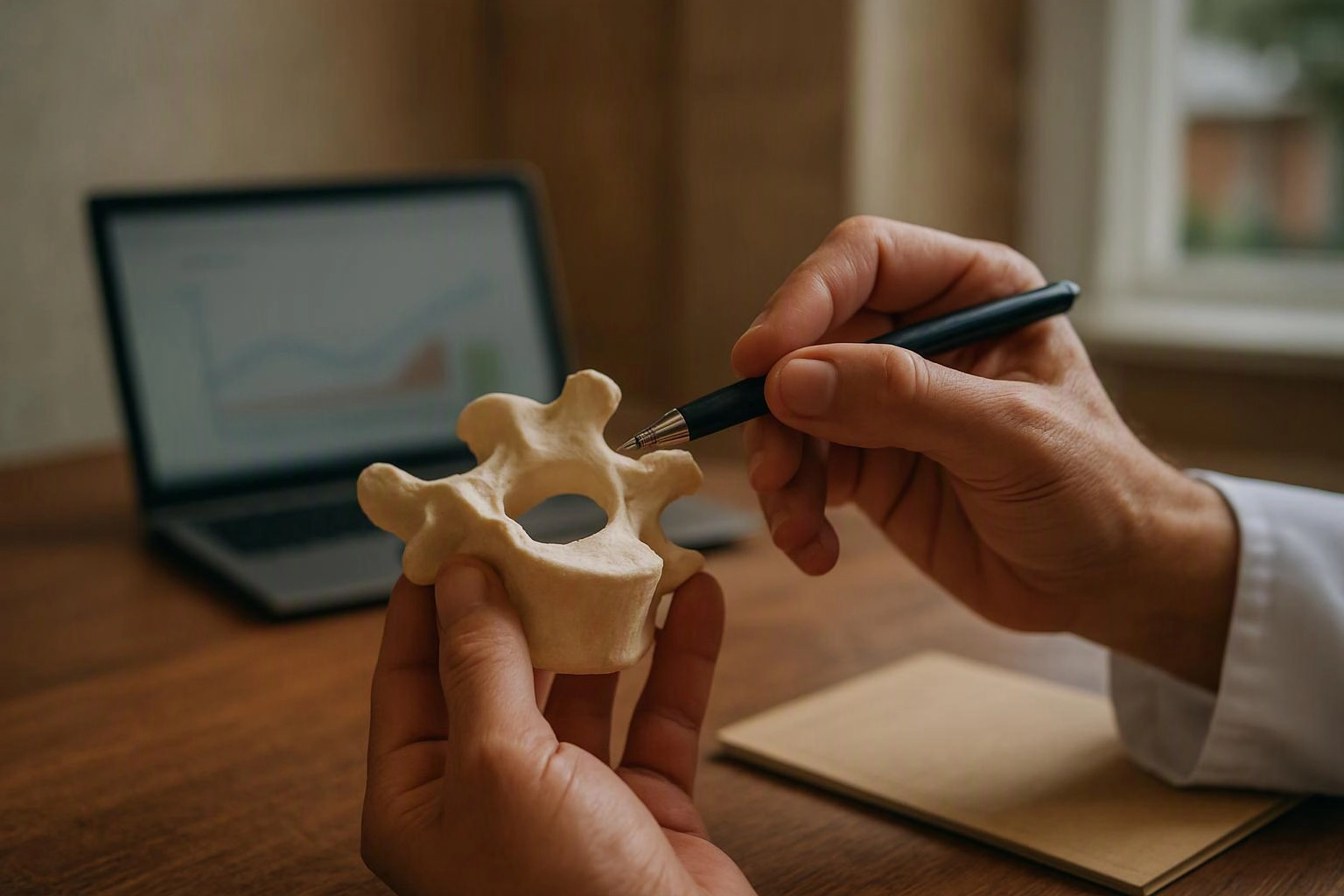
When we assess neck pain, we consider the atlas as part of the upper cervical region rather than treating it as a separate source of symptoms. Our team reviews head and neck movement, posture, muscle tension, and related joint motion before deciding whether care should address this area.
Atlas Vertebra in Practice: A Real-World Example
A person with neck pain after a sudden head movement may have limited upper-neck rotation and discomfort near the base of the skull. During an evaluation, we examine the atlas region together with the surrounding cervical joints and muscles.
Related Services
Related Terms
Cervical Spine
The cervical spine is the upper section of the spinal column located in the neck. It…
Range of Motion
Range of Motion is the amount and direction a joint can move through its available movement…
Whiplash
Whiplash is a neck injury caused by rapid forward and backward movement of the head. The…
Joint Mobilization
Joint Mobilization is a hands-on technique that applies controlled, gentle movement to a joint and its…
Advanced Injury Care Clinic
Have Questions About Atlas Vertebra?
Contact Advanced Injury Care Clinic for practical guidance on Atlas Vertebra and related chiropractor work in Brentwood.