Persistent Muscle Knots: When to Seek an Evaluation
Persistent muscle knots warrant an evaluation when pain continues, movement becomes limited, symptoms spread, or numbness and weakness appear. Massage therapy assessment at Advanced Injury Care Clinic examines the affected muscles and surrounding movement to guide appropriate care.
Request an EstimateWhen Should You Get a Muscle Knot Checked?
A persistent muscle knot should be checked when pain persists, movement remains restricted, symptoms recur, or the area develops numbness, weakness, swelling, or unusual sensitivity.
A muscle knot can be a tight spot in soft tissue, but ongoing symptoms may involve more than local muscle tension. We review the pattern of your muscle pain and use a massage therapy evaluation to decide whether the symptoms fit muscular care or need further medical attention.
Warning Signs That a Muscle Knot Needs Attention
Warning signs show when a recurring tight spot needs more than routine self-care. Our team uses these symptoms to help determine whether an evaluation is appropriate.
What Symptoms Around a Muscle Knot Need Medical Attention?
Numbness, progressive weakness, sudden swelling, fever, severe pain, or symptoms after a significant injury require medical attention rather than massage alone.
Nerve symptoms can include numbness, tingling, burning, or pain that travels into an arm or leg. We screen these symptoms before soft-tissue treatment and direct urgent concerns to appropriate medical care.
Acute injury can also cause damage that is not suitable for immediate massage. Seek urgent medical care for severe or rapidly worsening symptoms, major swelling, new weakness, or fever with significant pain.
Why Do Muscle Knots Keep Coming Back?
Muscle knots often return when repetitive movement, sustained posture, overuse, or an unresolved movement pattern continues to load the same tissue.
Repetitive activity can keep the same muscle fibers working without enough recovery. Poor posture and limited movement mechanics can also increase muscle tension in the neck, shoulders, back, hips, or calves.
Stress-related muscle tension may add to the problem, especially when the body stays braced for long periods. We look at your activities, posture, and recovery habits to identify factors that may be maintaining the symptoms.
Can Massage Therapy Help With Muscle Knots?
Yes, massage therapy can help reduce soft-tissue tension and improve comfortable movement when symptoms are consistent with a muscular problem and no warning sign requires medical evaluation.
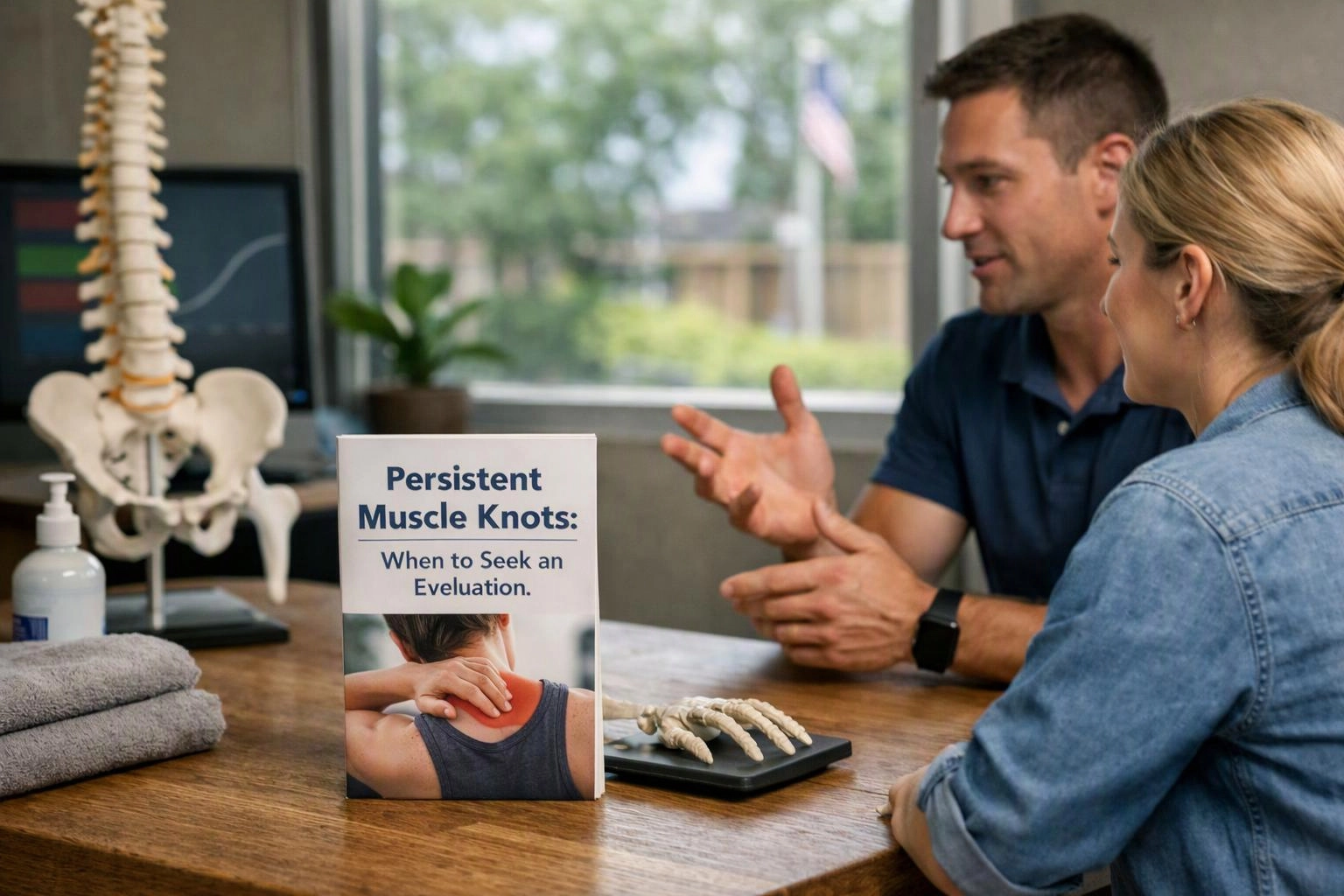
Massage therapy may address myofascial tension, tender muscle bands, and trigger points within the soft tissue. Our approach uses pressure and movement that match your symptoms instead of forcing painful tissue.
Care may support muscle relaxation and range of motion, but massage does not replace medical assessment when numbness, weakness, fever, sudden swelling, or severe pain is present.
DIY Care or an Evaluation: Which Path Fits Your Symptoms?
Self-care may fit mild muscle tension when symptoms are improving and no warning signs are present. We use symptom screening and a movement assessment when pain persists, returns, or affects normal activity.
| Factor | What you can do yourself | What we do |
|---|---|---|
| Mild muscle tension | Use comfortable heat, gentle movement, and hydration. | We assess whether the symptoms appear muscular and suitable for massage therapy. |
| Ongoing or recurring pain | Track activities, positions, and movements that trigger symptoms. | We review the symptom history and perform a movement assessment. |
| Numbness, weakness, swelling, or fever | Seek medical attention and avoid treating the area as a simple knot. | We screen the symptoms and explain when medical care is needed before massage. |
How Advanced Injury Care Clinic Assesses a Persistent Muscle Knot
Advanced Injury Care Clinic assesses muscle tenderness, range of motion, and the movement pattern that may be stressing the area.
Our team asks how the symptoms started, what activities affect them, and whether pain travels from the original site. This helps us consider referred pain and separate a local muscle complaint from symptoms that may involve a joint, tendon, or nerve.
When massage therapy is appropriate, we use the findings to shape a massage therapy plan focused on comfortable soft-tissue treatment and functional movement.
What to Do Before Your Evaluation
Preparing clear information helps our team understand the muscle knot and the factors that may be keeping it active.
These details help us choose a safe starting point and decide whether massage therapy fits your symptoms.
Questions About Persistent Muscle Knots
Can a muscle knot cause tingling or numbness?
Advanced Injury Care Clinic treats tingling or numbness as a reason for careful screening because these symptoms may involve an irritated nerve or another condition beyond a muscle knot.
Should you massage a muscle knot if it hurts?
Massage may be appropriate for mild muscular discomfort, but sharp, severe, spreading, or worsening pain should be evaluated before deeper pressure is used.
What type of clinician checks persistent muscle knots?
Advanced Injury Care Clinic checks persistent muscle knots through symptom screening, soft-tissue assessment, and movement evaluation, while medical symptoms may require a medical clinician.
Can muscle knots be caused by an injury?
Yes, muscle knots can develop after an injury when nearby muscles tighten to protect the area, but significant injury symptoms need screening before massage therapy.
Persistent muscle knots deserve an evaluation when symptoms continue, return, limit movement, or include nerve symptoms. Contact Advanced Injury Care Clinic to discuss your symptoms and determine whether an evaluation or massage therapy plan is appropriate.
Contact Advanced Injury Care Clinic
Get a Free Estimate