Kinesiology Taping: Common Uses, Limits, and How It Fits Into Care
Kinesiology taping uses elastic tape to provide light support and sensory feedback for selected movement or discomfort concerns. Advanced Injury Care Clinic applies it as one part of chiropractic care when it fits the person’s goals and overall plan.
Request an EstimateWhat Is Kinesiology Taping Used For?
Kinesiology taping is an elastic taping method that provides light external support and sensory feedback during movement.
Elastic therapeutic tape may help a person notice how an area is moving. This body awareness can support movement comfort when the tape application matches the concern.
We may use muscle support taping or joint support taping as part of a broader plan. The goal is to support functional movement, not to hold the body rigid.
How Kinesiology Tape Can Support an Injured Area
Yes, kinesiology tape can support an injured area when the application matches the concern and does not replace assessment or active care.
Kinesiology tape gives an injured area light external support during movement. The tape may also provide sensory input that helps improve proprioception, which is the body’s sense of position and motion.
Some applications are chosen to support comfort or help manage the feeling of swelling. We first consider the person’s symptoms, movement pattern, and skin response before deciding whether tape is appropriate.
What Kinesiology Taping Can and Cannot Do
Kinesiology tape can provide temporary symptom support and movement support, but it does not diagnose an injury or correct every underlying cause.
The table below separates the supportive role of tape from the parts of care that require assessment and rehabilitation.
| Kinesiology taping may help with | Kinesiology taping does not replace |
|---|---|
| Light external support during selected movements | A complete injury assessment |
| Sensory feedback and body awareness | Rehabilitation for strength, mobility, and control |
| Short-term movement comfort | Care for the underlying cause of an injury |
We use tape as a conservative care technique when it supports the person’s functional goals. Active rehabilitation and appropriate follow-up remain important when the concern needs more than temporary support.
How Kinesiology Taping Fits Into Chiropractic Care
Yes, kinesiology taping can be used with chiropractic care as a supportive technique within an individualized care plan.
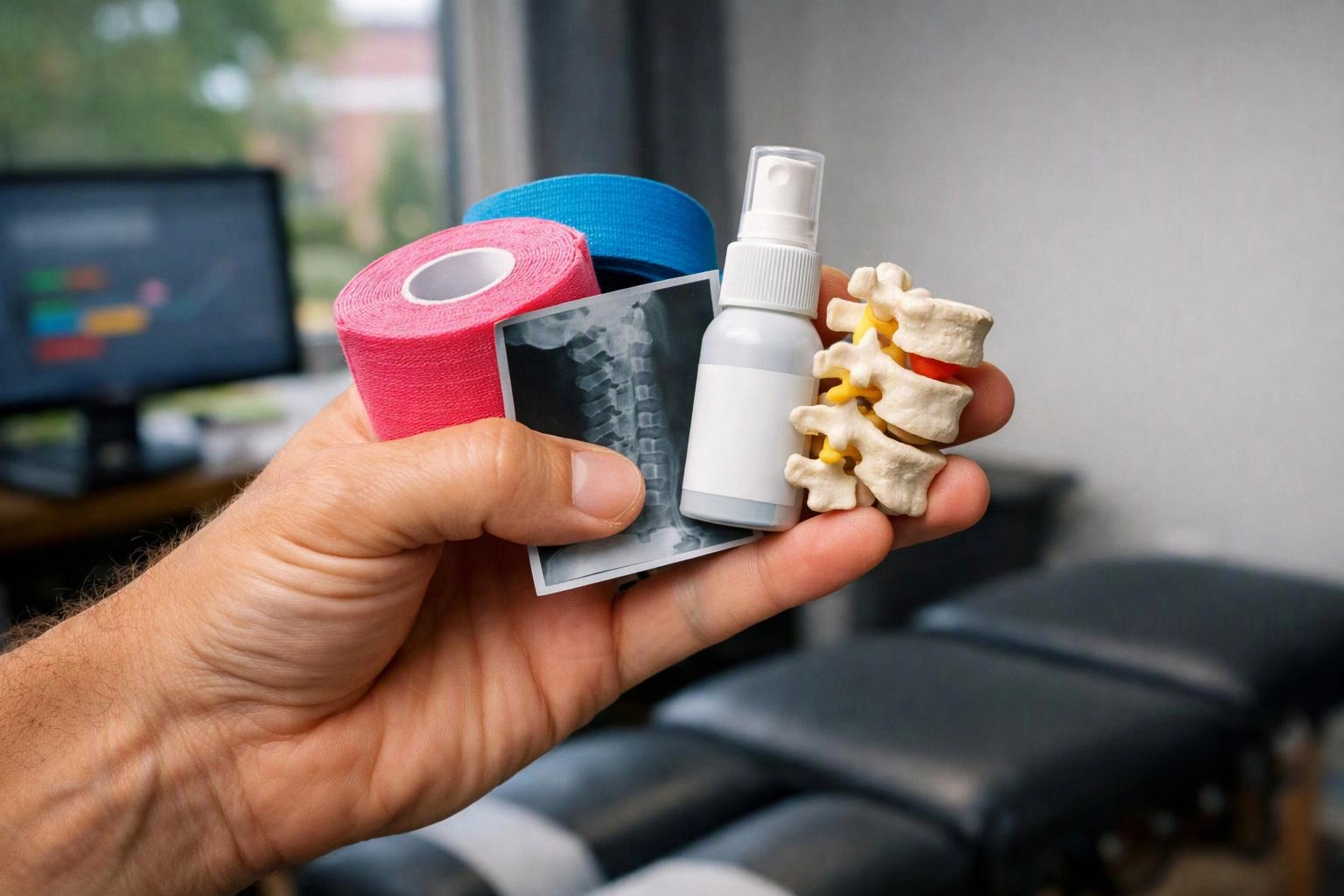
We begin with a movement assessment to understand how the concern affects function. Depending on the findings, our team may combine taping with manual care, a chiropractic adjustment, or therapeutic exercise.
Each part of the care plan should support a clear functional goal. We review how the person responds and adjust care progression when the tape does not improve movement comfort.
What to Expect When Kinesiology Tape Is Applied
Kinesiology taping begins with an assessment of the area and ends with guidance on movement, skin response, and tape care.
Tape should feel supportive, not sharply painful or excessively tight. We want the application to work with active movement and the rest of the care plan.
When Kinesiology Taping May Not Be Appropriate
Kinesiology taping may not be appropriate when skin irritation, adhesive sensitivity, open wounds, or skin infection affects the area.
Circulation concerns also require careful clinical assessment before tape is applied. We review the skin and the person’s health information so the application does not create an avoidable problem.
Remove the tape and contact our team if severe itching, burning, pain, or a marked skin reaction develops. Taping should support care, not delay assessment of a worsening concern.
How We Decide Whether Kinesiology Taping Fits Your Care
Advanced Injury Care Clinic decides whether kinesiology taping fits your care by reviewing your symptoms, movement limitations, skin condition, care goals, and response to application.
Our team uses those findings to select the right supportive approach or leave taping out when another option better matches the concern.
Questions About Kinesiology Taping
Can kinesiology tape replace treatment for an injury?
Kinesiology tape cannot replace injury assessment, rehabilitation, or care for an underlying cause. Advanced Injury Care Clinic uses tape only when it supports the person’s broader care plan.
Can kinesiology tape irritate your skin?
Yes, kinesiology tape can irritate skin or cause a reaction to the adhesive. Remove the tape if burning, severe itching, pain, or a strong skin reaction develops, and contact our team for guidance.
How should you remove kinesiology tape?
Remove kinesiology tape slowly in the direction of hair growth while supporting the skin. Stop if removal causes significant pain or skin damage, and ask our team for help with aftercare.
Discuss Kinesiology Taping With Our Team
Advanced Injury Care Clinic can review your symptoms, movement goals, and skin condition to determine whether kinesiology taping belongs in your individualized care plan. We offer Free Consultations so you can discuss the appropriate next step.
Contact our team to discuss your care needs.
Related Resources
Chiropractic Adjustments: Techniques, Benefits, and What to Expect
Everything About ItSpinal Decompression Therapy: How It Works and Who May Be a Candidate
Everything About ItPrenatal Chiropractic Care: Potential Benefits, Safety, and Questions to Ask
Everything About ItPediatric Chiropractic Care: Evidence, Safety, and Questions for Parents