Pediatric Chiropractic Care: Evidence, Safety, and Questions for Parents
Pediatric chiropractic care requires an age-appropriate clinical assessment because evidence varies by condition and safety depends on the child’s health, symptoms, and the techniques considered; Advanced Injury Care Clinic uses parent questions and clinical findings to guide an informed discussion.
Request an EstimateWhat Does the Evidence Say About Pediatric Chiropractic Care?
The evidence for pediatric chiropractic care is condition-specific and does not support treating every childhood concern with spinal manipulation. Research quality varies by health condition, study design, and treatment goal.
Our team uses evidence-informed care to connect the proposed treatment with a clear clinical indication. We discuss what is known, what remains uncertain, and whether another form of conservative care may better fit the child.
Parents can review our Pediatric Chiropractic Care service information before discussing a plan with us.
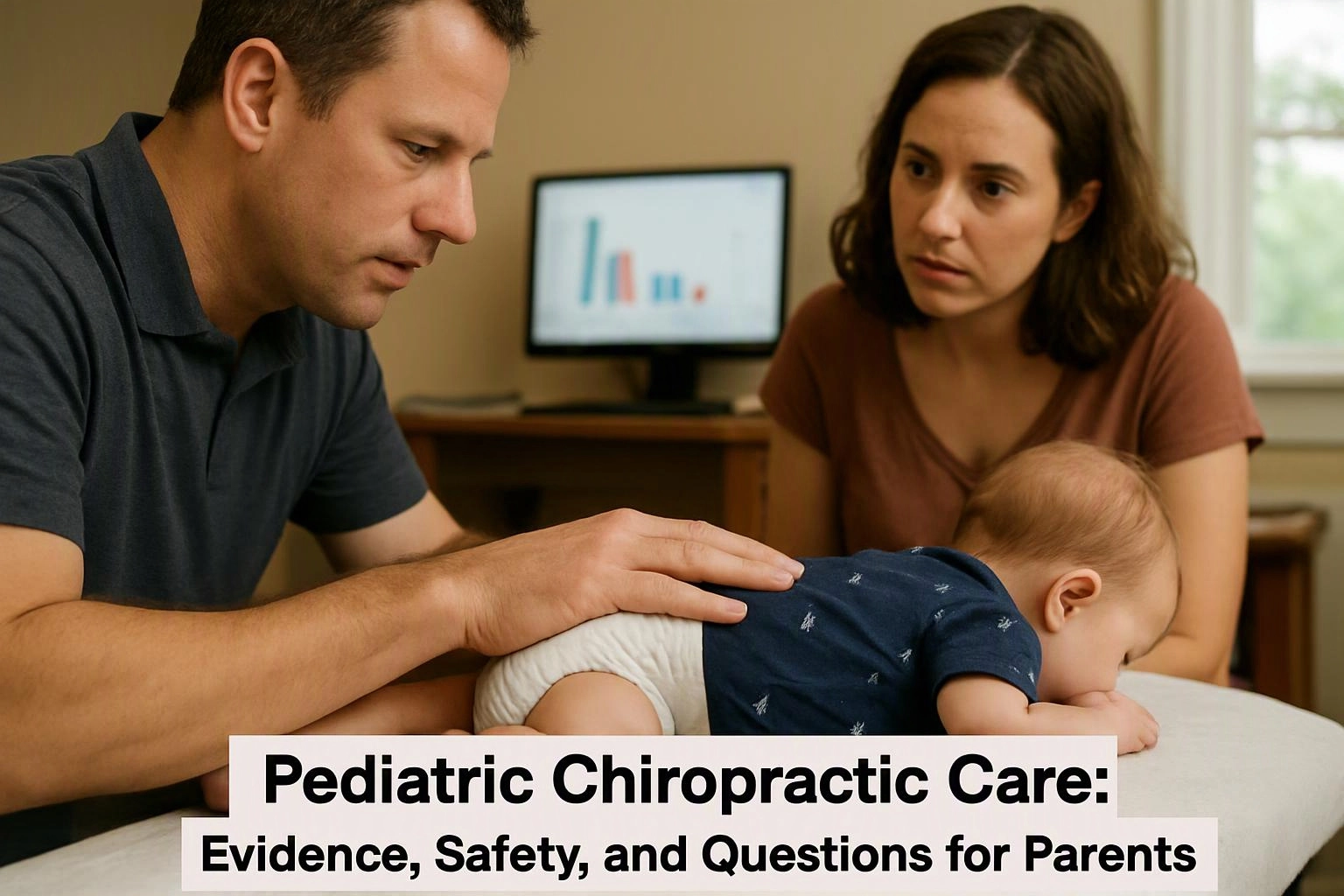
Is Chiropractic Care Safe for Children?
Pediatric chiropractic care can only be considered appropriately safe after an individualized assessment identifies whether the child is a suitable candidate and which techniques are appropriate.
Child safety begins with a clinical history and physical examination. We review the child’s health history, current symptoms, development, prior injuries, and relevant medical care.
We also screen for contraindications and decide whether an age-appropriate technique fits the treatment goal. Informed consent means parents understand the proposed care, potential benefit, potential risk, and available treatment alternatives before care begins.
What Should Parents Know About Babies and Chiropractic Care?
Babies should not receive chiropractic care based on age alone because an infant’s symptoms, development, medical history, and need for medical evaluation must guide the decision.
Infants and newborns have different developmental needs from older children. Our team considers the baby’s presentation and developmental stage before discussing any manual therapy.
When symptoms suggest a medical concern, we recommend medical referral to the child’s pediatrician or another appropriate medical service before chiropractic care is considered.
Are Spinal Manipulations Recommended for Children?
Spinal manipulation is not automatically recommended for children; the decision depends on the child’s presentation, the proposed technique, the treatment goal, and the available evidence.
Manual therapy can include different approaches, and the risks and expected benefits depend on how each approach is used. We compare the clinical indication with the child’s health history and assessment findings before discussing care.
| Decision factor | What it means for care |
|---|---|
| Child age and development | The approach must match the child’s developmental stage and ability to communicate symptoms. |
| Clinical indication | Care should address a defined concern with a clear treatment goal. |
| Risk assessment | Health history, symptoms, examination findings, and possible contraindications guide the decision. |
| Treatment alternatives | Parents should understand other reasonable care options before giving consent. |
Spinal manipulation may not be appropriate when the assessment does not support it. We explain the reasoning and discuss alternatives that may better match the child’s needs.
How We Assess Whether Pediatric Chiropractic Care Is Appropriate
Advanced Injury Care Clinic uses a structured clinical assessment to connect parent concerns with safe, appropriate next steps. Our process may include the following:
Our team keeps parental consent central to each decision. Parents can ask for clarification before accepting any proposed care plan.
Questions Parents Should Ask Before Care Begins
Parents should ask direct questions before pediatric chiropractic care begins so the treatment rationale and safety plan are clear. The answers should support shared decision-making.
Our team welcomes questions about the proposed technique and the reason for each part of the care plan. Parents can make an informed decision when the answers are specific and understandable.
When Should a Child Receive Medical Evaluation First?
A child should receive medical evaluation first when symptoms may indicate an acute injury, serious illness, neurological problem, or underlying condition outside the scope of chiropractic assessment.
Urgent symptoms may include a significant injury, sudden weakness, changes in alertness, trouble walking, or other neurological symptoms. Parents should contact a pediatrician or appropriate medical service when these concerns are present.
We use symptom screening to identify situations that need medical evaluation or medical referral before we discuss conservative care. Chiropractic assessment does not replace medical evaluation for serious or unexplained symptoms.
How Can Parents Make an Informed Decision?
Parents can make an informed decision by matching the proposed care to the child’s diagnosis, reviewing potential benefits and risks, and understanding alternatives and follow-up criteria.
Shared decision-making gives parents a clear role in reviewing evidence-informed care. Our team explains the clinical reasoning, listens to parental consent concerns, and adjusts the discussion to the child’s symptoms and development.
A benefit-risk discussion should include the treatment goal, possible alternatives, and signs that the plan needs review. Monitoring helps parents and our team decide whether care remains appropriate.
Questions About Pediatric Chiropractic Decisions
What conditions do parents commonly ask about pediatric chiropractic care?
Advanced Injury Care Clinic discusses pediatric chiropractic care only in relation to the child’s specific symptoms, assessment findings, and treatment goal. Parents commonly ask whether manual therapy may have a role in a defined musculoskeletal concern, but the evidence and suitability must be reviewed condition by condition.
What should parents do if a child feels worse after a chiropractic visit?
Parents should contact the clinic about new or worsening symptoms after a chiropractic visit and seek medical evaluation for severe, sudden, or concerning symptoms. We review the change, consider whether the care plan needs to pause, and guide parents toward medical referral when the symptoms require it.
Can parents stop pediatric chiropractic care if they are not comfortable with the plan?
Yes, parents can pause or stop pediatric chiropractic care if they are not comfortable with the plan. Parental consent remains part of each care decision, and our team can discuss concerns, alternatives, or medical referral.
How can parents tell whether a proposed technique is appropriate for a child?
Parents can ask how the proposed technique matches the child’s age, development, health history, symptoms, examination findings, and treatment goal. We explain the technique, potential benefit, potential risk, alternatives, and follow-up plan before requesting informed consent.
Advanced Injury Care Clinic uses clinical assessment and parent questions to guide a careful discussion about pediatric chiropractic care. Contact us to discuss your child’s concerns and the next appropriate step.