Dry Needling vs. Chiropractic Adjustment: What to Ask a Provider
Dry needling targets muscle trigger points with thin needles, while chiropractic adjustment uses controlled manual force to address joint movement. Advanced Injury Care Clinic compares the goals, trade-offs, and questions that help you choose appropriate care.
Request an EstimateQuick Picks
Dry needling and chiropractic adjustment address different parts of musculoskeletal pain. The better option depends on your symptom pattern and care goals.
How Dry Needling and Chiropractic Adjustment Differ
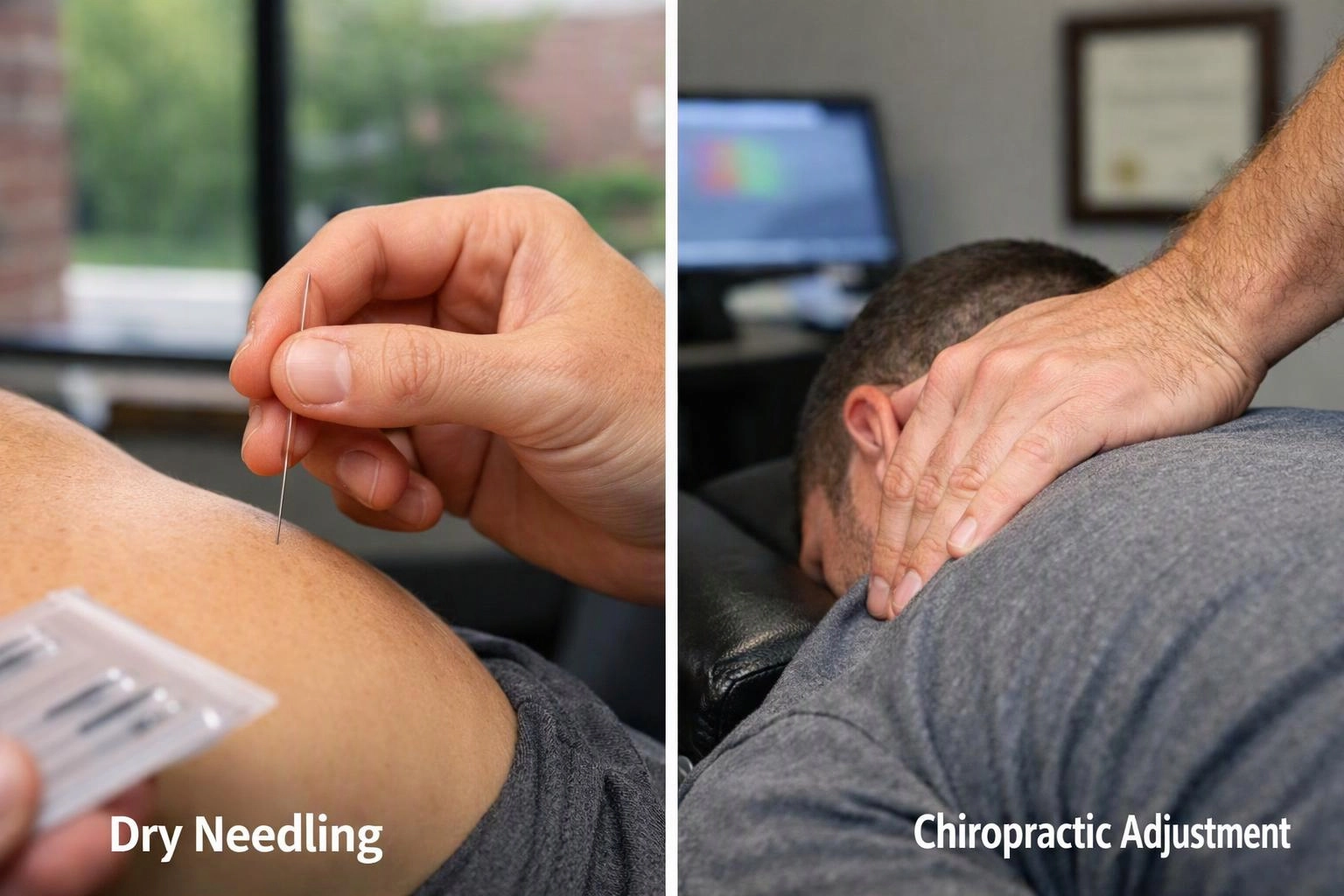
Dry needling focuses on muscle trigger points, while chiropractic adjustment focuses on joint movement and spinal mechanics.
Dry needling uses a thin needle to address sensitive muscle areas linked with myofascial pain. Chiropractic adjustment uses controlled manual force to support joint mobility and movement patterns.
Both approaches may support musculoskeletal pain care, but they use different treatment targets. Our team begins with patient assessment before choosing either technique.
Dry Needling vs. Chiropractic Adjustment at a Glance
The better option depends on whether your main concern is muscle tension, restricted joint motion, or a combination of both.
| Factor | Dry Needling | Chiropractic Adjustment | Decision Point |
|---|---|---|---|
| Treatment technique | Thin-needle treatment for selected muscle areas | Controlled manual force for selected joints | The suspected pain source guides the choice. |
| Primary goal | Address muscle tension and trigger points | Support joint mobility and spinal movement | Your treatment goals matter. |
| Cost drivers | Areas treated, assessment needs, and care plan | Assessment needs, treatment plan, and follow-up care | We explain pricing before care. |
| Timeline | Depends on symptoms and movement response | Depends on joint findings and movement response | Progress guides follow-up care. |
| Maintenance | May include movement work and reassessment | May include mobility work and reassessment | The plan should match your goals. |
| Best fit | Localized muscle pain and tightness | Restricted joint motion and spinal stiffness | Some care plans use both approaches. |
What Is Dry Needling Used For?
Dry needling is a targeted technique that uses thin needles to address sensitive muscle areas and related movement limits.
We may consider dry needling for myofascial pain, muscle tension, and trigger points. The approach can also support range of motion when tight muscle tissue limits movement.
Sports injuries and some headache treatment plans may include dry needling when the examination supports it. Our team links the technique to your symptoms and treatment goals.
Learn more about our Dry Needling approach and how we assess whether it fits your needs.
Advantages of Dry Needling
Dry needling can offer focused care when muscle tissue appears to drive localized symptoms. We still screen for safety concerns and assess movement before treatment.
Best Fit for Dry Needling
Dry needling may best fit localized muscle pain, muscle tightness, trigger points, or activity-related pain.
We look for a clear connection between the symptom pattern and muscle tissue. A different plan may be more appropriate when joint restriction is the main finding.
What Does a Chiropractic Adjustment Address?
A chiropractic adjustment is a manual technique that applies controlled force to help improve joint movement and mechanical function.
We may use an adjustment when spinal joints show restricted motion or when movement patterns contribute to neck pain or back pain. The examination also considers headache treatment when the neck and spine appear relevant.
Chiropractic adjustment is one form of manual therapy. Our team uses spinal mechanics, movement testing, and patient history to shape the treatment plan.
Advantages of Chiropractic Adjustment
Chiropractic adjustment can support care when joint mobility and spinal movement are central concerns. We match manual treatment to the findings from your assessment.
Best Fit for Chiropractic Adjustment
Chiropractic adjustment may best fit restricted joint motion, spinal stiffness, neck discomfort, back discomfort, or movement-related symptoms.
Our team checks whether the symptom pattern matches a joint or spinal source. We may also use other manual therapy methods when they better match your needs.
Can Chiropractors Perform Dry Needling?
Chiropractors may perform dry needling when their training and local scope allow it, so we verify the technique, credentials, and treatment plan before care.
Dry needling scope depends on state requirements and the clinician’s training. Our patient assessment includes a safety screening before we discuss whether the technique fits.
When you search for a dry needling chiropractor, ask who performs the treatment, what training supports it, and how the plan addresses your symptoms.
What Should You Ask Before Choosing a Treatment?
Ask what problem the treatment targets, why it fits your symptoms, what you may feel, and how we will judge progress.
How We Decide Between Dry Needling and Adjustment
We choose the approach after reviewing your history, examining movement, and matching the treatment to the suspected pain source.
Our team considers pain location, movement testing, neurologic symptoms, and your treatment goals. We also review whether sports chiropractic, headache treatment, or another plan fits the symptom pattern.
Combined care may help when both muscle tension and joint restriction contribute to symptoms. We explain each part of the care plan before treatment begins.
What Changes the Cost of Care?
Care cost depends on the treatment selected, areas assessed, and plan recommended; we explain pricing upfront and offer Free Consultations.
Cost drivers include treatment type, the number of areas treated, the clinical assessment, and follow-up needs. A quote should clearly explain what the assessment and recommended care plan include.
We review these details with you before care so you can understand the proposed plan. You can request an exact quote through our contact page.
When Should You Ask About Another Evaluation?
Severe, worsening, or unusual symptoms need medical evaluation before dry needling or chiropractic adjustment.
Ask about medical evaluation for progressive weakness, new numbness, fever, or unexplained symptoms. We also pause routine musculoskeletal care when the symptom pattern suggests a condition outside our scope.
Share your full health history during safety screening. Clear information helps our team choose a safer next step.
Questions About Dry Needling and Chiropractic Adjustment
Is dry needling the same as acupuncture?
Dry needling and acupuncture are different techniques with different treatment frameworks. Advanced Injury Care Clinic uses dry needling to address selected muscle areas and movement limits after assessment.
Can dry needling and chiropractic adjustment be used in the same care plan?
Yes, dry needling and chiropractic adjustment can be combined when both muscle tension and joint restriction affect movement. We choose each treatment based on your assessment and care goals.
Does dry needling hurt?
Dry needling can create brief sensations during treatment and post-treatment soreness afterward. We explain what to expect and adjust the plan based on your response.
Which treatment is better for headaches?
Neither treatment is automatically better for every headache. We review the neck, muscle tension, joint movement, and symptom pattern before choosing dry needling, chiropractic adjustment, or combined care.
Which treatment is better for sports-related muscle pain?
Dry needling may better fit sports-related muscle pain when trigger points or muscle tightness drive symptoms. Our sports chiropractic assessment checks whether joint movement also needs attention.
Advanced Injury Care Clinic can review your symptoms, complete a patient assessment, and explain suitable treatment options.
Contact our teamRelated Resources
Dry Needling Companies Worth Comparing in Brentwood (2026)
Everything About ItDry Needling: What It Is and How It Differs from Acupuncture
Everything About ItHow to Check a Chiropractor’s Tennessee License and Credentials
Everything About ItChiropractic Cost Factors and Insurance Coverage