Sports Injury Symptoms: When to Pause Training and Get Assessed
Sports injury symptoms such as sharp pain, swelling, bruising, weakness, reduced motion, or joint instability mean you should pause training and get assessed. Advanced Injury Care Clinic checks the injury and may use Sports Chiropractic, Dry Needling, or Corrective Exercise Therapy based on your needs.
Request an Estimate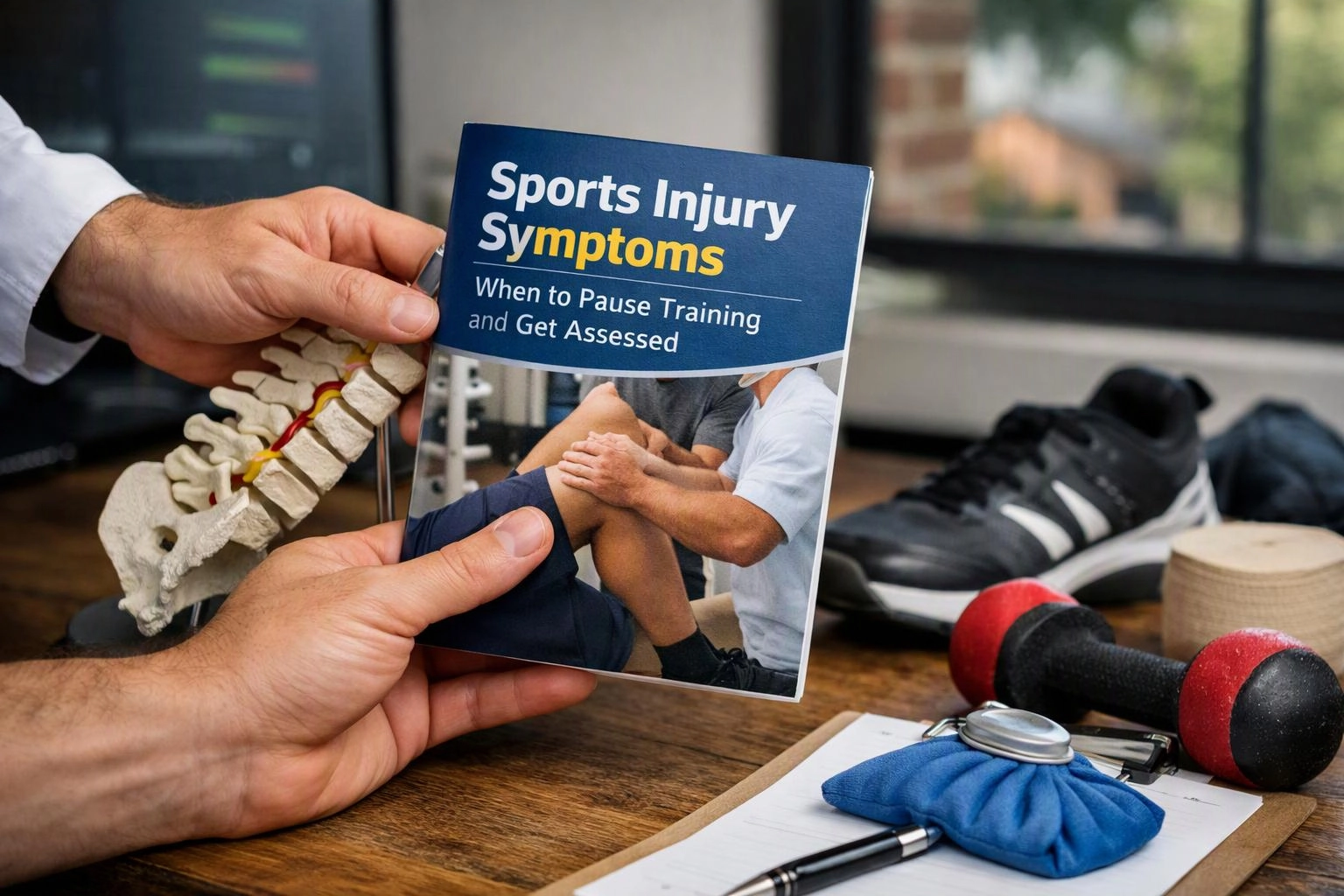
Which Sports Injury Symptoms Mean You Should Pause Training?
Sports injury symptoms that worsen with movement, change normal function, or suggest tissue damage mean you should pause training. Continuing can increase irritation and make your movement less controlled.
These signs can occur with an athletic injury, training injury, or other musculoskeletal injury. We assess the pattern before advising a safe next step.
What Do Pain, Swelling, and Bruising Reveal About a Sports Injury?
Pain, swelling, and bruising can show that exercise has irritated or damaged muscles, tendons, ligaments, or other soft tissue. An acute injury may involve a muscle strain, ligament sprain, tendon irritation, or joint injury.
Inflammation is part of the body’s response to tissue stress. The level and location of symptoms can help us judge whether training should stop and whether a medical assessment is needed.
We review how the injury happened, what movements hurt, and whether symptoms are changing. That information helps us separate a manageable training issue from a problem that needs prompt medical care.
When Do Reduced Motion and Instability Need Assessment?
Reduced motion or joint instability needs assessment when the problem limits daily movement, changes your form, or makes weight bearing unsafe. Limited range of motion can affect joint function and place extra stress on nearby tissue.
Instability may appear as giving way, poor balance, or a joint that feels unreliable. We use movement assessment and controlled testing to see how the joint responds.
Book an assessment when symptoms persist, keep returning, or stop you from moving normally. Pause sport until you can use the area without unsafe compensation.
Which Sports Injury Warning Signs Need Prompt Medical Care?
Sports injury warning signs such as deformity, severe weakness, numbness, or head injury symptoms need prompt medical evaluation. Emergency care may be needed when breathing difficulty or a serious loss of function is present.
| Warning sign | What to do |
|---|---|
| Visible deformity or a joint that looks out of place | Stop activity and seek prompt medical evaluation. |
| Severe pain, sudden loss of strength, or inability to bear weight | Avoid testing the injury and arrange urgent care. |
| Numbness, tingling, or spreading weakness | Seek prompt medical assessment. |
| Head injury symptoms, confusion, or worsening headache | Stop play and seek urgent medical care. |
| Breathing difficulty or signs of a serious emergency | Call emergency services immediately. |
We can assess many musculoskeletal problems, but emergency symptoms need medical services first. Do not return to training while red flags remain.
What Commonly Causes Sports Injuries?
Sports injuries often develop when tissue demand rises faster than movement control and recovery. We look for the cause so your plan addresses more than the painful area.
Muscle tightness, weakness, and past injury can also affect movement quality. Our team considers these factors during the assessment.
How Can You Reduce the Risk of Sports Injuries?
Sports injury prevention starts with matching training demands to your current capacity. Small changes can protect movement quality while you build fitness.
We can help identify movement limits that make training less efficient. That information supports safer choices as your load changes.
How Does a Sports Chiropractic Assessment Guide Recovery?
A sports chiropractic assessment reviews symptoms, movement, joint function, and training demands before we plan the next recovery step. Our Sports Chiropractic approach connects the injury history with how you move today.
We may check joint mobility, muscle function, balance, and load tolerance. We then match care to your goals, symptoms, and readiness for return to training.
Our plan may include hands-on care, movement changes, exercises, or referral for medical assessment. The goal is a gradual return with better control and clear limits.
What Happens During the Assessment?
Our assessment follows a clear process that links your symptoms to daily movement and sport demands.
- We discuss your symptom history, injury mechanism, training load, and previous injuries.
- We complete a physical assessment of the painful area and nearby structures.
- We use movement testing to review range of motion, strength, balance, and control.
- We explain the care plan and training changes that fit your current function.
- We arrange referral when symptoms require medical care beyond our scope.
Can Dry Needling Help Sports-Related Muscle Tightness?
Yes, Dry Needling may help sports-related muscle tightness when our assessment links the tightness to treatable muscle or movement restrictions. The technique may target trigger points associated with muscle spasm and reduced movement tolerance.
We first check whether the muscle is the main source of the problem. Dry Needling forms one part of care and may be paired with movement work or exercise.
Tell us if symptoms include weakness, numbness, severe pain, or signs of a head injury. Those findings may require medical assessment before treatment.
How Does Corrective Exercise Therapy Support a Return to Training?
Corrective Exercise Therapy builds movement control, strength, and load tolerance so you can progress training with better control. Exercises are selected around your sport, symptoms, and current function.
We may focus on mobility where movement is limited and strength where control is reduced. We then adjust the challenge as your body handles more load.
This approach supports return to sport without ignoring pain response or poor movement quality. We explain how to modify training while capacity improves.
When Is It Safe to Resume Training After a Sports Injury?
You can resume training when symptoms are controlled and movement, strength, and function support a gradual return. A single pain-free moment doesn't prove that the tissue is ready for full demand.
We help you choose the next training step based on function, not just symptoms. Persistent pain, weakness, or instability means the plan needs review.
How Can Advanced Injury Care Clinic Help With Sports Injuries?
Advanced Injury Care Clinic assesses sports injuries and matches care to your symptoms, movement limits, and training goals. We provide Sports Chiropractic, Dry Needling, and Corrective Exercise Therapy when those options fit our findings.
Our team checks the injury pattern, explains your choices, and supports a measured return to training. We also identify warning signs that need medical assessment.
Contact us to arrange a consultation and discuss the sports injury symptoms affecting your activity.
Get a Free EstimateQuestions About Sports Injury Symptoms
Should you train through sports injury pain?
Advanced Injury Care Clinic recommends pausing training when pain is sharp, worsening, or changing your movement. We assess the cause and guide a safer return when function improves.
Can a chiropractor help with a sports injury?
Yes, Sports Chiropractic may help suitable musculoskeletal injuries by addressing joint mobility, muscle function, and movement control. We refer urgent or complex problems for medical assessment.
How do you know if a sports injury is serious?
A sports injury may be serious when it causes deformity, severe weakness, numbness, unsafe weight bearing, or head injury symptoms. Breathing difficulty and major loss of function need emergency care.
Can you use Dry Needling for a tight sports injury muscle?
Yes, Dry Needling may help a tight sports injury muscle when our assessment finds treatable trigger points or movement restrictions. We choose the technique only when it suits your symptoms and recovery plan.
Related Resources
Dry Needling Companies Worth Comparing in Brentwood (2026)
Compared ToUsing Insurance or Paying Out of Pocket for Chiropractic Care
Everything About ItDry Needling: What It Is and How It Differs from Acupuncture
Everything About ItHow to Check a Chiropractor’s Tennessee License and Credentials