
What Is Kinesiology Tape?
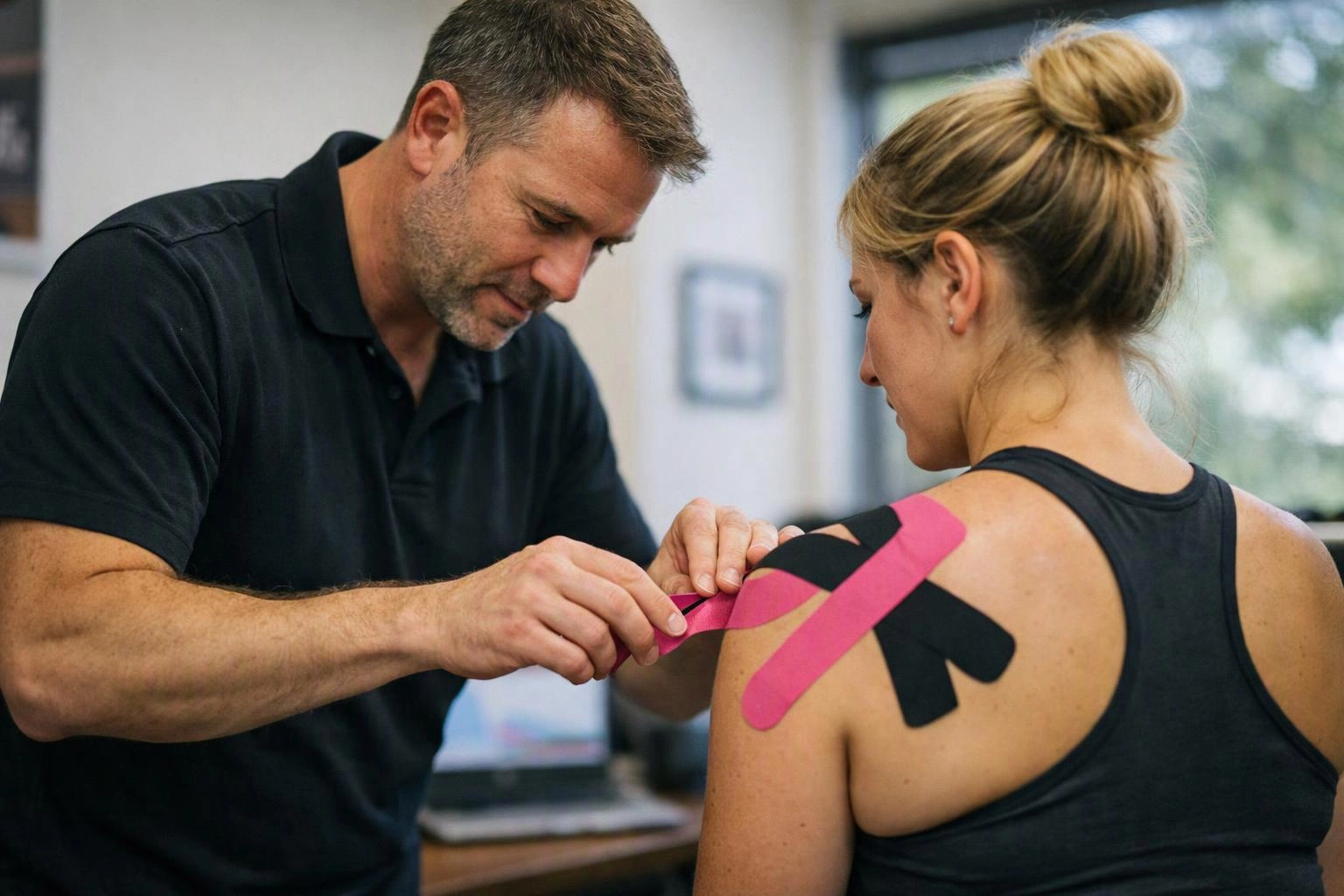
Kinesiology Tape is a flexible adhesive strip used on the skin during movement. The tape follows the body’s shape and may provide light support or sensory feedback around muscles and joints. Unlike rigid athletic tape, kinesiology tape allows more natural motion. It is often used as one part of a broader sports care plan.
Quick Facts About Kinesiology Tape
Category
Flexible adhesive support
Used for
Movement support and sensory feedback
Common confusion
Not the same as rigid athletic tape
Also called
KT Tape, K-Tape
Often discussed with
Sports Chiropractic
Key Takeaways About Kinesiology Tape
- Its elastic material allows more movement than rigid athletic tape.
- Tape placement depends on the body area and activity.
- Kinesiology tape does not realign bones or replace rehabilitation.
How Kinesiology Tape Works

Kinesiology Tape works through gentle contact with the skin while the body moves. The tape stretches and returns toward its original shape, which can provide a light pulling sensation. That sensation may help you notice how an area is moving during activity.
Related glossary terms: Proprioception, Joint Mobility, Range of Motion.
Placement follows the target muscle, joint, or movement pattern. Sports clinicians may apply the tape around a shoulder, knee, ankle, or other area that needs support during exercise. Proprioception describes the body’s sense of position, and tape can add information to that sense. Tape should fit the larger plan, which may include exercise, movement checks, or other care.
From the Advanced Injury Care Clinic team
When we use kinesiology tape in Sports Chiropractic, we check the movement pattern and the skin before applying it. We place the tape to support the activity being trained, then reassess how the area moves. We also explain that tape supports a plan, but does not replace active rehabilitation.
Kinesiology Tape in Practice: A Real-World Example
A recreational runner may receive kinesiology tape around the knee during a return-to-running plan. The tape can provide movement feedback while the runner practices controlled exercises.
Related Services
Related Terms
Proprioception
Proprioception is the body’s sense of position and movement. Signals from muscles, tendons, joints, and skin…
Joint Mobility
Joint mobility is the amount and quality of movement available at a joint. It depends on…
Range of Motion
Range of Motion is the available movement at a joint or body region. It describes how…
Trigger Point
A trigger point is a sensitive spot within a tight band of muscle that can cause…
Advanced Injury Care Clinic
Have Questions About Kinesiology Tape?
Contact Advanced Injury Care Clinic for practical guidance on Kinesiology Tape and related chiropractor work in Brentwood.