Can auto accident injury treatment help limited mobility?
Range of motion can improve when care addresses the joints, muscles, and tissues affecting movement. Advanced Injury Care Clinic checks mobility, pain patterns, muscle tension, and accident-related symptoms before recommending care. Spinal adjustments, soft-tissue therapy, and corrective exercises may be used when they fit the evaluation. Individual response differs.
What does the first accident injury evaluation check?
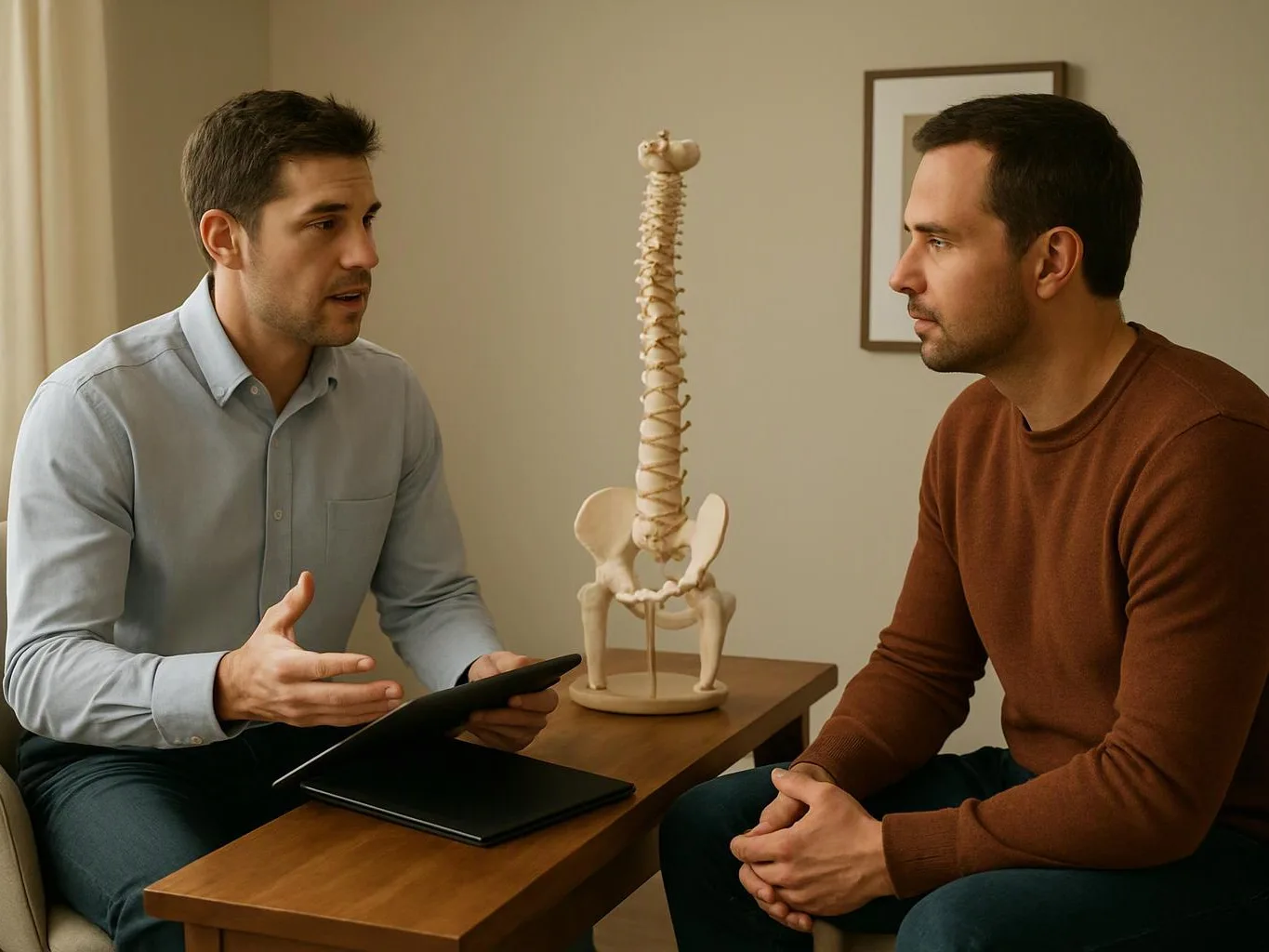
The first evaluation checks your health history, accident concerns, movement, pain patterns, and affected muscles or joints. We also ask how symptoms affect daily tasks. X-rays may be considered when clinically indicated. These findings guide the report of findings and the treatment options we discuss.
Which symptoms should be discussed during a consultation?
Neck pain, back pain, whiplash, headaches, sciatica, stiffness, and weakness should be discussed during a consultation. Symptom details help us understand how the accident affects movement and daily function. Tell us what makes symptoms worse, what movement feels limited, and whether symptoms have changed.
When should restricted movement be checked after a crash?
Restricted movement should be checked when stiffness, weakness, or pain affects normal tasks after a crash. An evaluation helps identify movement limits and related tissue concerns. Seek emergency medical care for severe or life-threatening symptoms, because chiropractic care is not a substitute for emergency treatment.
Why might soft-tissue therapy be added to spinal adjustments?
Soft-tissue therapy may be added when muscle tightness or tissue sensitivity contributes to movement limits. Spinal adjustments address selected joint areas, while soft-tissue work focuses on muscles and nearby tissues. We choose these methods after reviewing your symptoms and examination findings.
How do corrective exercises fit after an accident?
Corrective exercises give you guided movement practice that may support strength, control, and daily function. The exercises depend on your symptoms, movement exam, and treatment goals. We explain how they fit your plan and review changes during follow-up care.
What should be checked before care is scheduled?
A health history and injury evaluation should guide care before treatment is scheduled. We review accident details, symptoms, movement, and any relevant records you bring. This step helps identify whether chiropractic care fits your needs or whether another medical evaluation should come first.