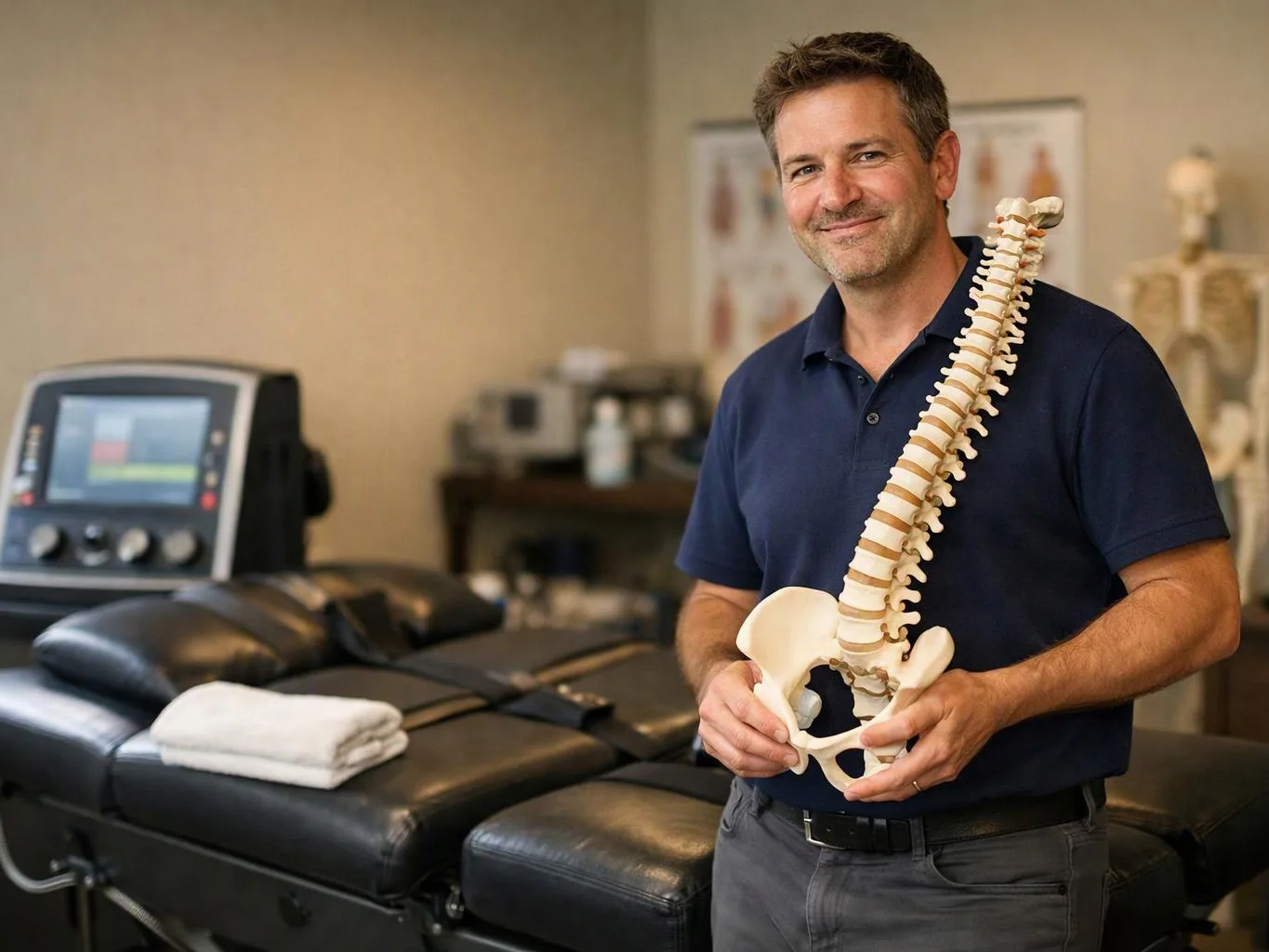
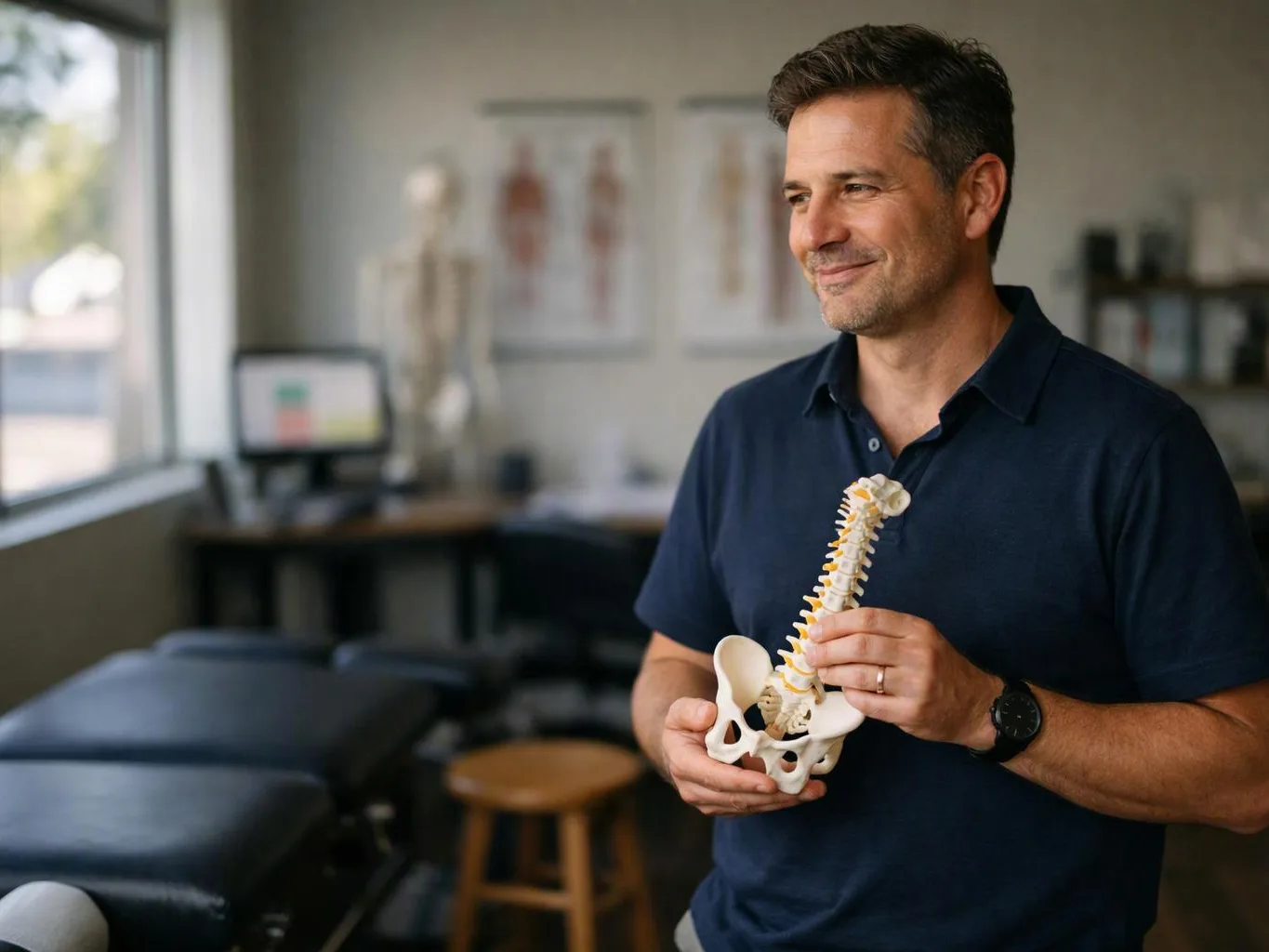
Disc-Related Back or Leg Symptoms: What to Discuss at an Evaluation
Spinal decompression therapy may be appropriate for some people after an evaluation of symptoms, neurological signs, disc findings, and safety factors; Advanced Injury Care Clinic uses the evaluation to discuss whether this approach fits your condition.
Request an EstimateWhat Can a Herniated or Bulging Disc Feel Like?
A herniated or bulging disc can cause localized back pain or irritation of a spinal nerve that produces symptoms in the buttock, leg, or foot. Our team maps these symptoms to understand whether they may reflect disc-related nerve irritation.
A bulging disc can cause leg pain and tingling when disc tissue irritates a nearby nerve. Symptoms can also occur without severe back pain, so the location and pattern of symptoms matter during a chiropractic evaluation.
Why Do Disc-Related Symptoms Develop?
Disc-related symptoms develop when disc tissue changes or injury contributes to irritation or pressure around a spinal nerve. We look at the likely source of irritation instead of treating the symptom pattern alone.
The intervertebral disc includes the nucleus pulposus and annulus fibrosus between the vertebrae. Our movement assessment considers how posture, lifting, and repeated activity may relate to your symptoms.
What Does Our Evaluation Check Before Spinal Decompression?
Our evaluation checks the symptom pattern, neurological findings, movement limitations, relevant history, and available imaging before we discuss spinal decompression. A chiropractic evaluation helps us decide whether traction-based care fits the clinical picture.
We review your clinical history and complete a physical examination. Our neurological examination may include range of motion, reflexes, muscle strength, and sensory changes.
Medical imaging can add information about a disc protrusion, disc degeneration, or other spinal condition. We also screen for medical red flags that may require urgent medical care or a different treatment pathway.
Can Spinal Decompression Be Used for a Herniated Disc?
Yes, spinal decompression may be considered for selected herniated-disc symptoms when our evaluation indicates that the approach is appropriate and safe.
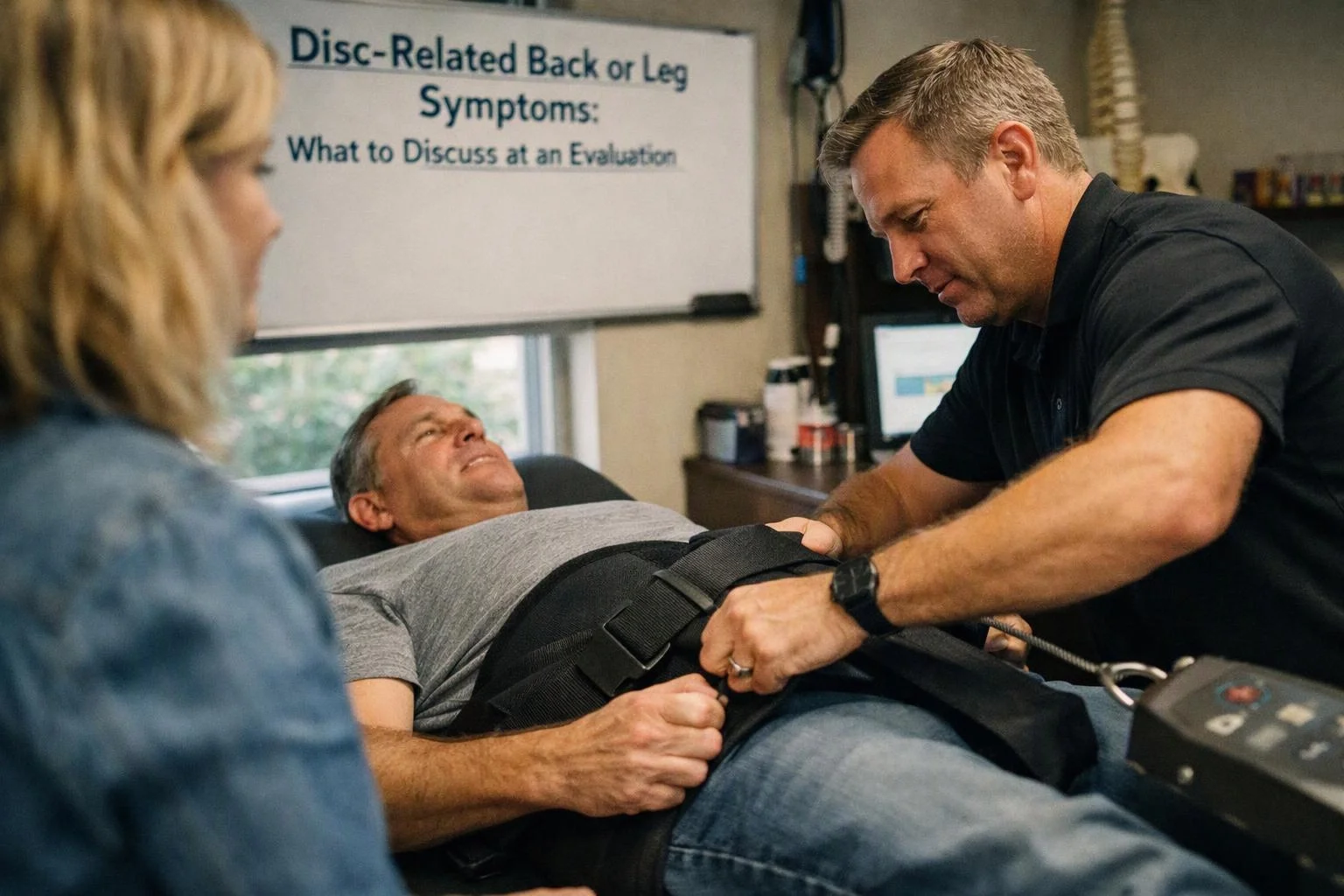
Spinal decompression therapy uses controlled traction to address some patterns of disc-related nerve irritation. Treatment suitability depends on your symptoms, neurological findings, medical history, and available imaging.
Our chiropractic care plan may include spinal decompression when the findings support it. We explain the purpose of the approach and discuss other care options when decompression does not fit your condition.
What Should You Discuss During a Spinal Decompression Evaluation?
You should discuss when symptoms began, where symptoms travel, what changes them, and any relevant treatment or health history. Clear details help our team connect your symptom pattern with the examination findings.
Imaging reports and medication information can help us interpret your current condition. Tell us about any change in muscle strength or sensation, even if the change seems minor.
When Should Disc-Related Symptoms Receive Prompt Medical Attention?
Disc-related symptoms with serious or rapidly worsening neurological changes require prompt medical evaluation before chiropractic treatment is considered.
Progressive weakness, loss of bladder control, loss of bowel control, or saddle numbness are red flags. Severe neurological symptoms need urgent medical evaluation because they may signal a serious spinal problem.
Contact emergency medical services when symptoms are sudden, severe, or rapidly worsening. Tell our team about any urgent medical evaluation during your later chiropractic assessment.
How Can You Reduce Strain on an Irritated Disc?
Activity modification and sound movement habits can reduce strain on an irritated disc during everyday tasks. These steps do not replace an evaluation when pain, numbness, or weakness continues.
Our team can discuss activity modification after reviewing your movement assessment. Stop an activity that causes worsening weakness or severe radiating pain and seek medical guidance.
How Advanced Injury Care Clinic Helps You Decide Whether Spinal Decompression Fits
Advanced Injury Care Clinic reviews your symptoms and examination findings with you, explains whether spinal decompression fits the clinical picture, and offers Free Consultations.
We use an individualized evaluation to connect your back pain treatment options with your symptom pattern, neurological findings, and safety factors. Our treatment planning focuses on an approach that matches your condition.
Bring your questions, imaging reports, medication list, and health history to the evaluation. We will explain what we find and how it affects treatment suitability.
Questions About Disc-Related Back and Leg Symptoms
Can a bulging disc cause leg pain and tingling?
Yes, a bulging disc can cause leg pain and tingling when disc tissue irritates a nearby spinal nerve. Advanced Injury Care Clinic checks the symptom pattern and neurological findings during an evaluation.
Is spinal decompression appropriate for every herniated disc?
No, spinal decompression is not appropriate for every herniated disc. Our evaluation determines whether the symptoms, neurological findings, imaging, and safety factors support this treatment.
What information should I bring to a disc-related pain evaluation?
Bring your symptom history, medication information, imaging reports, previous treatment details, and relevant health history. These details help our team assess your condition and discuss treatment suitability.
Can disc-related symptoms occur without back pain?
Yes, disc-related symptoms can occur without prominent back pain. Nerve irritation may produce leg symptoms, numbness, tingling, or weakness, so our evaluation considers the full symptom pattern.