Forward Head Posture, Neck Pain, and Screen-Related Strain
Forward head posture can affect neck comfort, shoulder position, and upper-back movement. Advanced Injury Care Clinic connects a chiropractic assessment with posture correction, corrective exercise, and practical screen habits.
Request an Estimate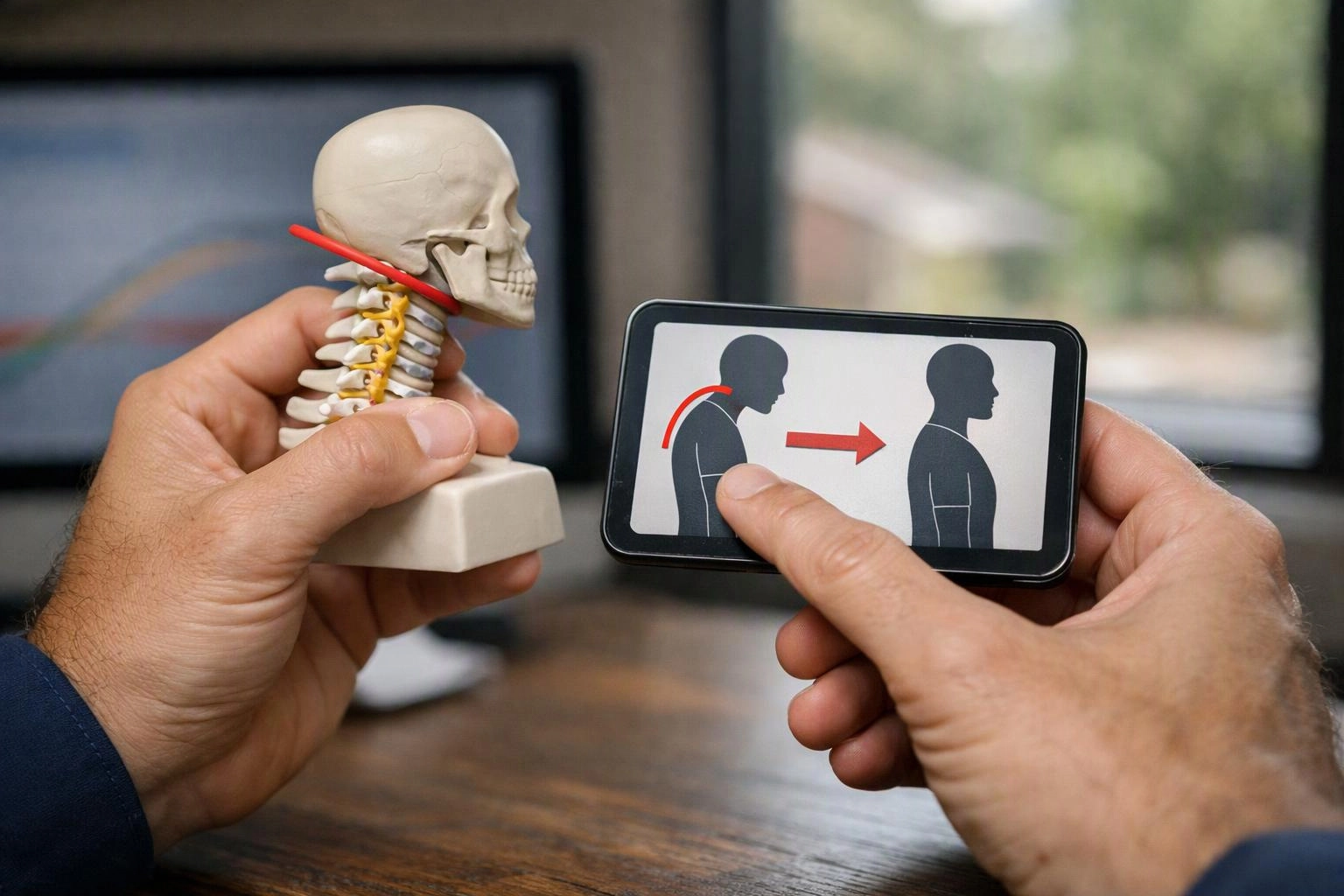
How Forward Head Posture Can Cause Neck Pain
Forward head posture can increase strain on the neck and upper back by shifting the head away from the spine's balanced position.
The cervical spine supports the head and guides neck movement. When the head stays forward, the neck muscles may work harder to hold it up.
That extra effort can irritate the neck joints and create upper-back tightness. Our team checks how posture, movement, and muscle control may connect with your neck pain.
For more guidance, our Posture Correction service focuses on practical changes that support better alignment.
Signs and Symptoms of Screen-Related Posture Strain
Screen-related strain can affect the neck, shoulders, upper back, and arms. Common signs include:
Symptoms that spread into an arm or hand need careful review. We assess those patterns before choosing exercises or hands-on care.
What Causes Forward Head Posture and Upper Back Tightness?
Forward head posture commonly develops from sustained screen positions, poor desk setup, limited movement, and reduced postural muscle support.
These factors often build slowly, so the cause may not feel obvious. Our team reviews your daily positions and movement habits to identify the main contributors.
Can Poor Posture Cause Headaches?
Yes, poor posture can contribute to tension-type headaches when neck and upper shoulder tissues remain strained.
A posture-related headache may involve tight neck muscles, irritated cervical joints, or reduced head and neck alignment. Long screen sessions can add to that load.
We look for links between your headache pattern, neck movement, and posture. Care may focus on reducing strain and improving controlled support.
How a Chiropractor Assesses Forward Head Posture and Neck Pain
A chiropractor assesses posture, neck movement, pain patterns, and daily screen habits to connect symptoms with contributing factors.
Our Chiropractic assessment may include a posture evaluation, range of motion testing, and a review of muscle balance. We also ask how work, driving, phone use, and sleep affect your symptoms.
The goal is to understand what changes your pain and what movements you tolerate. That information helps us shape a focused neck pain treatment plan.
Posture Correction Exercises for Neck Pain
Posture correction exercises for neck pain should match your movement limits and focus on controlled neck, shoulder, and upper-back support.
Exercise choice depends on your symptoms, range of motion, and medical history. Stop an exercise that causes sharp pain, spreading symptoms, or new weakness, and tell our team.
How to Prevent Screen-Related Neck and Upper Back Strain
Screen habits can reduce strain when they support a neutral head position and regular movement. Small changes work best when you use them consistently.
We can help you connect these habits with your work demands. A better setup should feel usable throughout the day, not forced.
Which Treatment Approach Fits Your Neck Pain?
The right care focus depends on your symptoms, movement limits, and the role of screen-related strain. This table shows how each factor can change the plan.
| Main finding | Care focus | What we may address |
|---|---|---|
| Head-forward posture with neck stiffness | Posture correction | Alignment, neck movement, and daily positions |
| Weak shoulder or upper-back support | Corrective exercise therapy | Deep neck flexors, scapular muscles, and thoracic mobility |
| Pain linked with restricted movement | Neck pain treatment | Pain response, range of motion, and exercise tolerance |
| Symptoms that increase during device use | Chiropractic care with screen changes | Desk ergonomics, phone use, and movement breaks |
These approaches can work together when your assessment supports them. We explain the care plan before starting treatment.
When Should You Seek Care for Neck Pain?
You should seek care when neck pain persists, worsens, follows an injury, or occurs with numbness, weakness, or coordination changes.
Loss of coordination, sudden weakness, or severe symptoms after an injury need prompt medical attention. Contact emergency services for symptoms that feel severe or life-threatening.
We review persistent or changing symptoms and help determine whether chiropractic care fits. Injury-related neck pain deserves an assessment before you return to normal activity.
What to Expect From Posture Correction Care
We review your posture and symptoms, explain the care plan, and use Free Consultations to begin discussing suitable treatment options.
Advanced Injury Care Clinic connects posture assessment with Corrective Exercise Therapy and neck pain treatment. We consider your work setup, screen habits, movement tolerance, and goals.
Care may include education, guided exercise, and hands-on chiropractic care when appropriate. We adjust the plan as your symptoms and movement change.
Request an exact quote by contacting our team through our contact page. The quote depends on the assessment and care plan your needs require.
Questions About Forward Head Posture and Neck Strain
Can forward head posture be corrected?
Yes, forward head posture can often improve with a suitable plan. Advanced Injury Care Clinic assesses your movement and guides posture correction, exercise, and daily habit changes.
Can screen time make neck pain worse?
Yes, screen time can worsen neck pain when your head stays forward and your body remains still. Changing screen position and taking movement breaks may reduce that strain.
Are posture correction exercises safe for everyone with neck pain?
No single exercise is safe for everyone with neck pain. Exercise choice should account for symptoms, movement limits, injury history, numbness, and weakness.
Can neck pain travel into the shoulders or upper back?
Yes, neck pain can spread into the shoulders or upper back. Our assessment checks whether posture, muscle tension, joint movement, or nerve-related symptoms may be involved.
What symptoms may need urgent medical attention?
Sudden weakness, loss of coordination, severe pain after an injury, or new numbness may need urgent medical attention. Seek emergency help when symptoms feel severe or life-threatening.
Advanced Injury Care Clinic can help connect your neck symptoms with posture, screen habits, and movement needs. Contact our team to discuss suitable care options.
Related Resources
Chiropractic First Visit: Exam, Consultation, and Treatment Options
Everything About ItChiropractic Cost Factors and Insurance Coverage
Brand vs BrandHow to Compare Chiropractic Care Plans Before You Commit
Everything About ItYour First Chiropractic Visit: Evaluation, Treatment, and Progress Checks