What Chiropractic Adjustments May Help With — and Their Risks
Chiropractic adjustments may help some people with low back pain, neck pain, and certain headaches, but they can also cause side effects and may not suit everyone. Advanced Injury Care Clinic reviews your symptoms, health history, and warning signs before discussing whether an adjustment is appropriate.
Request an EstimateWhat Is a Chiropractic Adjustment?
Chiropractic adjustment is a manual therapy that applies a controlled force to a spinal joint. The goal is to support joint mobility and improve how the spine moves.
A spinal adjustment may affect a vertebra, nearby muscle, ligament, or nerve. We first review your symptoms and movement before choosing any physical treatment.
Improved range of motion may make daily movement easier for some people. Treatment depends on the cause of pain and your overall health.
Our Chiropractic Adjustment care begins with patient assessment, not a routine technique.
What May Chiropractic Adjustments Help With?
Chiropractic adjustments may help some people with low back pain, neck pain, and selected headache symptoms, but results depend on the cause and the person.
We match treatment to the pattern of symptoms, physical findings, and your goals. The table shows where an adjustment may have a role.
| Concern | How an adjustment may help | What changes the decision |
|---|---|---|
| Low back pain | May support spinal movement and reduce some mechanical symptoms. | The pain pattern, examination findings, and warning signs. |
| Neck pain | May improve neck movement when the cause is suitable for manual care. | Neck symptoms, nerve findings, and possible medical causes. |
| Headache | May help selected cervicogenic or tension-type headache symptoms. | The headache pattern and whether migraine or another cause is possible. |
| Musculoskeletal pain | May support comfortable movement in some joints and tissues. | The affected area, injury history, and treatment goals. |
Can an Adjustment Help Low Back Pain?
Yes, a chiropractic adjustment may help some cases of low back pain when the symptoms fit a mechanical pattern and no warning signs are present.
Mechanical back pain often changes with posture, loading, or spinal movement. We use pain assessment and movement findings to decide whether an adjustment fits your needs.
Low back pain can also come from causes that need different care. Our team screens for nerve symptoms, injury concerns, and other signs before treatment.
Can Adjustments Help Neck Pain or Headaches?
Yes, an adjustment may help some neck-related pain and headaches, but severe, sudden, or unusual symptoms need medical assessment first.
A cervicogenic headache can be linked to neck movement or nearby joints. A tension-type headache may also involve neck and muscle tension.
Migraine has different features and may need medical care beyond spinal manipulation. We review headache symptoms before discussing a neck adjustment.
What Are the Risks of Chiropractic Adjustments?
Chiropractic adjustments can cause temporary soreness or discomfort, while serious complications are uncommon but require attention when warning signs appear.
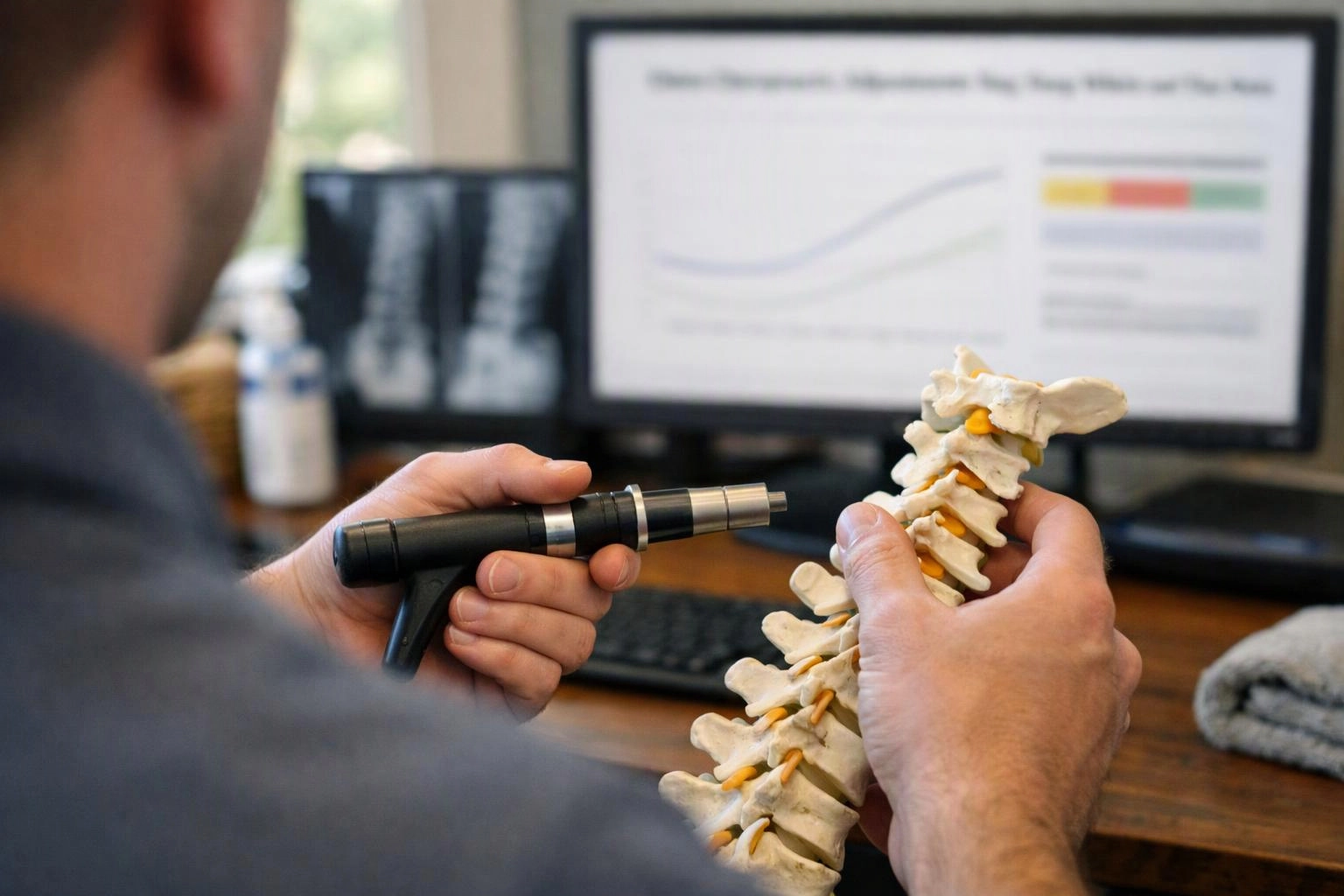
Our team explains treatment risks before care and stops to reassess when symptoms change. Neck manipulation needs careful screening because the neck contains nerves and blood vessels.
When Should Someone Avoid a Chiropractic Adjustment?
Someone should avoid or delay an adjustment when symptoms or health conditions could make manipulation unsafe until they receive appropriate medical evaluation.
We use symptom screening to identify situations that need medical care first. The following concerns can change whether treatment is appropriate.
How We Check Whether an Adjustment Is Appropriate
We check your health history, symptom pattern, physical examination findings, and treatment goals before recommending an adjustment.
Our team asks about past injuries, current conditions, medications, and changes in symptoms. We also perform neurological screening when nerve symptoms or other warning signs are present.
These findings help us choose a suitable treatment plan or recommend medical evaluation. We explain the expected benefits, treatment risks, and other care options clearly.
What to Expect Before and After an Adjustment
Before treatment, we explain the planned technique and ask for patient consent. After treatment, we review what to monitor and how follow-up care will work.
When to Seek Medical Care After an Adjustment
Urgent medical care is needed after an adjustment for a severe headache, new weakness, or sudden numbness.
Vision changes, trouble speaking, and loss of coordination are also warning signs. These symptoms can signal a serious problem and should not be monitored at home.
Call for urgent medical care when symptoms are sudden, severe, or getting worse. Contact our team about less serious soreness so we can guide your follow-up care.
Discuss Your Symptoms With Advanced Injury Care Clinic
Advanced Injury Care Clinic reviews your symptoms, health history, and examination findings before discussing treatment suitability.
We explain whether a chiropractic adjustment fits your goals and concerns. Our team also discusses patient consent, treatment risks, and follow-up care.
Free Consultations are available for discussing your symptoms and possible next steps. Use our contact page to request a patient consultation.
Questions About Chiropractic Adjustments
Are chiropractic adjustments safe for everyone?
Chiropractic adjustments aren't safe for everyone, so Advanced Injury Care Clinic screens for health conditions, warning signs, and neurological symptoms first.
Can a chiropractic adjustment make pain worse?
Yes, a chiropractic adjustment can cause temporary soreness or discomfort, and worsening or new neurological symptoms need prompt assessment.
What side effects can happen after a chiropractic adjustment?
Possible side effects include soreness, tenderness, stiffness, or temporary discomfort near the treated area.
Should I tell the chiropractor about my medications and health conditions?
Yes, share your medications, health conditions, injuries, and symptom changes so we can complete a safer assessment.
What symptoms after an adjustment need urgent medical attention?
Severe headache, weakness, numbness, vision changes, trouble speaking, and loss of coordination need urgent medical attention.