Back or Neck Pain with Numbness, Tingling, or Weakness
Back or neck pain with numbness, tingling, or weakness may involve an irritated or compressed nerve and needs attention when symptoms are severe, spreading, or paired with loss of bladder or bowel control. Advanced Injury Care Clinic evaluates the spine and neurological symptoms to guide appropriate back pain treatment, neck pain treatment, or spinal decompression therapy.
Request an EstimateWhat Back or Neck Pain with Numbness, Tingling, or Weakness Can Mean
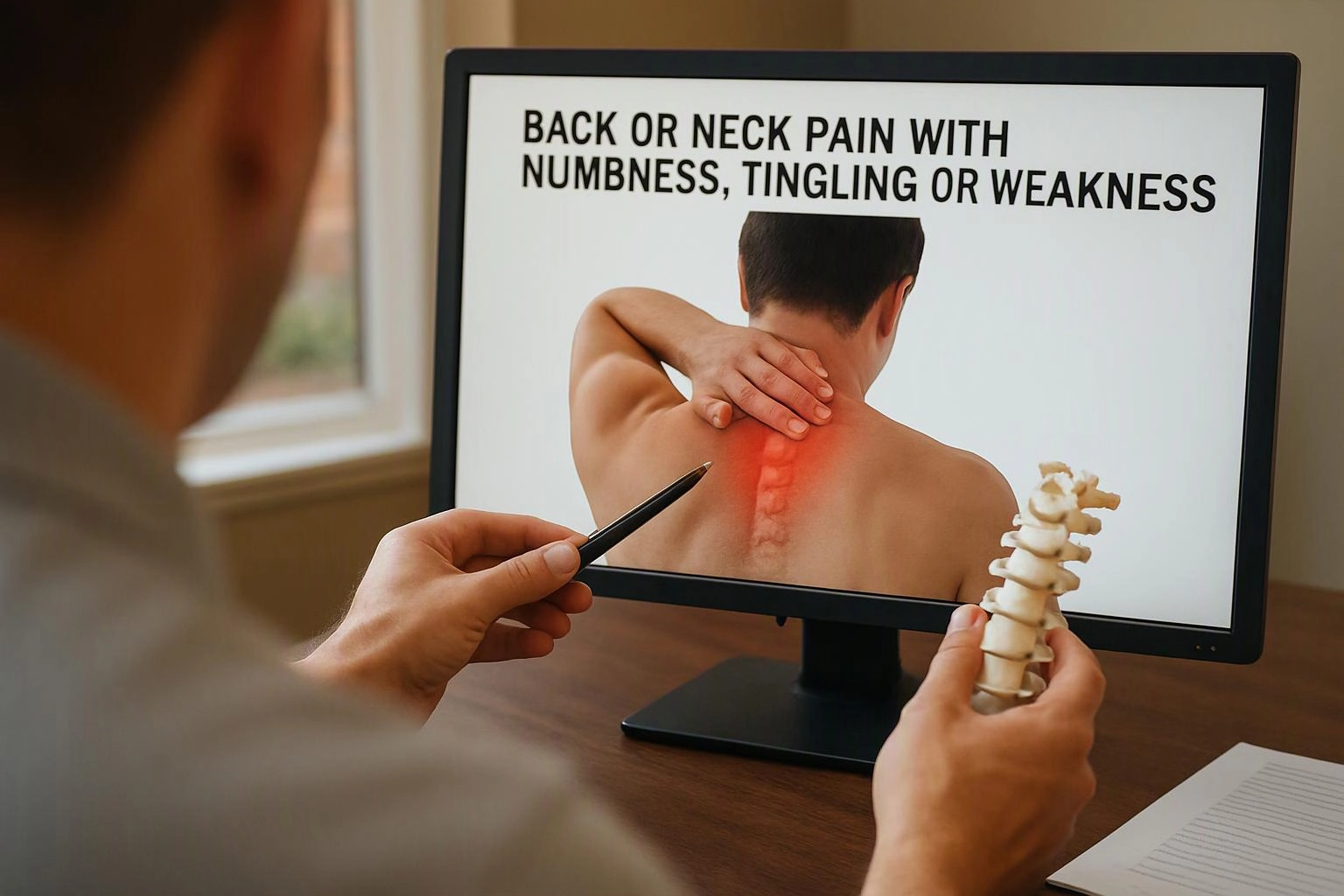
Back pain or neck pain with numbness, tingling, or muscle weakness may indicate nerve irritation, nerve compression, or another condition requiring clinical evaluation. Numbness can feel like reduced sensation or loss of feeling, while tingling may feel like pins and needles.
Nerve irritation can cause burning pain, shooting pain, or radiating pain along a nerve pathway. Nerve compression may affect an arm, hand, leg, or foot and can change muscle strength, grip, or walking.
Our team connects your symptoms with the spine, nearby joints, and soft tissues before discussing care. The pattern of your symptoms helps guide whether back pain treatment, neck pain treatment, or another form of evaluation is appropriate.
Warning Signs to Take Seriously
Warning signs with back or neck pain can show that neurological symptoms are changing. Contact Advanced Injury Care Clinic for an evaluation when symptoms persist, recur, or interfere with normal movement.
Seek urgent medical evaluation when symptoms are sudden, severe, or rapidly worsening, especially when bladder, bowel, walking, or coordination changes occur.
When Numbness or Weakness Needs Urgent Medical Evaluation
Back or neck pain with sudden, severe, or rapidly worsening neurological symptoms needs urgent medical evaluation, especially when walking, bladder, bowel, or coordination changes occur.
Sudden neurological symptoms can relate to spinal cord compression, cauda equina syndrome, serious injury, or stroke-like symptoms. These conditions need prompt medical attention, and chiropractic care is not a substitute for emergency assessment.
We ask about changes in strength, sensation, walking, and coordination so we can help identify the appropriate next step. If symptoms began after a serious injury or are quickly progressing, seek urgent medical care before arranging routine treatment.
Can a Pinched Nerve Cause Numbness or Tingling?
Yes, a pinched or irritated nerve can cause numbness, tingling, pain, or weakness along the nerve's path, but a clinical evaluation is needed to identify the cause.
A pinched nerve can affect a nerve root as it leaves the spine. Radiculopathy describes nerve-root symptoms that may include pain, numbness, tingling, or weakness.
Sciatica commonly involves symptoms traveling from the lower back into the buttock and leg. Cervical radiculopathy can send symptoms from the neck into the shoulder, arm, or hand.
A dermatome is an area of skin connected to a nerve root. Referred pain can feel as if it comes from an area away from the original spinal source, so the symptom location alone does not confirm the cause.
What to Do When Neck Pain Causes Arm Tingling or Weakness
Neck pain with arm tingling or weakness calls for activity changes, symptom monitoring, and a neurological evaluation when symptoms persist or worsen.
These steps can help you respond safely while you arrange appropriate care:
How Chiropractic Evaluation Connects Symptoms to the Spine
Advanced Injury Care Clinic connects spinal symptoms with possible nerve involvement through a medical history, orthopedic examination, and neurological examination.
Our team reviews when symptoms began, where they travel, and which movements change them. We assess range of motion, reflexes, muscle strength, and sensation to look for patterns involving a nerve root or the spinal cord.
We also consider spinal alignment and how the neck or back moves during the examination. When the findings call for more information, we can discuss an imaging referral or other appropriate medical evaluation.
This process helps separate common musculoskeletal symptoms from patterns that need urgent attention. It also gives us a clearer basis for treatment planning.
Back Pain Treatment, Neck Pain Treatment, and Spinal Decompression Therapy
Spinal decompression therapy is one treatment approach that may be considered when symptoms suggest nerve irritation or pressure affecting spinal movement. The right approach depends on the examination findings, symptom pattern, and clinical safety.
Back pain treatment may focus on improving mobility, reducing mechanical stress, and supporting better movement. Neck pain treatment may address restricted motion, posture, and symptoms that travel into the shoulder, arm, or hand.
We build treatment planning around your findings and monitor symptom response as care progresses. Increased weakness, spreading numbness, or new coordination changes require reassessment and may call for medical referral.
Self-Care Compared with Calling Advanced Injury Care Clinic
Self-care may help with mild, stable symptoms, while Advanced Injury Care Clinic evaluates persistent, recurring, or neurological symptoms to determine an appropriate care plan.
The choice depends on symptom severity, progression, and whether numbness or weakness affects normal activity. The comparison below shows what you can safely consider and what our team evaluates.
| Factor | What you can do yourself | What we do |
|---|---|---|
| Mild, stable symptoms | Use comfortable movement, support a neutral spine position, and monitor changes. | We review the history and examine movement when symptoms persist or return. |
| Neurological symptoms | Track numbness, tingling, weakness, and changes in walking or coordination. | We perform a neurological evaluation and determine whether referral or treatment planning is appropriate. |
| Back pain treatment or neck pain treatment | Avoid activities that clearly increase symptoms while you arrange an evaluation. | We match care to the examination findings and symptom response. |
| Spinal decompression therapy | Do not assume decompression is suitable without a clinical assessment. | We assess whether this approach fits the symptoms and overall treatment plan. |
How to Prepare for a Spine and Nerve Evaluation
A useful spine and nerve evaluation starts with a clear symptom history. Write down the pain location, numbness distribution, weakness pattern, and onset before your visit.
Note which activities aggravate symptoms, including sitting, lifting, turning your neck, or walking. Include previous injuries and current medications so our team can consider the full picture.
Bring details about changes in sensation, grip, balance, or bladder and bowel function. Clear information helps us perform a focused clinical neurological examination and decide whether further evaluation is needed.
Questions About Back or Neck Pain with Nerve Symptoms
Should I see a chiropractor for back pain with numbness?
Advanced Injury Care Clinic evaluates back pain with numbness when symptoms persist, recur, or affect strength and movement. Sudden or rapidly worsening numbness, severe weakness, walking changes, or bladder and bowel changes need urgent medical evaluation.
Why does my back pain radiate down my leg?
Back pain can radiate down the leg when irritation or compression affects a lumbar nerve root. Sciatica is one pattern of radiating leg pain, but an examination is needed to identify the cause.
Why does my neck pain cause tingling in my hand?
Neck pain can cause tingling in the hand when a cervical nerve root is irritated or compressed. The distribution of the tingling, changes in sensation, and muscle strength help guide the neurological evaluation.
Can spinal decompression help nerve-related back or neck symptoms?
Spinal decompression therapy may help some nerve-related back or neck symptoms when the clinical findings support that approach. We first evaluate the symptoms, spinal movement, and neurological findings before including it in a care plan.
Back or neck pain with numbness, tingling, or weakness deserves careful attention when symptoms spread, worsen, or affect movement. Advanced Injury Care Clinic evaluates the spine and neurological symptoms so we can guide appropriate next steps.
Contact Advanced Injury Care Clinic to arrange an evaluation.
Get a Free Estimate