After Dry Needling: Soreness, Activity, and When to Follow Up
After dry needling, mild soreness can occur as the treated area responds, but worsening pain or unusual symptoms need attention. Advanced Injury Care Clinic explains how to manage activity, monitor recovery, and know when to follow up.
Request an EstimateWhat Should You Expect After Dry Needling?
Dry needling can cause temporary soreness or tenderness in the treated area, and the response should be monitored as you recover.
Post-treatment soreness may feel like muscle tenderness near the needle site. The treated muscle can also feel tired, tight, or sensitive when you move.
These changes can reflect a normal muscle response. We review your symptoms and movement so your recovery guidance matches your needs.
Our Dry Needling service includes clear aftercare guidance for your treated area.
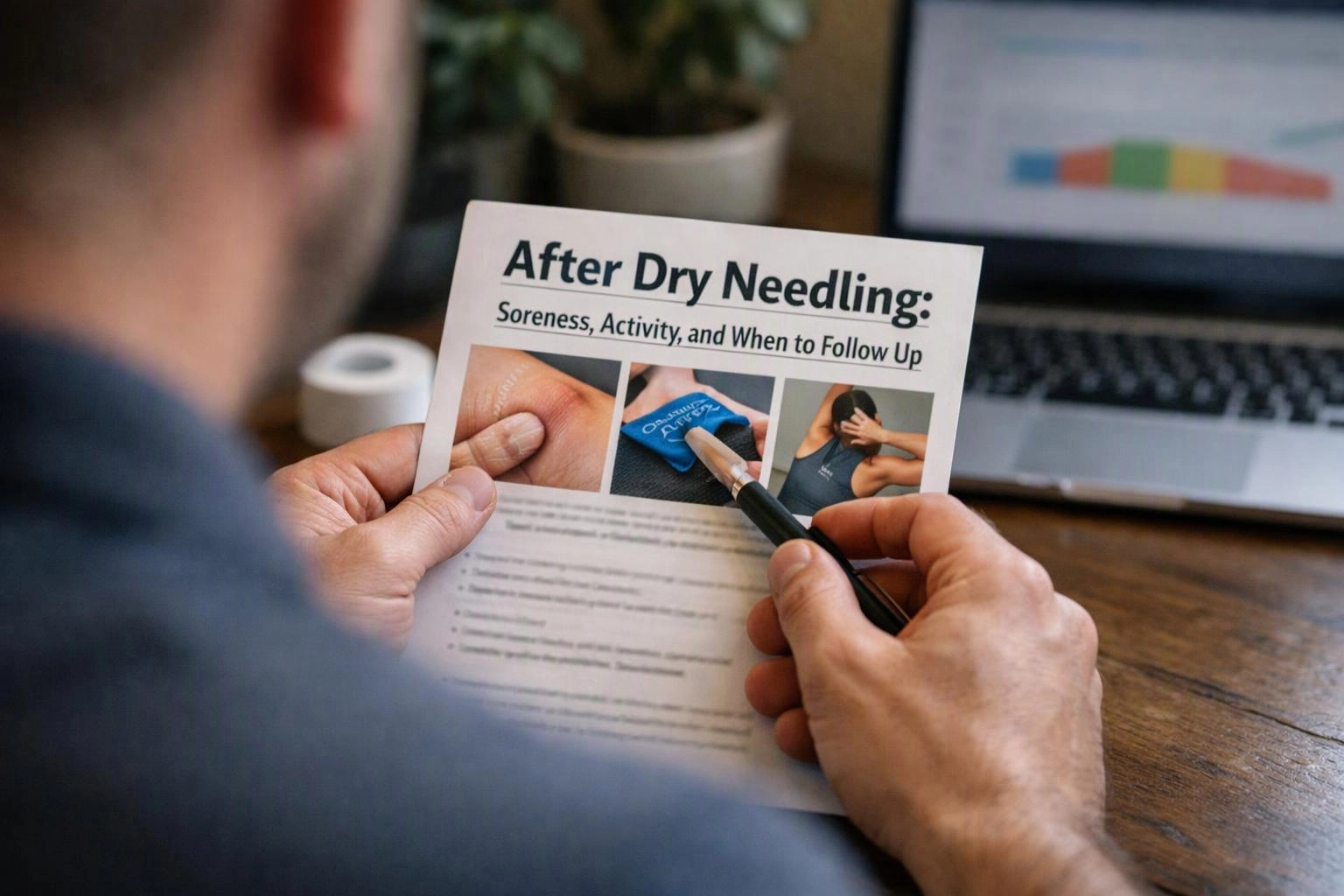
How Can You Manage Soreness After Dry Needling?
Dry needling aftercare can reduce irritation by keeping movement comfortable and following the instructions we gave you.
Use these simple steps while you monitor your response:
Comfort matters more than pushing through symptoms. We can adjust your recovery guidance when your response changes.
Can You Exercise After Dry Needling?
Yes, you can return to exercise when movement feels comfortable and your symptoms remain steady.
Start with activity that places a manageable load on the treated muscle. Reduce or pause exercise that causes pain, increases soreness, or changes how you move.
Physical activity should not force a painful range of motion. Gentle movement may feel better than complete inactivity, but rest is appropriate when the area feels irritated.
We use your pain response and movement quality to guide activity after treatment.
Your Dry Needling Aftercare Timeline
The aftercare timeline helps you compare your symptoms with the plan we provided. Recovery can vary by treated muscle, activity level, and treatment response.
Use symptom tracking to record changes and share useful details during follow-up care.
| Time period | Recommended focus |
|---|---|
| Immediate | Notice needle-site tenderness, follow care instructions, and keep movement comfortable. |
| First Week | Track soreness, adjust exercise if needed, and watch for symptom changes. |
| First Month | Review movement progress and discuss ongoing symptoms during planned care. |
| Ongoing | Continue the care plan and contact the clinic when your response changes. |
The table is a guide, not a substitute for your personal instructions. Our team uses your symptoms and movement to shape follow-up planning.
When Should You Follow Up After Dry Needling?
You should follow up when soreness doesn't improve, symptoms worsen, or your response differs from the aftercare guidance we gave you.
Contact the clinic when pain that gets worse affects movement or daily activity. New symptoms also deserve prompt review.
During a follow-up assessment, we discuss your treatment response and changes since care. We may review movement and update your care plan.
Warning Signs After Dry Needling
Warning signs after dry needling require prompt attention because they can signal a problem beyond expected soreness.
Contact the clinic or seek urgent medical help when symptoms are severe or rapidly changing.
How Advanced Injury Care Clinic Reviews Your Response to Dry Needling
Advanced Injury Care Clinic reviews your symptoms, movement, and treatment response during follow-up care.
We ask how the treated muscle feels during rest and activity. Our team also checks movement quality and any change in your pain response.
That information helps us decide whether your care plan needs adjustment. We explain the next steps and give recovery guidance that fits your symptoms.
Contact us when you need help understanding soreness, activity after treatment, or new symptoms.
Contact Advanced Injury Care Clinic
Get a Free EstimateQuestions About Dry Needling Aftercare
Is soreness normal after dry needling?
Yes, mild soreness or muscle tenderness can occur after dry needling. Advanced Injury Care Clinic explains what to monitor and when to request follow-up care.
What should you avoid after dry needling?
Avoid exercise or activity that increases soreness, causes sharp pain, or changes your movement. Follow the care instructions we gave you.
Can dry needling make pain worse?
Dry needling can cause temporary tenderness, but pain that gets worse needs attention. Contact the clinic when symptoms increase or new symptoms appear.
Should you use heat or cold after dry needling?
Use heat or cold only when it matches the aftercare instructions we gave you. Stop if either option increases discomfort, and contact us if you aren't sure what fits your symptoms.
Related Resources
Dry Needling Companies Worth Comparing in Brentwood (2026)
Compared ToUsing Insurance or Paying Out of Pocket for Chiropractic Care
Everything About ItDry Needling: What It Is and How It Differs from Acupuncture
Everything About ItHow to Check a Chiropractor’s Tennessee License and Credentials