
What Is Piriformis Syndrome?
Piriformis Syndrome is a condition in which the piriformis muscle irritates the sciatic nerve near the buttock. This irritation may cause pain, tingling, or numbness in the buttock and down the back of the leg. Symptoms often resemble sciatica, so a careful exam helps separate muscle-related pain from spinal causes.
Quick Facts About Piriformis Syndrome
Category
Muscle-related nerve irritation
Used for
Understanding buttock and leg symptoms
Common confusion
Often confused with spinal sciatica
Also called
Piriformis Muscle Syndrome, Deep gluteal syndrome
Often discussed with
Sciatica Treatment
Key Takeaways About Piriformis Syndrome
- Pain often starts deep in the buttock.
- Symptoms may change with sitting or hip movement.
- Piriformis Syndrome isn't the same as spinal sciatica.
How Piriformis Syndrome Works
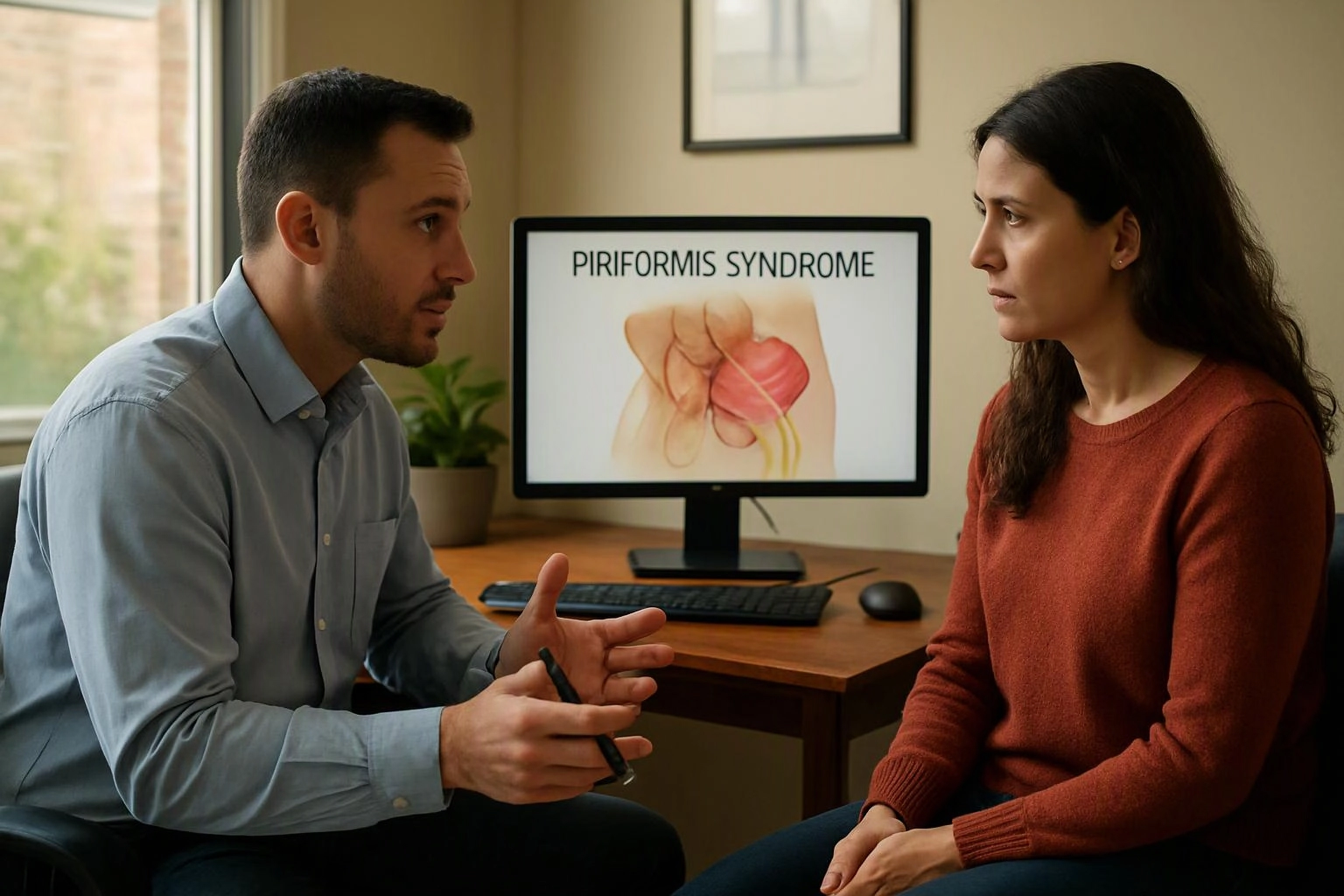
Piriformis Syndrome develops when the piriformis muscle affects the sciatic nerve near the pelvis. The muscle sits deep in the buttock and helps turn the hip. Irritation in this area may send pain or altered feeling along the nerve's path.
Related glossary terms: Nerve Compression, Referred Pain, Trigger Point.
A clinician looks at symptom location, hip movement, muscle tenderness, and nerve signs. The pattern helps show whether the problem likely involves the buttock or the lower spine. Sciatica describes nerve-related symptoms, while Piriformis Syndrome describes one possible source. A lumbar spine problem may create similar symptoms.
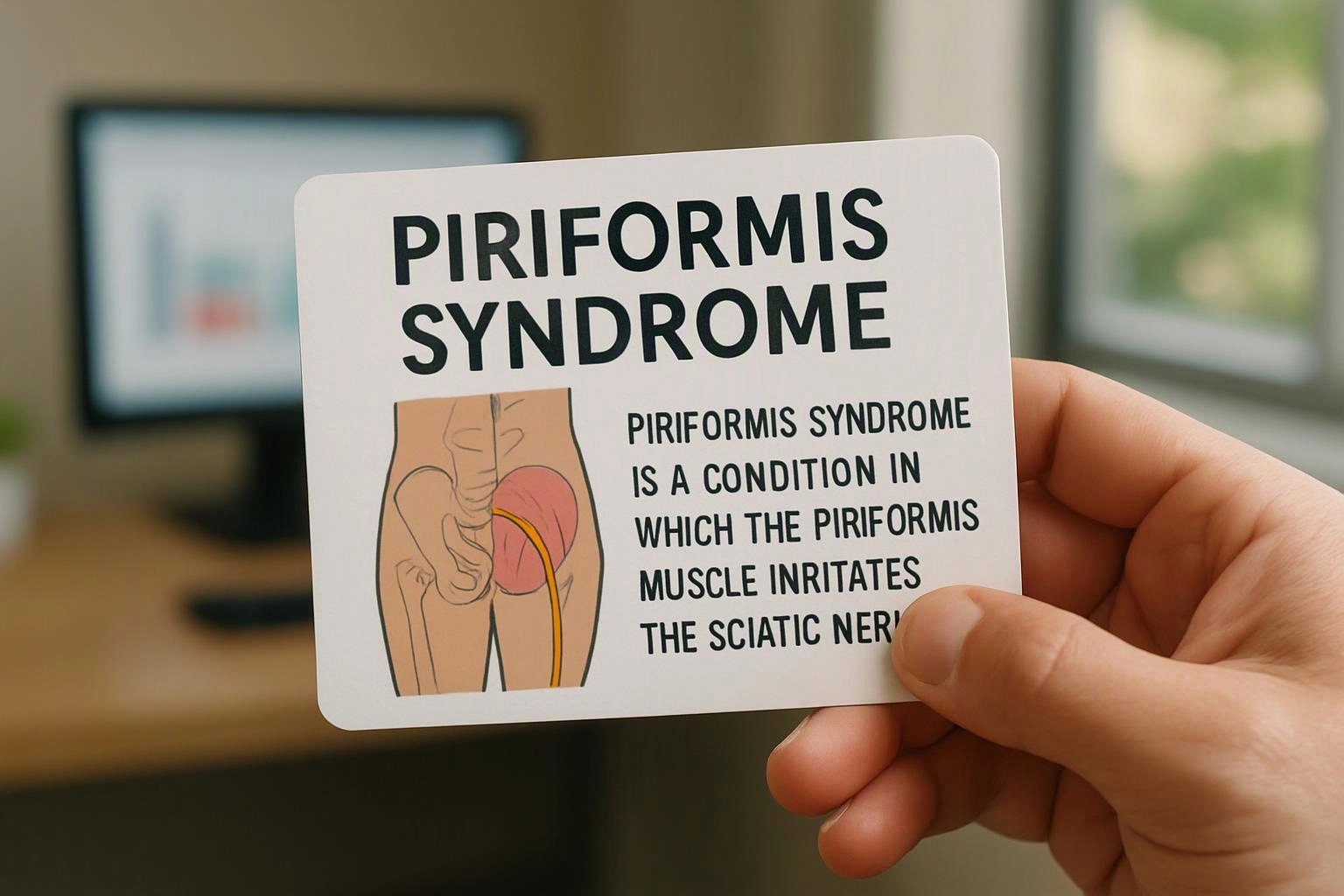
From the Advanced Injury Care Clinic team
When we assess Piriformis Syndrome, we review the symptom pattern and check hip, pelvic, and lower-back movement. We also look for signs that point toward the spine or another source of nerve irritation. Our team uses these findings to guide Sciatica Treatment and keep the working diagnosis clear.
Piriformis Syndrome in Practice: A Real-World Example
A person may feel deep buttock pain after sitting for a long period, followed by tingling down the back of the leg. During Sciatica Treatment, the care team may compare hip movement with lower-back findings to identify the likely source.
Related Services
Related Terms
Nerve Compression
Nerve Compression is pressure on a nerve that can disrupt normal signal flow between the body…
Referred Pain
Referred Pain is discomfort felt in one body area even though the source lies elsewhere. Shared…
Trigger Point
A trigger point is a sensitive spot within a tight band of muscle that can cause…
Lumbar Spine
The lumbar spine is the lower section of the spinal column, located between the thoracic spine…
Advanced Injury Care Clinic
Have Questions About Piriformis Syndrome?
Contact Advanced Injury Care Clinic for practical guidance on Piriformis Syndrome and related chiropractor work in Brentwood.