When Persistent Lower Back Pain May Need an Evaluation
Persistent lower back pain may need an evaluation when symptoms keep returning, worsen, restrict normal movement, or include warning signs; Advanced Injury Care Clinic evaluates the pattern, contributing factors, and whether chiropractic care is appropriate.
Request an EstimateWhen Should Persistent Lower Back Pain Be Evaluated?
Persistent lower back pain should be evaluated when symptoms do not settle, return repeatedly, worsen, or interfere with normal activities. A chiropractic evaluation helps connect the pain pattern with movement limits, daily activities, and physical findings.
Recurring back pain can reflect a musculoskeletal condition, such as joint dysfunction, muscle strain, or disc irritation. We assess whether conservative care is appropriate and whether another type of medical evaluation is needed.
Signs Your Lower Back Pain Needs Attention
Lower back pain needs attention when symptoms affect movement, spread beyond the low back, or become harder to manage. We use these details to decide how carefully the condition should be evaluated.
Symptoms that keep returning can point to an unresolved source of stress on the lumbar spine. Our team reviews the full pattern instead of focusing on pain intensity alone.
What Can Cause Recurring Lower Back Pain?
Recurring lower back pain can develop when the lumbar spine, muscles, joints, or surrounding tissues are repeatedly stressed. Common causes include:
Recurring back pain may involve more than one contributing factor. We consider lifting mechanics, posture, activity level, and the relationship between the lumbar spine, pelvis, core muscles, and hip muscles.
How We Evaluate Persistent Back Pain
Advanced Injury Care Clinic evaluates the pain history, movement pattern, physical findings, and warning signs before determining whether chiropractic care fits the condition.
Our team reviews your health history and symptom timeline before completing a movement assessment. We look at spinal alignment, spinal mobility, restricted movement, muscle tension, and neurological symptoms such as radiating pain, numbness, tingling, or weakness.
We use a chiropractic examination to understand how the back responds to movement and loading. If the findings suggest a problem outside the scope of conservative care, we discuss the need for medical referral.
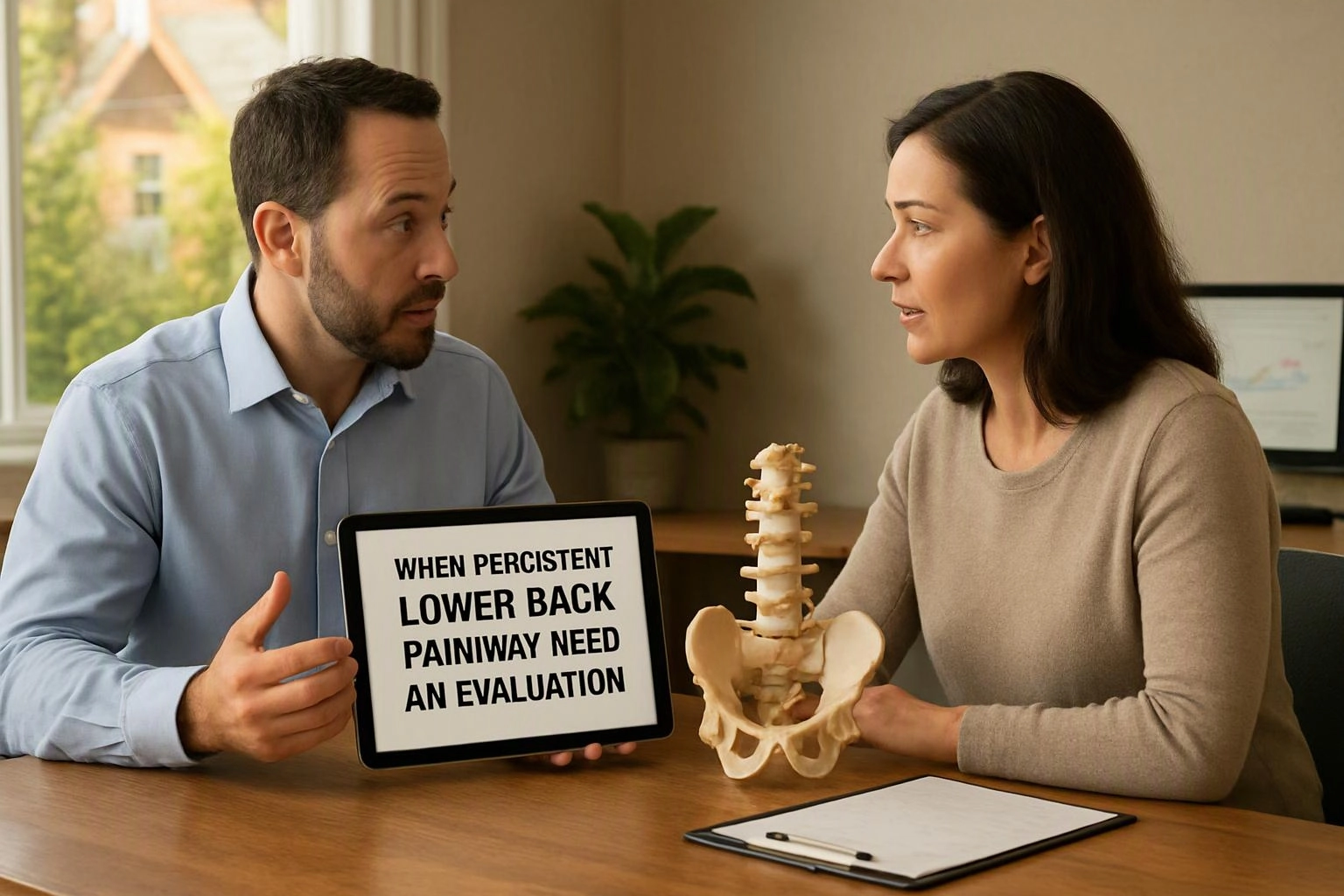
What to Tell Us About a Flare-Up
Chronic back pain is easier to evaluate when you describe what changed during the flare-up. Tell us which activity triggered it, where the pain began, how strong it feels, and whether symptoms travel into the hip or leg.
Previous treatment also matters because it shows what helped, what did not help, and how the condition has changed. These details help us connect the acute flare-up with the larger pain history.
When Lower Back Pain May Need Prompt Medical Attention
Lower back pain may need prompt medical attention when severe neurological changes, loss of bladder or bowel control, major trauma, or serious systemic symptoms are present.
Red-flag symptoms include loss of bladder or bowel control, numbness in the saddle area, or progressive weakness. Serious injury, fever, or unexplained systemic symptoms also require prompt medical assessment.
We do not treat these warning signs as a routine back pain flare-up. Seek urgent medical care when these symptoms occur, and tell the medical team about any changes in strength, sensation, bladder function, or bowel function.
How Chiropractic Care May Help a Lower Back Pain Flare-Up
Chiropractic care may help a lower back pain flare-up when the evaluation identifies a musculoskeletal cause that is appropriate for conservative treatment.
Our team may use a chiropractic adjustment to support joint mobility and improve comfortable spinal movement when the examination supports that approach. We also address muscle tension, activity guidance, and movement habits that may be adding stress.
Our Back Pain Treatment approach is individualized to the findings from your examination. We explain what we recommend and how to modify activity while symptoms settle.
Ways to Reduce Recurring Lower Back Pain
Recurring lower back pain may become easier to manage when daily movement and loading habits place less stress on the lumbar spine. We help you connect prevention strategies with the activities that trigger your symptoms.
Prevention works best when it fits your symptoms, work demands, and current movement ability. Our team can help identify which changes are practical for your individualized treatment plan.
What to Expect From a Chiropractic Back Pain Evaluation
A chiropractic back pain evaluation begins with your symptoms and ends with care recommendations based on the examination. We explain each step so you understand why a specific approach may fit your condition.
Choosing the Next Step for Persistent Lower Back Pain
The next step for persistent lower back pain depends on the symptom pattern, examination findings, functional impact, and presence of warning signs. A chiropractic consultation may fit recurring mechanical pain without red-flag symptoms.
Self-care may be reasonable when symptoms are mild and improving, while worsening symptoms or neurological changes may require medical referral. We use the examination to build an individualized care plan that matches the suspected cause and your goals.
Advanced Injury Care Clinic provides Free Consultations so we can discuss your symptoms and determine whether an evaluation is appropriate. Contact our team to choose the next step for your lower back pain.